 en
en Our factory has served countless products across various industries for 30 years, making a significant contribution to the cutting industry. Let us customize the cutting tools you need!
Mabu - CEO RisingBamboo
 Email: Mb@mingbaiblade.com
 Tel.: +86-13855519988



In slitting production, circular blades transmit torque through the bore fit with the blade shaft. After long-term use, the bore wall gradually enlarges due to fretting wear and repeated mounting and dismounting. When bore wear exceeds 0.05mm, many users face a dilemma: repair with concerns about precision, or scrap with regret over waste. Mingbai Mechanical Tool Technology Co., Ltd. provides professional judgment criteria and repair solutions.
1. Three Degrees of Bore Wear
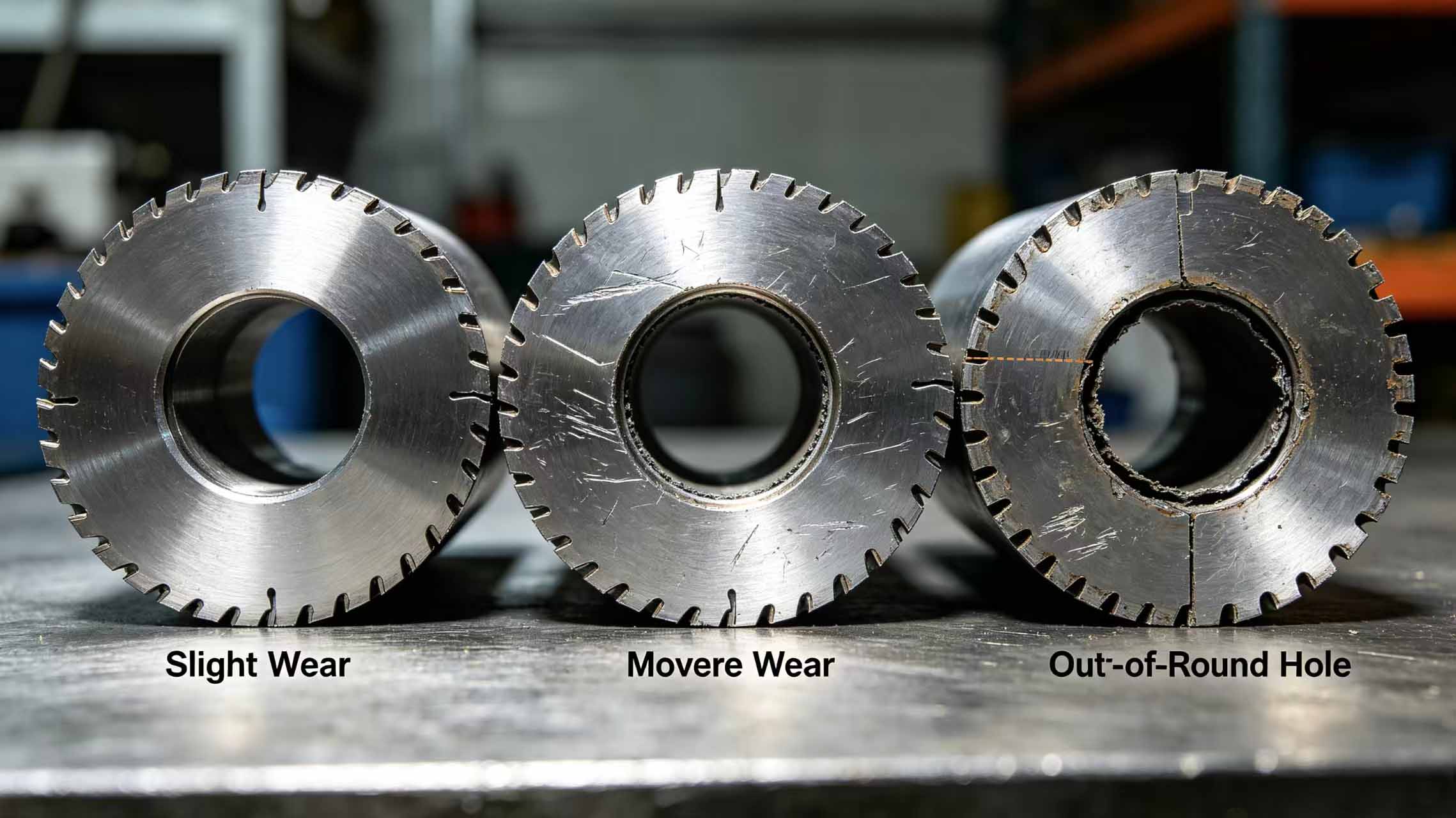
Light wear (<0.03mm): The bore size remains near the upper tolerance limit, and the blade shows no obvious play after installation. In this case, simply replacing the spacer or applying anti-loosening adhesive is sufficient; no repair is needed.
Moderate wear (0.03-0.05mm): The clearance between the bore and blade shaft has increased noticeably, and radial play can be felt after installation. During shearing, periodic burrs appear on the material edge, and width fluctuations increase. At this point, the repair value needs to be assessed.
Severe wear (>0.05mm): The bore has become significantly out-of-round or flared. After installation, the blade is severely eccentric, causing violent vibration during shearing and obvious wavy edges on the product. Repair is difficult at this stage and requires careful decision-making.
2. Repair or Scrap? Five Judgment Dimensions
1. Residual blade value
If heavy-duty circular blades for high-speed slitting still have more than 3 resharpening allowances left, and the blade has high original value (e.g., carbide or powder metallurgy high-speed steel wear-resistant carbide circular blades), repair is worthwhile. If the edge is near the end of its life, scrapping is more economical.
2. Equipment precision requirements
Ordinary slitting lines (with precision tolerance of ±0.1mm) have higher tolerance for repaired bore precision. High-precision circular blades for precision strip slitting have stringent concentricity requirements and must be strictly inspected after repair.
3. Wear pattern
Uniform enlargement (wear amount similar across all areas) → repairable. One-sided wear or flaring → repair is difficult and requires evaluation. Cracks or chipping at the bore edge → scrap immediately.
4. Blade type
For coated alloy blades, care must be taken not to damage the coating during bore repair; professional factory repair is recommended. For custom blades, repair is often the better choice due to lack of off-the-shelf replacements.
5. Repair cost
Repair cost is typically 15%-30% of a new blade. If the repaired blade can achieve over 70% of new blade life, repair is cost-effective.
3. Three Repair Methods
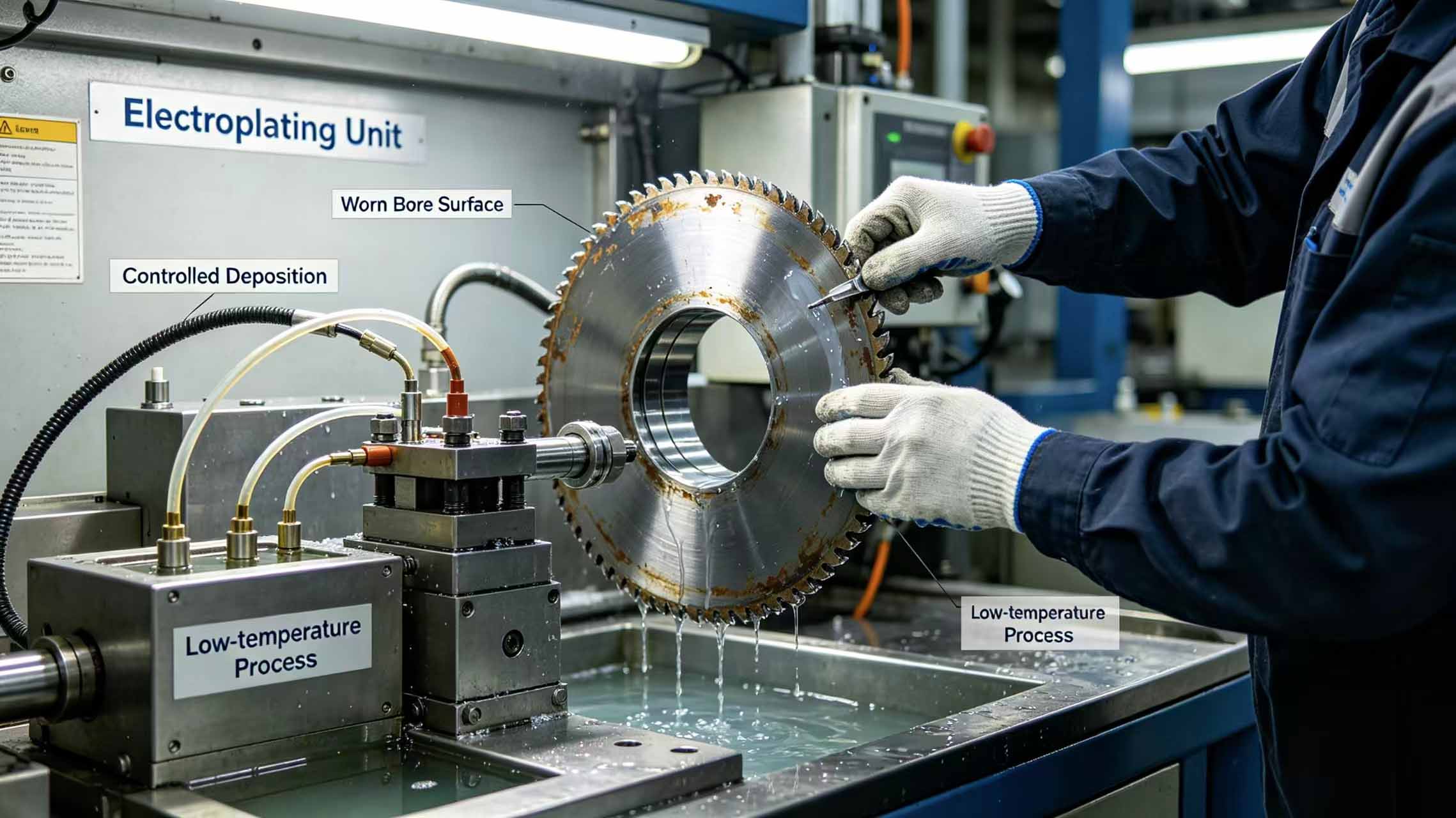
1. Bore brush plating (chrome/nickel plating)
Electrodeposit a layer of metal on the worn bore surface to restore dimensions. Advantages: no change to the blade substrate, low temperature, no deformation. Disadvantages: limited coating hardness, not suitable for heavy-load conditions. Suitable for mechanical blades for medium-load slitting.
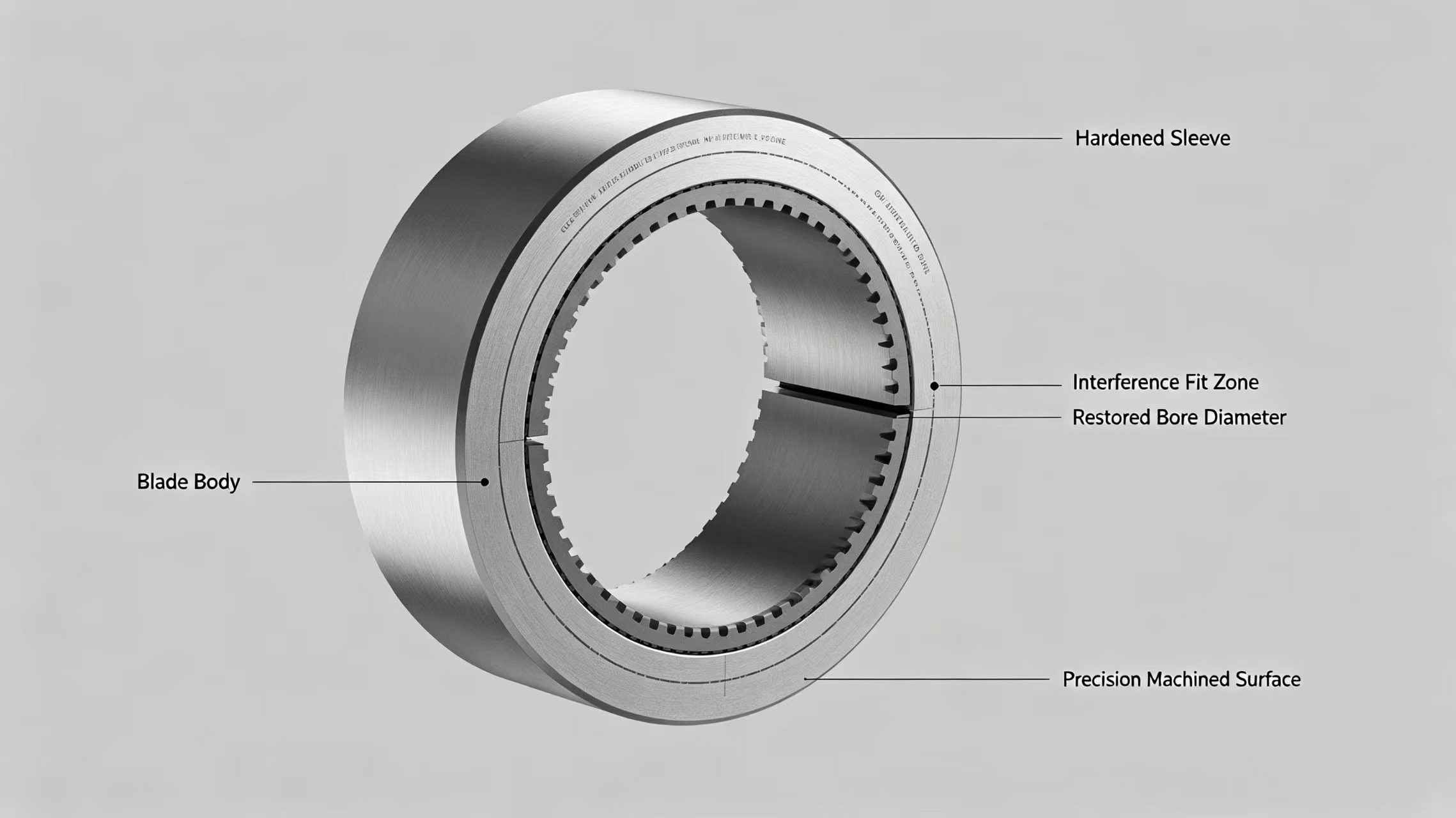
2. Bore sleeve insertion
Enlarge the original bore by 0.5-1mm, press in a heat-treated inner sleeve, and finish-machine the new bore to original dimensions. Advantages: restores original fit precision, long life. Disadvantages: higher cost, requires professional equipment. Suitable for heavy-duty alloy blades.
3. Bore overlay welding + re-machining
Use special welding rods to build up the bore wall, then re-bore to original dimensions. Advantages: metallurgical bonding of the repair layer with the substrate. Disadvantages: significant heat-affected zone, may cause deformation. Suitable for circular blades for thick plate slitting.
4. Three Situations Requiring Scrapping
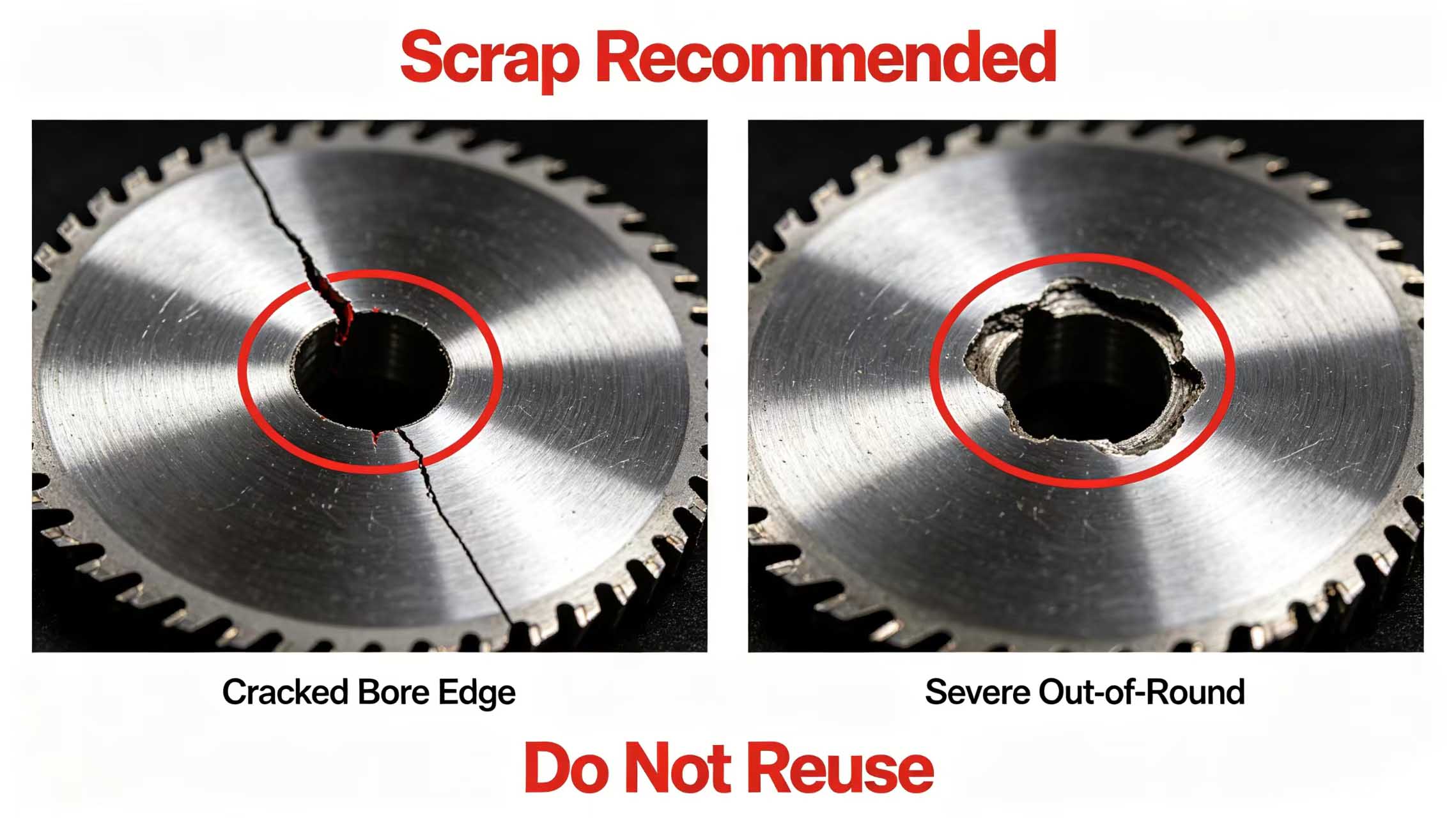
· Cracks at the bore edge (even if very small)
· The blade has been resharpened more than 5 times, and the remaining effective thickness is insufficient
· Severe bore out-of-roundness (ellipticity >0.03mm) and concentricity error >0.03mm
5. Verification Standards After Repair
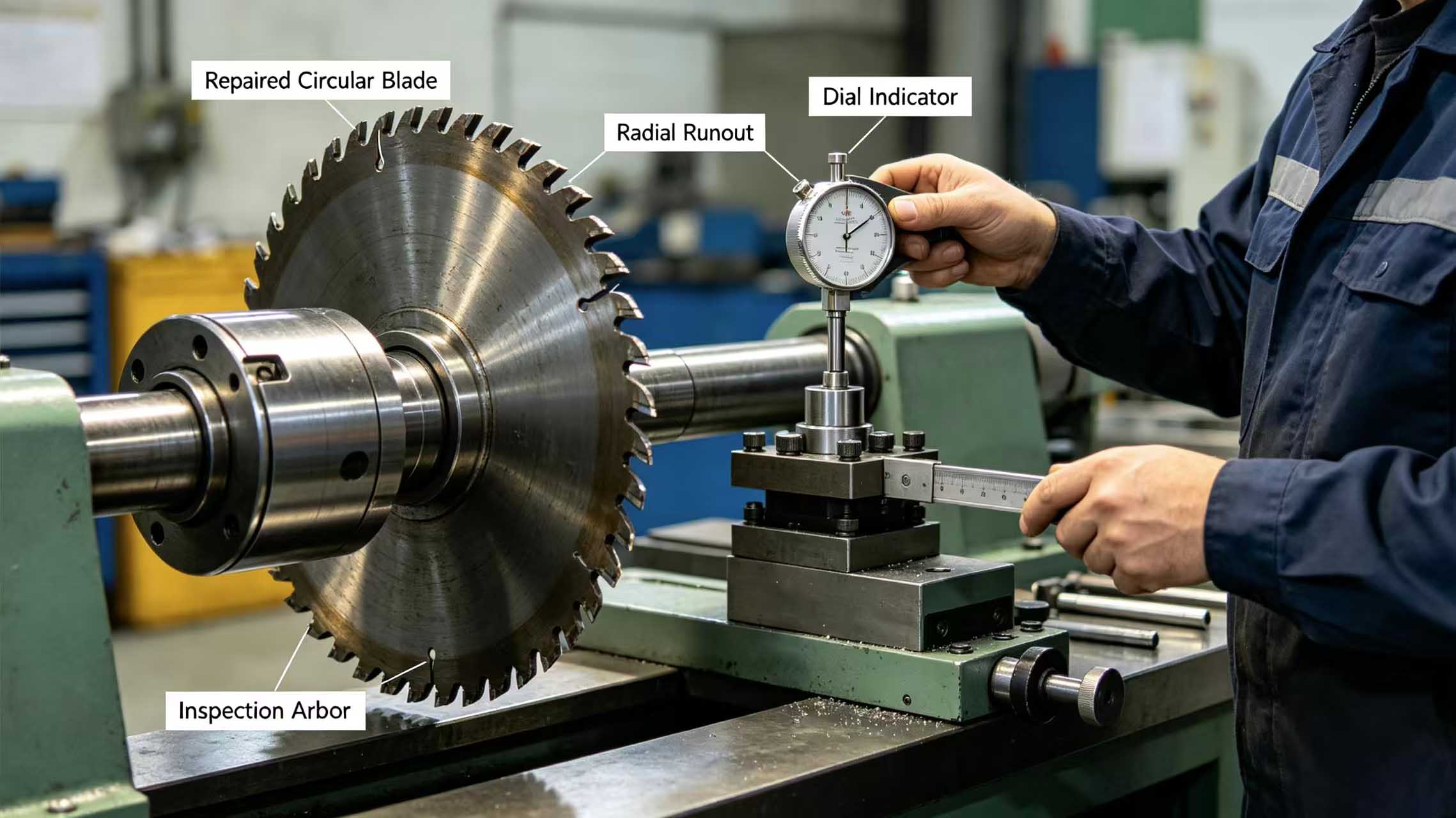
A repaired precision mechanical blade must pass the following inspections before installation:
· Bore size restored to original tolerance (H7 or H6)
· Bore roundness ≤ 0.003mm
· Bore-to-end-face perpendicularity ≤ 0.005mm
· Radial runout after shaft mounting ≤ 0.008mm
6. Mingbai Technology's Repair Services
Mingbai Mechanical Tool Technology Co., Ltd. offers circular blade bore wear repair services:
· Bore brush plating (controllable coating thickness, restoring to original dimensions)
· Bore sleeve insertion (professional press-fit, interference fit)
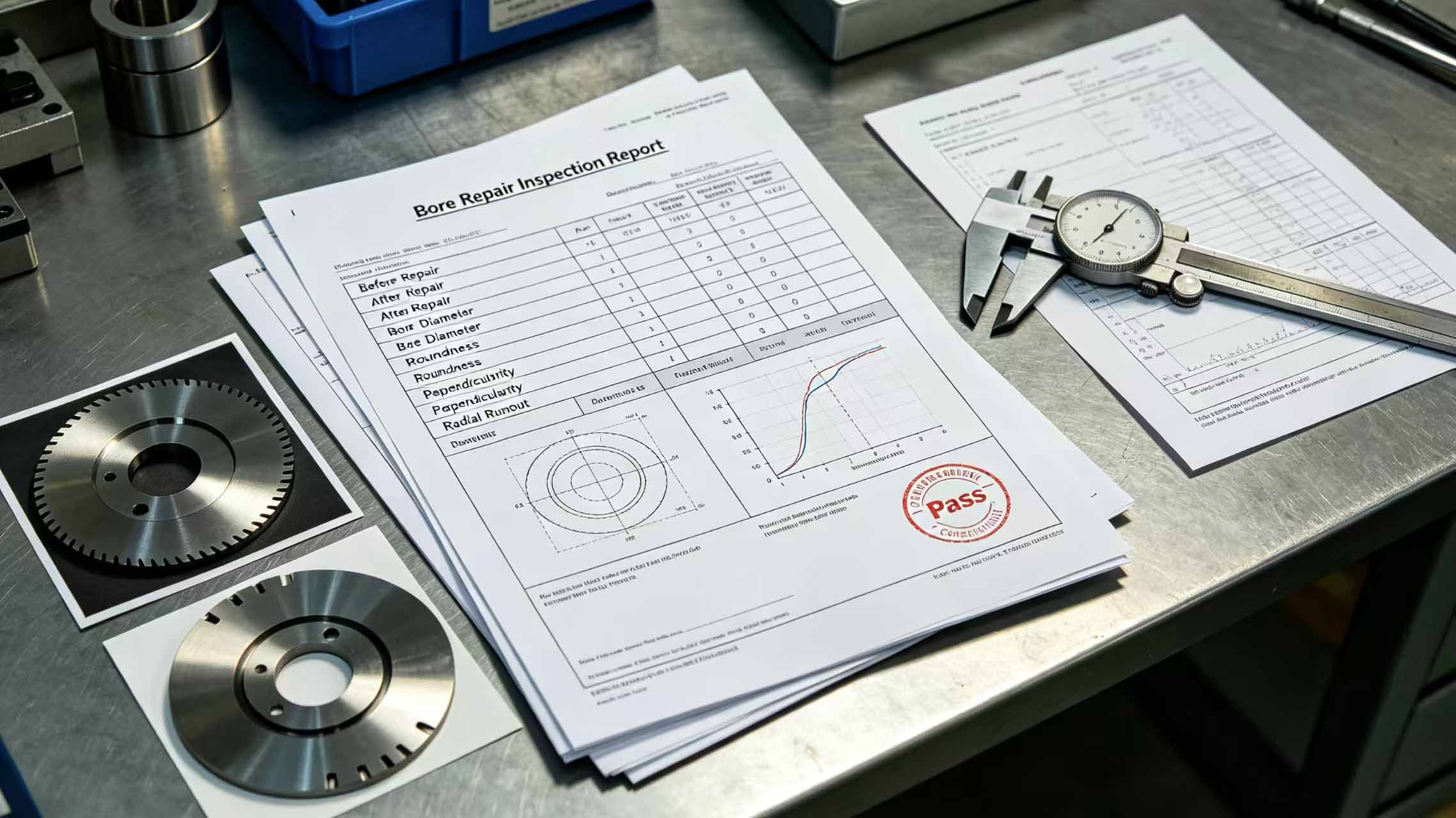
· Post-repair CMM inspection with precision report
· Quality guarantee: 100% pass rate for assembly after repair, otherwise free rework
Conclusion
When circular blade bore wear exceeds 0.05mm, whether to repair depends on residual blade value, equipment precision requirements, wear pattern, and repair cost. Light wear requires no treatment, moderate wear can be repaired, and severe wear or cracks should be decisively scrapped. Mingbai Technology is ready to help you extend blade life and reduce tooling costs with professional repair techniques and inspection capabilities.
Website: www.mingbaiblade.com
 IPv6 network supported |
Sitemap
|
Xml
|
Privacy Policy
IPv6 network supported |
Sitemap
|
Xml
|
Privacy Policy
leave a message
Scan to wechat :

Scan to whatsapp :
