Home

Precision mechanical blades

Precision mechanical blades

  • After Long-Term Storage, Rust Spots Appear on the Cutting Edge of Circular Blades — Will This Affect Performance?
    Jul 28, 2026
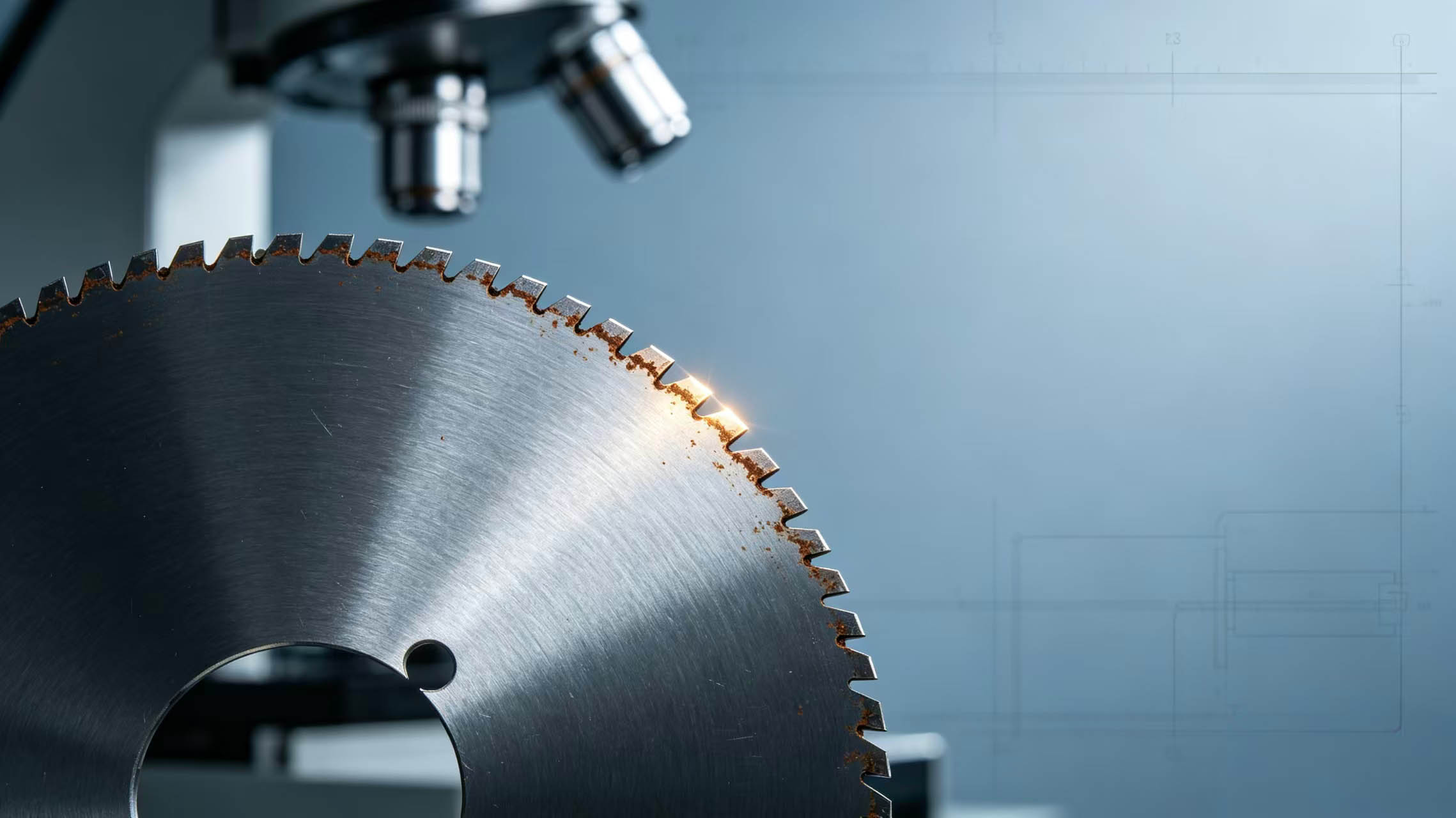
    In slitting production, many users retrieve circular blades from long-term warehouse storage and find yellowish-brown rust spots on the cutting edge. When faced with rust spots, the most common concern is: do these rust spots affect cutting performance? Can the blade still be used? Mingbai Mechanical Tool Technology Co., Ltd., based on materials science and field experience, provides scientific judgment criteria and handling recommendations.   1. The Nature and Hazards of Rust Spots   Rust spots are the product of electrochemical reactions between the blade's metal surface and oxygen and moisture in the air. For precision mechanical blades made of high-carbon steel, high-speed steel, and similar materials, once rusting begins, it penetrates from the surface inward. The harm of rust spots depends on three factors: location, depth, and morphology.   2. Three Types of Rust Spots on the Cutting Edge     Surface flash rust (mild) Characteristics: Yellowish-brown powdery rust, present only on the surface, depth < 0.01mm, removable with a cloth. Impact: After removal, no visible pits remain on the edge — does not affect performance.   Pitting rust (moderate) Characteristics: Dark brown or black spots, depth 0.01-0.03mm, leaving tiny pits the size of a pinprick after removal. Impact: May affect cutting quality, depending on specific working conditions.   Pitted/crater rust (severe) Characteristics: Dark brown or black depressions, depth > 0.03mm, leaving obvious pits or grooves after removal. Impact: Significantly affects performance, causing burrs or chipping during cutting — replacement is recommended.   3. Four-Step Method to Determine Whether Rust Spots Affect Performance   Step 1: Check the rust spot location   Rust spots on the cutting edge → directly affect cutting quality and require careful handling. Rust spots on the blade body (non-edge areas) → do not affect performance; clean and use. Inspection method for rust spots on stored circular blades starts with location.     Step 2: Assess rust spot depth   Gently sand the rusted area with fine sandpaper or an oilstone. If the surface is flat without pits after sanding → flash rust, can continue to be used. If obvious pits remain → rust has penetrated the substrate; assess whether edge integrity is compromised.     Step 3: Check edge integrity   Use a magnifying glass to inspect the edge. If the edge remains straight and intact → rust has not damaged the edge geometry. If the edge appears jagged or has notches → rust has damaged the edge, and circular blades for precision slitting will directly affect cutting accuracy.     Step 4: Verify through trial cutting   After cleaning the rust, perform a trial cut. Smooth cut edge without burrs → performance restored. Obvious burrs or uneven edges → rust has affected performance; recommend replacement or return to factory for regrinding.     4. Rust Tolerance of Different Blade Materials   High-speed steel circular blades: Most sensitive to rust. Pitting deeper than 0.02mm is recommended for replacement.   Carbide blades: The substrate does not rust, but the cobalt binder phase may corrode; edge strength must be checked.   Stainless steel blades: Good corrosion resistance. Rust spots usually stay on the surface with shallow depth. Ultra-thin circular blades for food packaging film slitting are more sensitive to defects and require special attention.   Coated blades: Rusting tends to occur where the coating is damaged; confirm whether rust has penetrated the coating.   5. Rust Removal Methods   Flash rust removal Gently sand with a fine oilstone (1000 grit or higher) with oil, or lightly brush with a brass wire brush, then wipe with rust preventive oil for protection.   Moderate rust removal Sand with fine sandpaper (800-1200 grit) until the surface is bright, taking care not to alter the edge geometry. Then inspect edge integrity with a magnifying glass.   Deep rust treatment Directly scrap, or send back to Mingbai Technology for evaluation to see if it can be restored through regrinding. If the edge is intact after regrinding, it can continue to be used.   6. How to Prevent Rust Spots in Storage?   · Control storage environment humidity between 40%-60%. · Long-term stored custom slitter blades should be coated with rust preventive oil and vacuum-packed. · Regularly inspect inventory, spot-check every 3 months. · Store blades of different materials separately to avoid galvanic corrosion.     7. Mingbai Technology's Rust Inspection Services   Mingbai Mechanical Tool Technology Co., Ltd. offers rust evaluation for stored circular blades services:   · Free visual inspection to determine rust type and depth. · Microscope inspection of edge integrity. · Provide repair or replacement recommendations. · Professional rust removal and regrinding services for repairable blades.   Conclusion   Rust spots on the cutting edge of circular blades after long-term storage do not necessarily mean the blade is scrap. Surface flash rust can be cleaned and does not affect performance. Pitting rust requires assessment of location and depth. Pitted/crater rust or edge damage should be scrapped or sent back for repair. The key steps are: "check location, measure depth, inspect edge, verify through trial cutting." Mingbai Technology is ready to provide professional rust inspection and repair services for you. Website: www.mingbaiblade.com
  • Is There a Universal Calculation Formula for the Side Gap Between Upper and Lower Slitter Blades?
    Jul 20, 2026
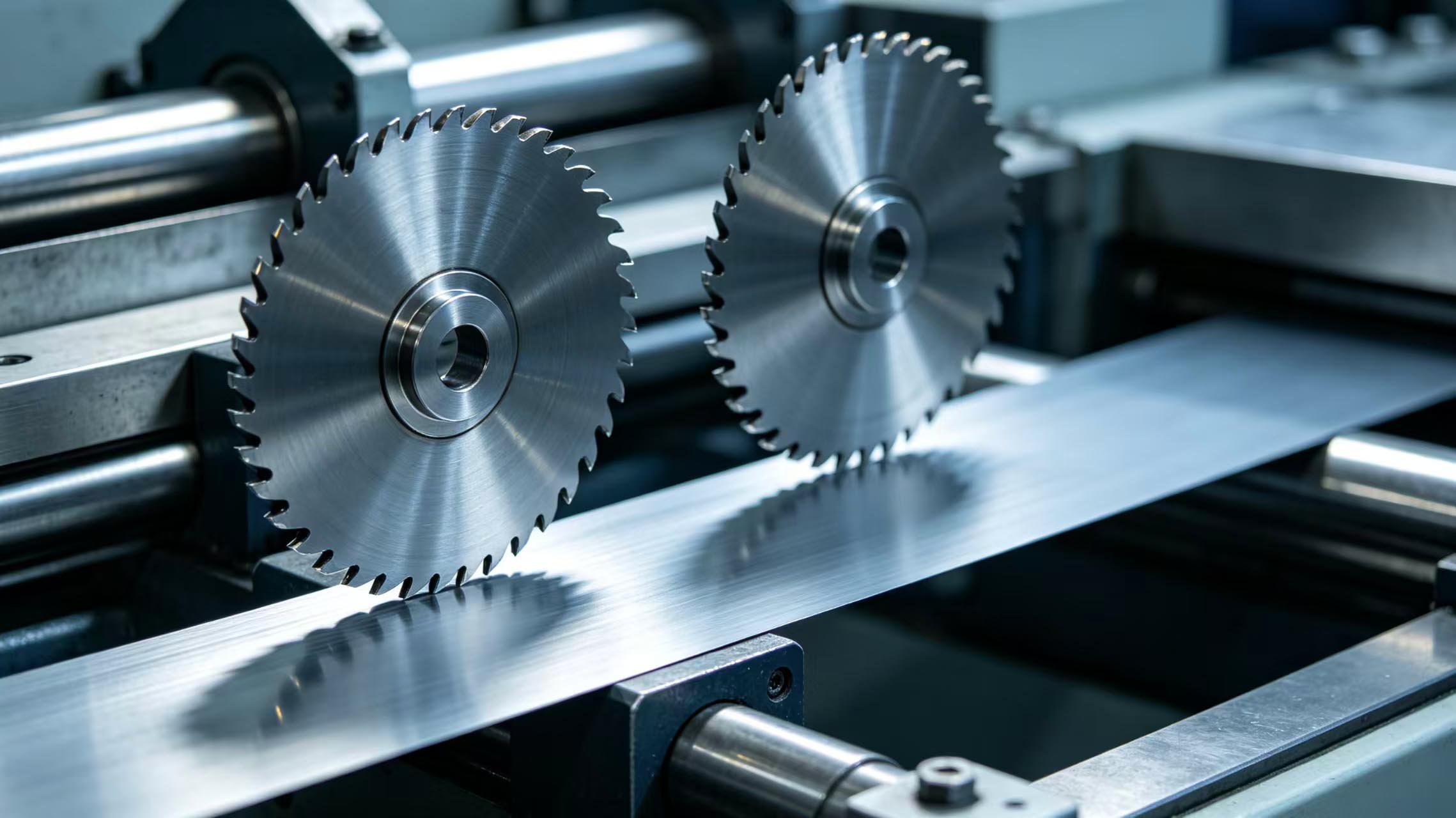
    In metal slitting operations, the side gap (also called lateral clearance) between slitter blades is one of the most critical process parameters. If the side gap is too large, the cut edge becomes jagged with burrs. If the side gap is too small, the blades rub against each other, generate heat, and may even chip. So, is there a universal calculation formula to quickly determine a reasonable side gap value? Mingbai Mechanical Tool Technology Co., Ltd., based on domestic and international standards and years of practice, provides you with a scientific calculation method.   1. The Universal Calculation Formula for Side Gap   The core of side gap calculation is the "material thickness percentage method," with the formula as follows:   Side Gap C = K × t     Where:   · C = Side gap (mm) · K = Gap coefficient (dimensionless) · t = Thickness of the material being sheared (mm)   Principles for selecting K value:   · Hard and brittle materials (silicon steel, high-carbon steel): K = 8%-12% · Soft and tough materials (low-carbon steel, copper, aluminum): K = 5%-7% · Medium hardness materials (ordinary carbon steel, stainless steel): K = 6%-10% · Ultra-thin materials (<0.3mm): K = 3%-5%   2. Recommended K Values for Different Materials     Ordinary carbon steel (Q235, SPCC, DC01): K = 6%-8%. Use the lower limit for thin materials (0.5mm at 6%) and the upper limit for thick materials (3mm at 8%). Circular blades for ordinary carbon steel slitting should be set according to this coefficient.   Stainless steel (304, 316, 430): K = 8%-10%. Stainless steel has severe work hardening, so a larger gap reduces friction between the edge and the material. Wear-resistant circular blades for stainless steel strip slitting are recommended with K = 9%.   Silicon steel: K = 10%-12%. The material is hard and brittle, requiring a larger gap to reduce impact. Alloy blades for silicon steel slitting are recommended with K = 11%.   Non-ferrous metals such as copper and aluminum: K = 4%-6%. Soft metals are sensitive to gap; too large a gap causes edge stringing. Circular blades for copper strip cutting are recommended with K = 5%.   High-strength steel: K = 8%-10%. Balancing hardness and toughness, the gap should not be too small. Custom blades for automotive panel slitting are recommended with K = 9%.   3. Other Factors Affecting K Value   1. Equipment rigidity   For equipment with good rigidity, the K value can be taken at the lower limit. For equipment with poor rigidity, use the upper limit to absorb impact.   2. Shearing speed   At high speeds (>100m/min), the K value should be reduced by 10%-15% compared to the conventional value to reduce vibration and temperature rise.   3. Blade material   Carbide blades, due to their high hardness and low deformation, can use a K value 5%-10% smaller than high-speed steel blades. High-hardness alloy blades can have a slightly smaller gap under the same working conditions.   4. Adjustment Method in Practical Application   Step 1: Calculate the initial gap using the formula   For example, for shearing 2.0mm thick 304 stainless steel, t = 2.0mm, K = 9%, then C = 2.0 × 9% = 0.18mm.   Step 2: Verify through trial cutting   Slit a section of material at normal speed and inspect the cut edge with a magnifying glass:     · Small, uniform burrs → gap is appropriate · Large burrs with tearing marks → gap is too large; reduce by 0.01-0.02mm · Whitened edge with powder → gap is too small; increase by 0.01-0.02mm   Step 3: Record the optimal value   Record the verified optimal gap value on the process card for direct use next time.   5. Five Precautions for Gap Adjustment   1. After each blade or material change, the gap must be re-measured and adjusted. 2. Use a feeler gauge for measurement; do not estimate by "feel."     3. After upper and lower blades are resharpened, the outer diameter becomes smaller, and the gap must be reset. 4. In multi-blade slitting, the gap for each blade should be consistent. 5. The gap adjustment precision for precision mechanical blades should be controlled within ±0.005mm.   6. Mingbai Technology's Gap Setting Services   Mingbai Mechanical Tool Technology Co., Ltd. provides side gap calculation and optimization services:   · Free calculation of recommended gap values based on your material, equipment, and speed. · On-site guidance for gap adjustment and trial cut verification. · Supply of high-precision feeler gauges and gap measurement tools. · For custom slitter blades, the gap value can be preset according to your working conditions.     7. Case Study   A stainless steel strip slitting plant used the same set of wear-resistant circular blades for stainless steel strip slitting to shear 1.0mm and 2.0mm stainless steel. The operator consistently used a 0.08mm gap for both thicknesses. As a result, the 1.0mm material cut well, but the 2.0mm material had severe burrs. Mingbai engineers calculated using the formula: 1.0mm × 9% = 0.09mm, 2.0mm × 9% = 0.18mm. After setting the gaps separately, the cut edge quality met standards for both thicknesses.   Conclusion   Although there is no "universal formula" for slitter blade side gap, the "C = K × t" calculation method covers the vast majority of working conditions. The key is selecting the K value — based on material, equipment, and speed, then fine-tuning through trial cuts. Mingbai Technology is ready to help you find the most suitable gap value with professional calculations and on-site services. Website: www.mingbaiblade.com

  • Circular Blade Bore Wear Exceeds 0.05mm — Should It Be Repaired or Directly Scrapped?
    Jul 07, 2026
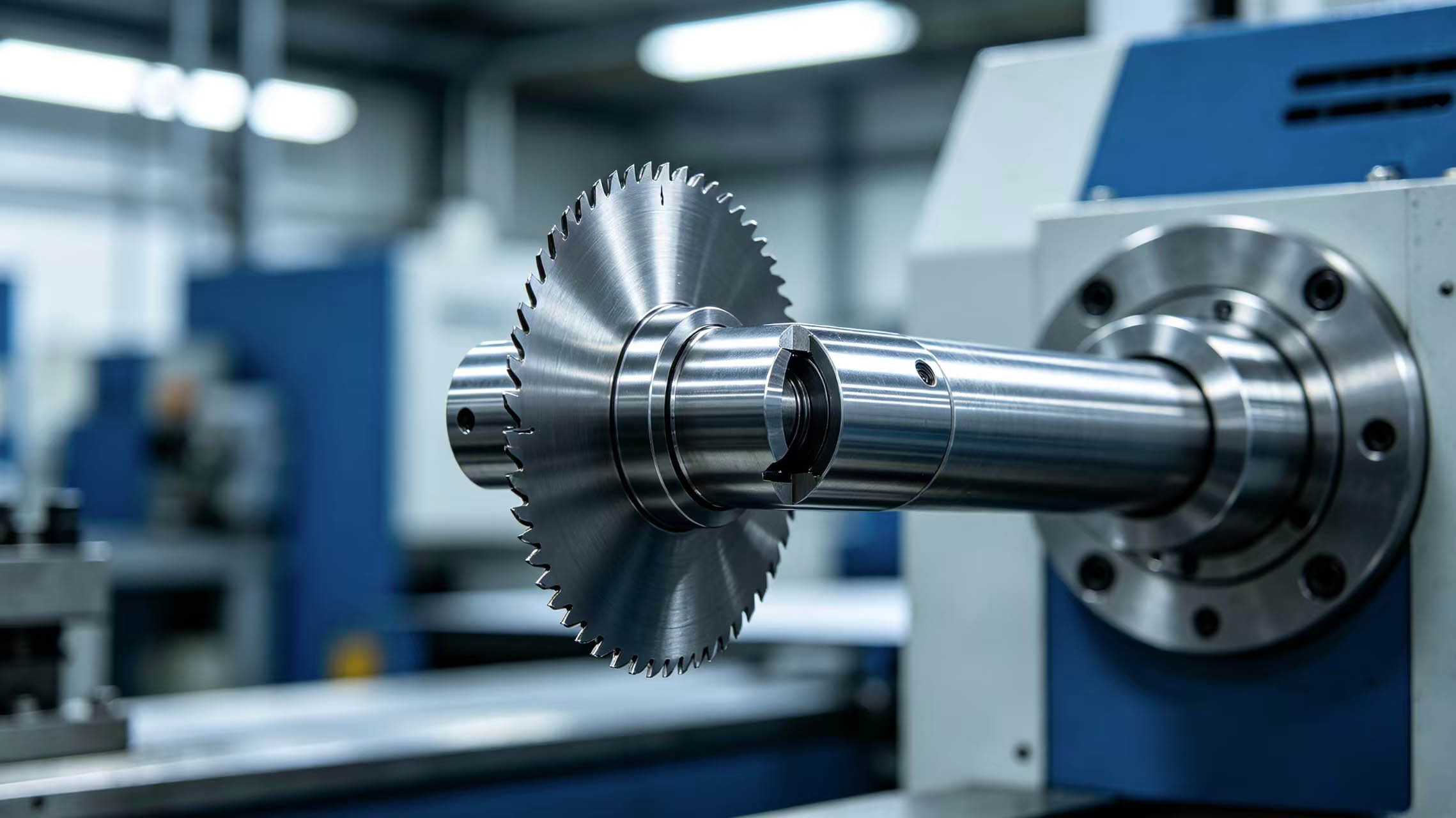
    In slitting production, circular blades transmit torque through the bore fit with the blade shaft. After long-term use, the bore wall gradually enlarges due to fretting wear and repeated mounting and dismounting. When bore wear exceeds 0.05mm, many users face a dilemma: repair with concerns about precision, or scrap with regret over waste. Mingbai Mechanical Tool Technology Co., Ltd. provides professional judgment criteria and repair solutions.   1. Three Degrees of Bore Wear     Light wear (<0.03mm): The bore size remains near the upper tolerance limit, and the blade shows no obvious play after installation. In this case, simply replacing the spacer or applying anti-loosening adhesive is sufficient; no repair is needed.   Moderate wear (0.03-0.05mm): The clearance between the bore and blade shaft has increased noticeably, and radial play can be felt after installation. During shearing, periodic burrs appear on the material edge, and width fluctuations increase. At this point, the repair value needs to be assessed.   Severe wear (>0.05mm): The bore has become significantly out-of-round or flared. After installation, the blade is severely eccentric, causing violent vibration during shearing and obvious wavy edges on the product. Repair is difficult at this stage and requires careful decision-making.   2. Repair or Scrap? Five Judgment Dimensions   1. Residual blade value   If heavy-duty circular blades for high-speed slitting still have more than 3 resharpening allowances left, and the blade has high original value (e.g., carbide or powder metallurgy high-speed steel wear-resistant carbide circular blades), repair is worthwhile. If the edge is near the end of its life, scrapping is more economical.   2. Equipment precision requirements   Ordinary slitting lines (with precision tolerance of ±0.1mm) have higher tolerance for repaired bore precision. High-precision circular blades for precision strip slitting have stringent concentricity requirements and must be strictly inspected after repair.   3. Wear pattern   Uniform enlargement (wear amount similar across all areas) → repairable. One-sided wear or flaring → repair is difficult and requires evaluation. Cracks or chipping at the bore edge → scrap immediately.   4. Blade type   For coated alloy blades, care must be taken not to damage the coating during bore repair; professional factory repair is recommended. For custom blades, repair is often the better choice due to lack of off-the-shelf replacements.   5. Repair cost   Repair cost is typically 15%-30% of a new blade. If the repaired blade can achieve over 70% of new blade life, repair is cost-effective.   3. Three Repair Methods   1. Bore brush plating (chrome/nickel plating)   Electrodeposit a layer of metal on the worn bore surface to restore dimensions. Advantages: no change to the blade substrate, low temperature, no deformation. Disadvantages: limited coating hardness, not suitable for heavy-load conditions. Suitable for mechanical blades for medium-load slitting.     2. Bore sleeve insertion   Enlarge the original bore by 0.5-1mm, press in a heat-treated inner sleeve, and finish-machine the new bore to original dimensions. Advantages: restores original fit precision, long life. Disadvantages: higher cost, requires professional equipment. Suitable for heavy-duty alloy blades.     3. Bore overlay welding + re-machining   Use special welding rods to build up the bore wall, then re-bore to original dimensions. Advantages: metallurgical bonding of the repair layer with the substrate. Disadvantages: significant heat-affected zone, may cause deformation. Suitable for circular blades for thick plate slitting.   4. Three Situations Requiring Scrapping   · Cracks at the bore edge (even if very small) · The blade has been resharpened more than 5 times, and the remaining effective thickness is insufficient · Severe bore out-of-roundness (ellipticity >0.03mm) and concentricity error >0.03mm   5. Verification Standards After Repair     A repaired precision mechanical blade must pass the following inspections before installation:   · Bore size restored to original tolerance (H7 or H6) · Bore roundness ≤ 0.003mm · Bore-to-end-face perpendicularity ≤ 0.005mm · Radial runout after shaft mounting ≤ 0.008mm   6. Mingbai Technology's Repair Services   Mingbai Mechanical Tool Technology Co., Ltd. offers circular blade bore wear repair services:   · Bore brush plating (controllable coating thickness, restoring to original dimensions) · Bore sleeve insertion (professional press-fit, interference fit) · Post-repair CMM inspection with precision report · Quality guarantee: 100% pass rate for assembly after repair, otherwise free rework     Conclusion   When circular blade bore wear exceeds 0.05mm, whether to repair depends on residual blade value, equipment precision requirements, wear pattern, and repair cost. Light wear requires no treatment, moderate wear can be repaired, and severe wear or cracks should be decisively scrapped. Mingbai Technology is ready to help you extend blade life and reduce tooling costs with professional repair techniques and inspection capabilities. Website: www.mingbaiblade.com
Leave A Message
If you are interested in our products and want to know more details,please leave a message here,we will reply you as soon as we can.
submit

leave a message

leave a message
If you are interested in our products and want to know more details,please leave a message here,we will reply you as soon as we can.
submit

home

products

WhatsApp

Contact Us