 en
en Our factory has served countless products across various industries for 30 years, making a significant contribution to the cutting industry. Let us customize the cutting tools you need!
Mabu - CEO RisingBamboo

 Email: Mb@mingbaiblade.com
 Tel.: +86-13855519988



When customizing blades, many users face a classic choice: should they choose solid carbide blades made entirely of carbide, or carbide-tipped blades with a steel body and carbide only at the cutting edge? The price difference is obvious, but how significant is the performance gap? Mingbai Mechanical Tool Technology Co., Ltd., based on years of customization experience, provides a detailed analysis of the advantages and disadvantages of both structures to help you make the most cost-effective decision.
1. The Fundamental Difference Between the Two Structures
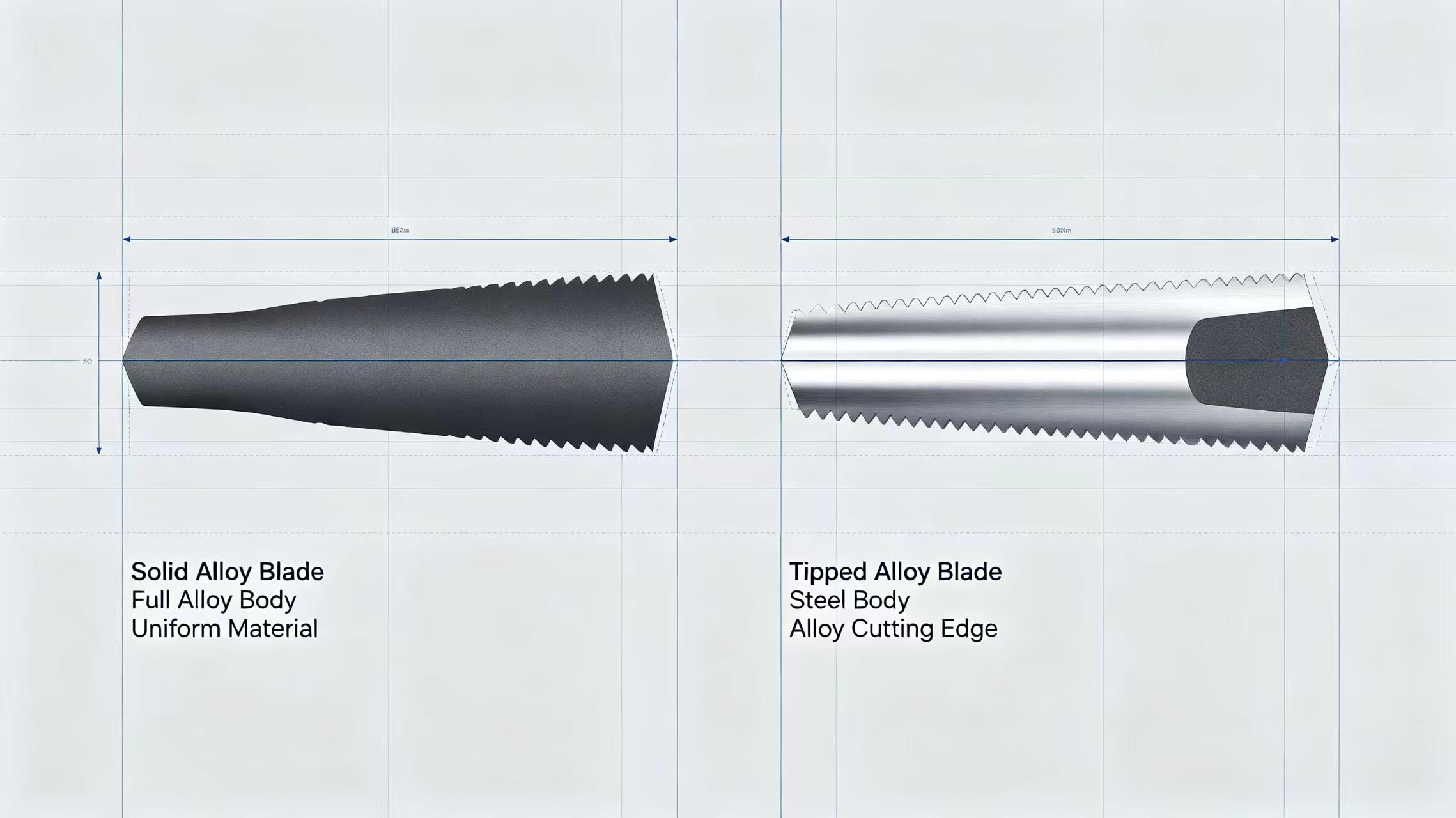
Solid carbide blades: The entire blade, from edge to body, is made of carbide. The material is uniform, with high hardness and excellent wear resistance.
Carbide-tipped blades: The blade body is made of ordinary steel (such as 40CrMo), with a carbide cutting edge brazed or hot-rolled onto the body. Carbide is only used where it is most needed — at the cutting edge.
The most core difference between the two is: solid carbide is "fully armed," while carbide-tipped is "good steel used on the edge."
2. Advantages and Limitations of Solid Carbide Blades
Advantages:
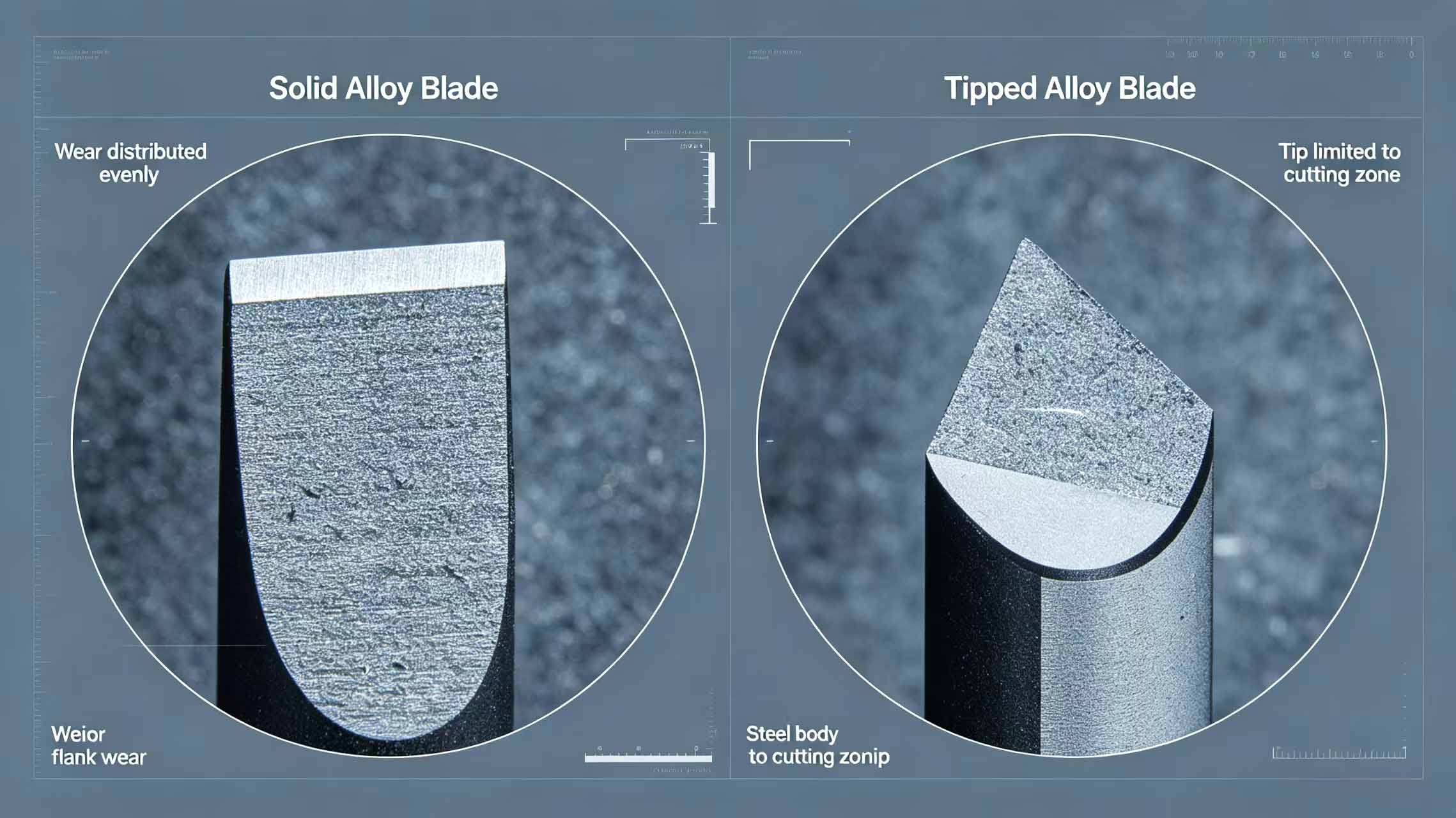
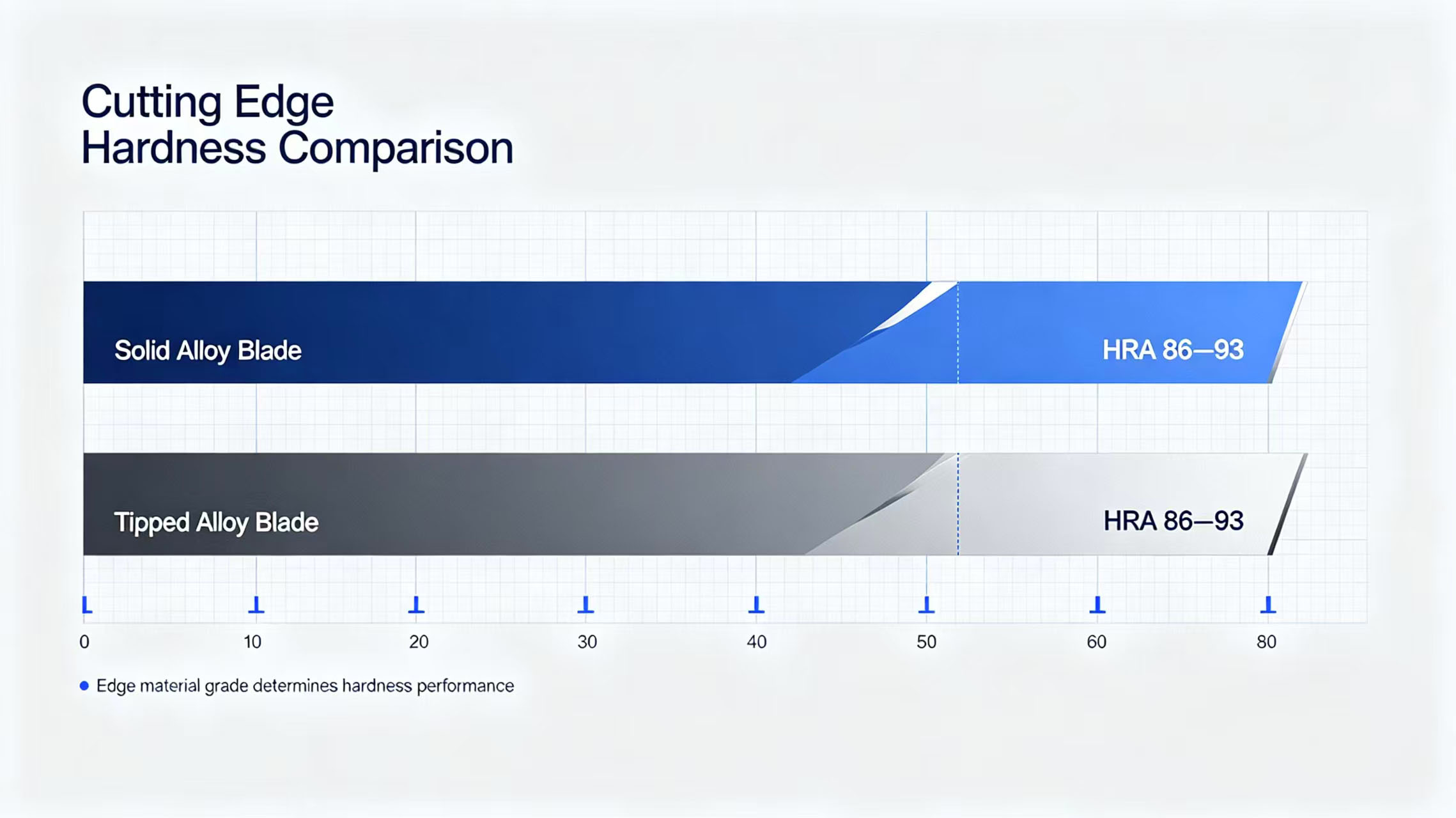
· Leading hardness and wear resistance: Solid carbide blades for continuous slitting can achieve hardness of HRA86-93, far surpassing carbide-tipped blades in wear resistance. Solid carbide end mills comprehensively outperform high-speed steel counterparts, maintaining edge sharpness for longer periods. Solid CBN blades offer good wear resistance and impact resistance.
· High precision and rigidity: The integral structure has no brazed interface, providing excellent rigidity and dynamic balance. Solid carbide tools are more rigid, precise, and durable than carbide-tipped tools.
· Good resharpening capability: Solid carbide blades can be resharpened multiple times, with minimal performance degradation after each regrind.
Limitations:
· Higher procurement cost: The entire blade is made of carbide material, with material costs far exceeding carbide-tipped structures. Carbide materials are expensive and difficult to machine.
· Relatively lower toughness: Solid carbide is brittle. Under unstable working conditions or when encountering hard spots in the material, there is a risk of cracking or complete fracture. Solid carbide tools have poorer toughness than high-speed steel tools and are more prone to fracture.
3. Advantages and Limitations of Carbide-Tipped Blades
Advantages:
· Lower overall cost: Carbide-tipped tools use tungsten carbide blades + 40CrMo bodies, making them cheaper than solid carbide tools. By using carbide only for the cutting portion, the consumption of expensive carbide material is significantly reduced, and the tool price is substantially lowered. Carbide-tipped blades for impact conditions are generally more cost-effective than solid carbide tools.
· Better toughness and impact resistance: The steel body provides good toughness and impact absorption. Compared to solid carbide blades, the high-speed steel body offers higher toughness and is less prone to fracture. Even if the carbide edge cracks, the crack stops at the steel body, preventing total blade failure.
· Comparable edge performance: The cutting edge of carbide-tipped blades uses the same carbide material as solid carbide blades, with essentially identical hardness and wear resistance.
Limitations:
· Limited edge length: Since only the edge portion is carbide, the number of resharpening cycles is fewer than for solid carbide blades.
· Brazing process risks: The two materials have different thermal expansion coefficients, which may create stress during brazing. If the process is not properly controlled, there is a risk of edge detachment. Carbide-tipped blades rely on physical bonding, which is not as strong as integral carbide.
4. How to Choose? Five Decision Dimensions
1. Working conditions — impact or stable?
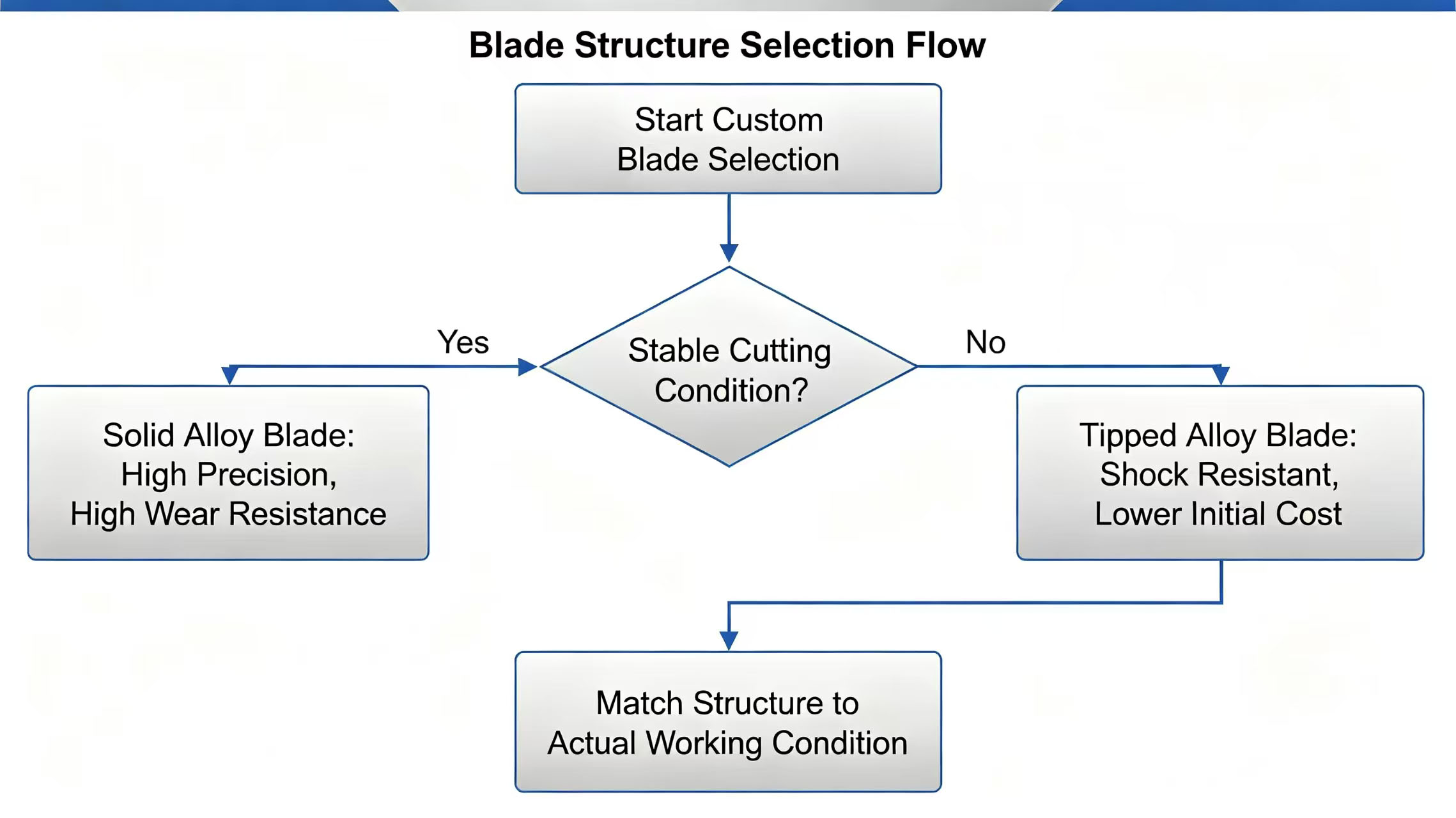
Impact conditions (material joints, large thickness fluctuations, poor equipment rigidity) → prioritize carbide-tipped blades; the steel body absorbs impact. Stable, continuous cutting → prioritize solid carbide blades for precision slitting to leverage wear resistance advantages.
2. Precision requirements
High-precision slitting, thin material slitting → solid carbide blades offer better rigidity and higher precision. Conventional precision requirements → carbide-tipped blades are fully adequate.
3. Resharpening and life requirements
Multiple resharpening cycles, pursuing extreme single-use life → solid carbide tools for long life. Limited resharpening cycles, pursuing lowest overall cost → carbide-tipped tools for cost saving.
4. Operating environment
High temperature, high speed, dry cutting → solid carbide blades have better red hardness. Room temperature, with cooling lubrication → both are suitable; carbide-tipped offers better cost-performance.
5. Procurement budget
Sufficient budget, pursuing long-term overall benefits → solid carbide blades. Limited budget, pursuing current cost control → carbide-tipped blades.
5. Mingbai Technology's Customization Recommendations
Mingbai Mechanical Tool Technology Co., Ltd. offers customization services for both structures:
· Solid carbide blades: Suitable for high-precision, high-speed, high-wear-resistance continuous slitting applications.
· Carbide-tipped blades: Suitable for impact conditions, thick materials, and poor equipment rigidity, with lower overall costs.
Our technical team can provide free material and structure selection recommendations based on your specific working conditions, ensuring every dollar is well spent.
6. Case Comparison
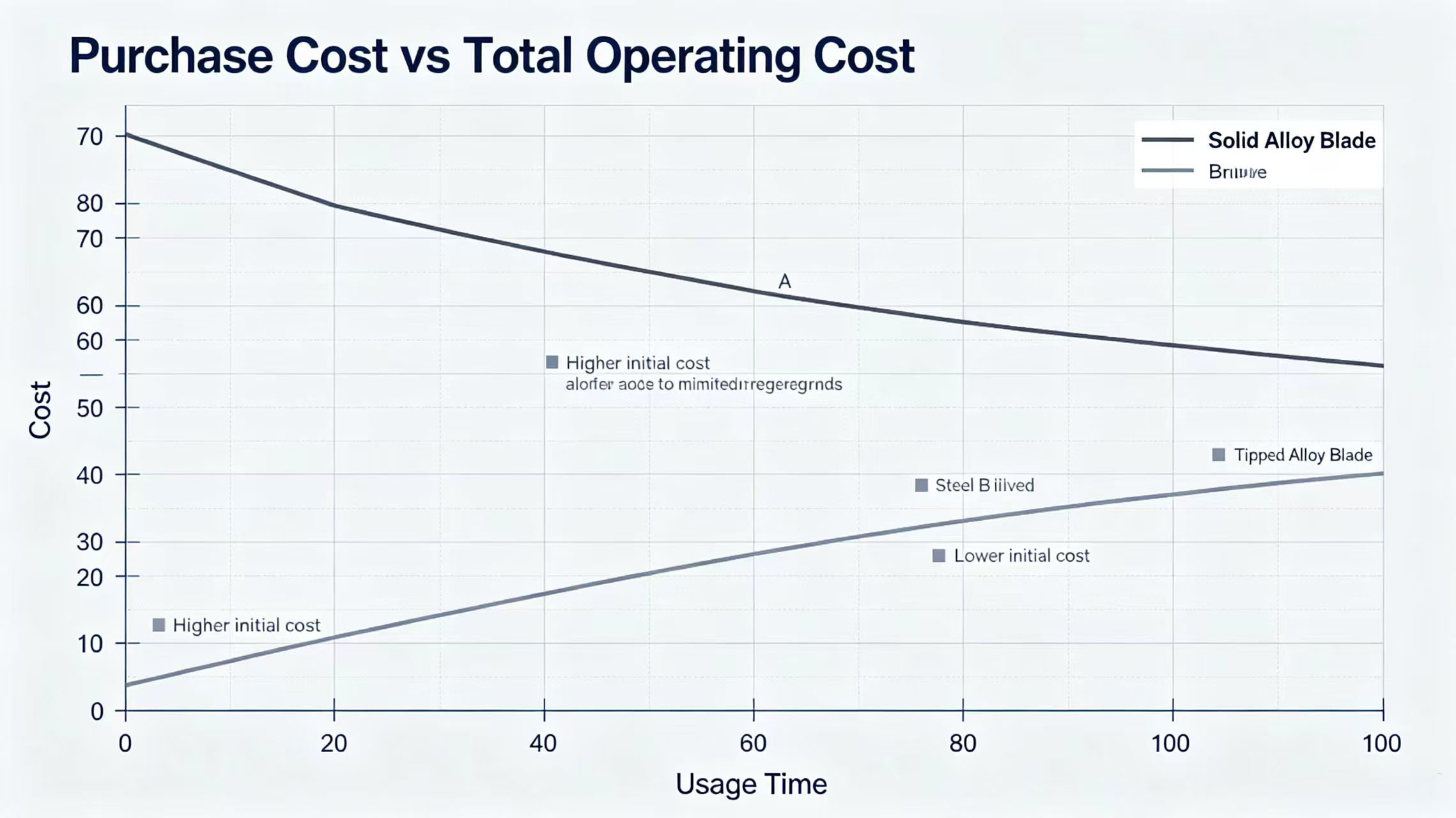
A precision strip slitting plant tested both solid carbide and carbide-tipped blades under the same conditions. The solid carbide blade lasted 14 days, while the carbide-tipped blade lasted 6 days — a life difference of 2.3 times. However, the carbide-tipped blade cost only 40% of the solid carbide blade. When factoring in downtime and resharpening costs, the carbide-tipped blade's total cost of use was 15% lower over a 3-month period, making it the more economical choice for that specific application.
Conclusion
There is no absolute "better" between solid carbide and carbide-tipped blades — only "suitable" and "not suitable." Solid carbide wins on performance ceiling, while carbide-tipped wins on overall cost. Choose the right structure, and you can achieve both long life and cost-effectiveness. Mingbai Technology is ready to help you make the optimal choice with professional customization capabilities.
FAQ :
Q1: How much more expensive are solid carbide blades compared to carbide-tipped blades?
A: Solid carbide blades typically cost 2-4 times more than carbide-tipped blades. However, because solid carbide blades can be resharpened more times and have longer single-use life, the total cost of use gap narrows. The actual difference depends on working conditions and resharpening frequency.
Q2: Can the carbide edge of carbide-tipped blades detach?
A: High-quality carbide-tipped blades use professional brazing processes with reliable bond strength, and detachment does not occur under normal use. However, if the welding process is poor or excessive impact is applied, detachment may occur. It is recommended to choose a manufacturer with quality assurance.
Q3: Can solid carbide blades be repaired if chipped?
A: If the chip is small, it can be repaired through resharpening. However, if the chip is large or the blade is completely fractured, it cannot be repaired. Solid carbide is brittle and should be protected from severe impact during use.
Q4: With the same edge material, is cutting performance the same?
A: If the same carbide grade is used for the cutting edge, cutting performance is essentially the same. However, solid carbide blades perform better in high-precision slitting due to superior overall rigidity.
Q5: How do you determine which structure to choose when customizing blades?
A: Consider three factors: working conditions (impact or stable), precision requirements, and budget. Choose carbide-tipped for impact conditions and solid carbide for high-precision applications. If unsure, contact Mingbai technical staff for a free evaluation and professional selection recommendations.
Website: www.mingbaiblade.com
 IPv6 network supported |
Sitemap
|
Xml
|
Privacy Policy
IPv6 network supported |
Sitemap
|
Xml
|
Privacy Policy
leave a message
Scan to wechat :

Scan to whatsapp :
