 en
en Our factory has served countless products across various industries for 30 years, making a significant contribution to the cutting industry. Let us customize the cutting tools you need!
Mabu - CEO RisingBamboo
 Email: Mb@mingbaiblade.com
 Tel.: +86-13855519988



In lithium battery electrode slitting operations, frequent chipping of circular blades is a persistent problem troubling many production lines. Chipping not only leads to excessive burrs and severe powder shedding on the electrode edge but can also puncture the separator, causing battery short-circuit risks. Many users first adjust equipment parameters, but Mingbai Mechanical Tool Technology Co., Ltd. tells you: the root cause of frequent chipping often lies in the mismatch between blade material and working conditions. This article provides a systematic solution from the material perspective.
1. Root Causes of Chipping in Electrode Slitting
Lithium battery electrodes consist of aluminum foil/copper foil current collectors and positive/negative electrode coatings. The coatings are hard and brittle. During slitting, circular blades must simultaneously cut through the coating and the metal foil, presenting a dual challenge of edge hardness and toughness.
Main causes of chipping include:
Impact from hard coating particles: Positive electrode materials such as lithium iron phosphate have high hardness, creating micro-impacts on the edge during cutting.
Foil thickness fluctuations: Thickness deviations exceeding 3μm in the current collector cause uneven cutting forces.
Insufficient blade toughness: Carbide is hard but brittle, with weak impact resistance.
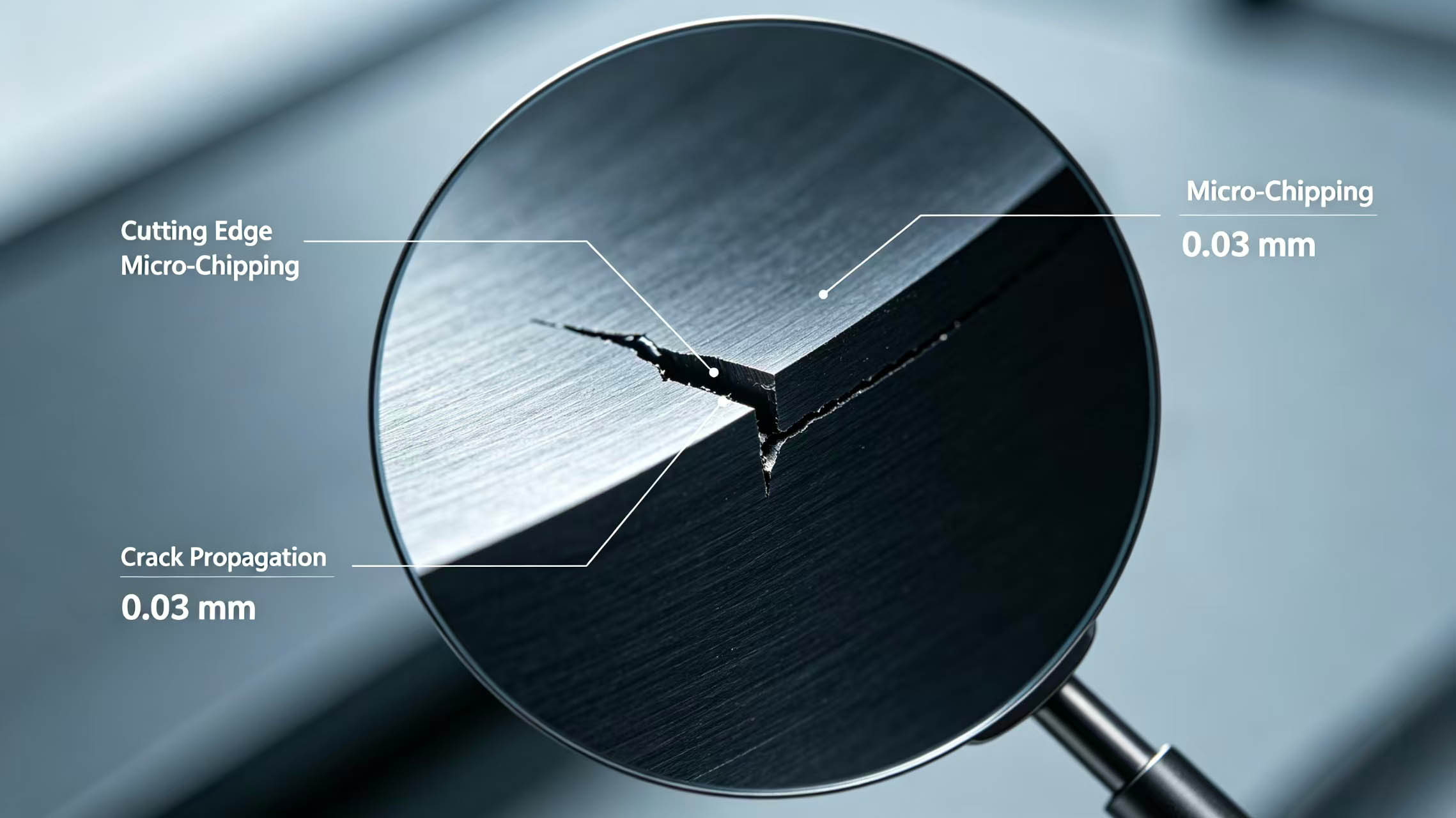
Edge micro-defects: Micro-cracks generated during grinding propagate under alternating stress.
2. Four Directions for Material Optimization
1. Select ultra-fine grain carbide substrate
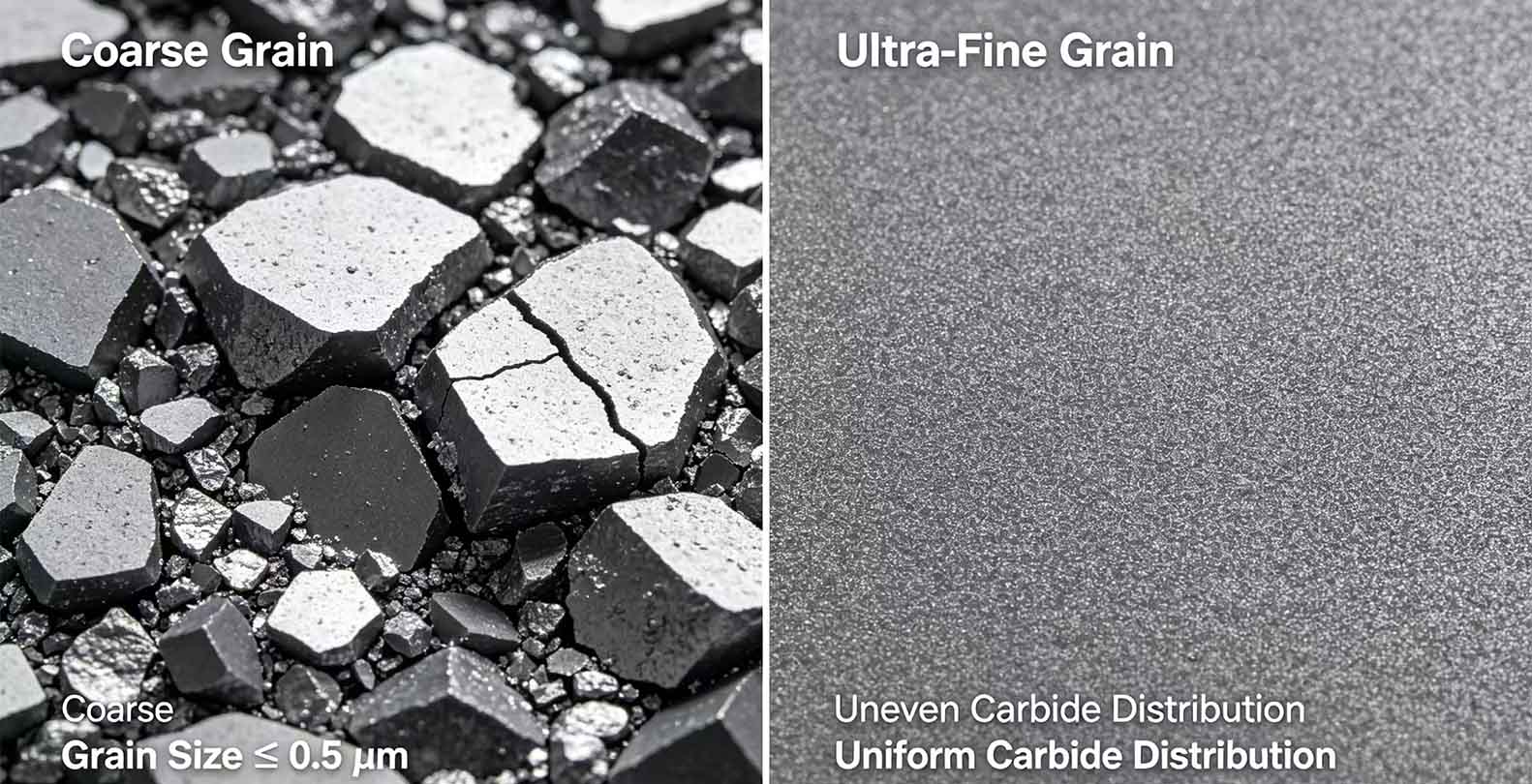
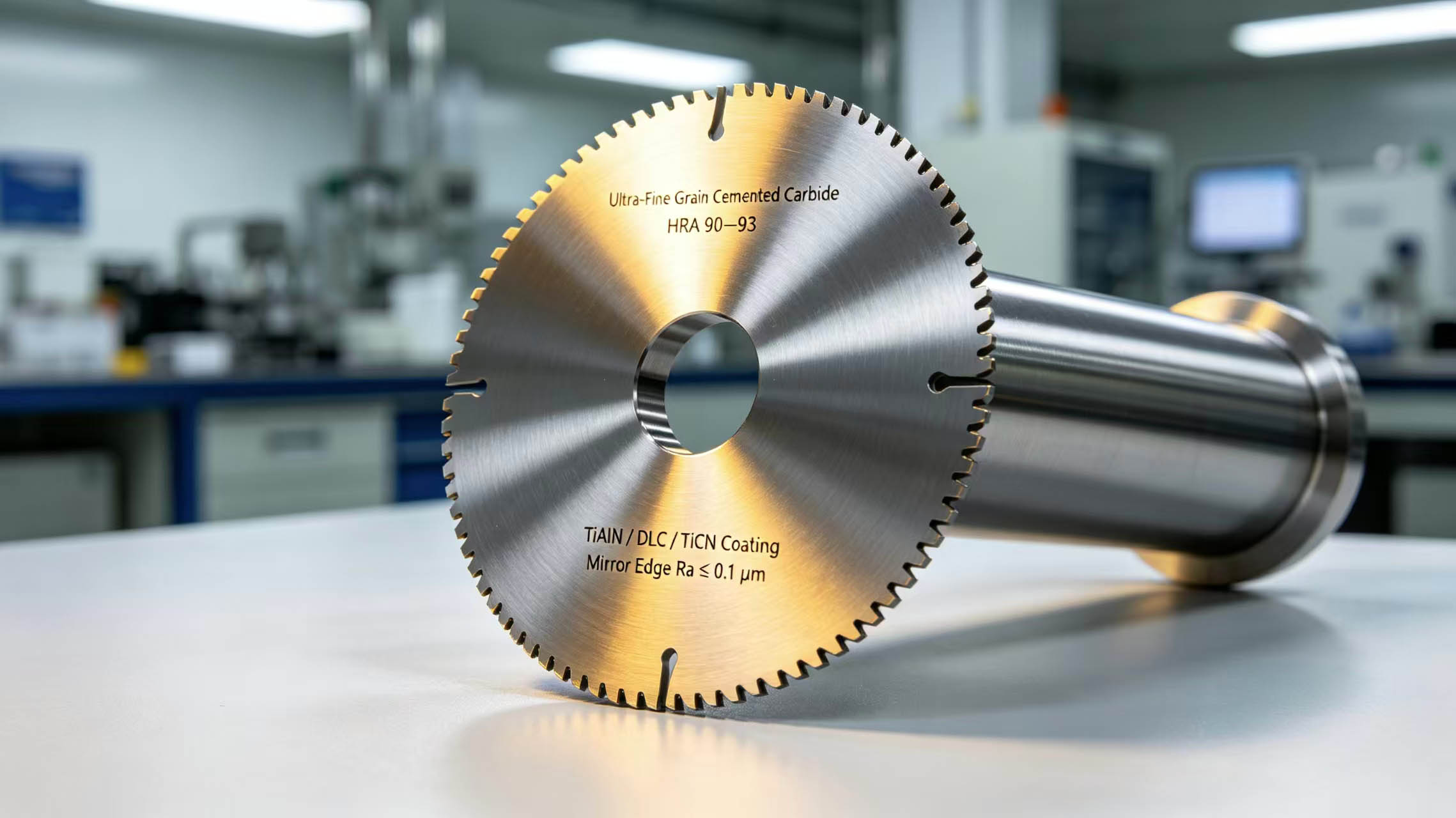
Traditional carbide has coarser grains, and carbide particles are prone to detachment under impact, forming the starting point for chipping. Ultra-fine grain carbide circular blades for lithium battery electrode slitting use tungsten carbide powder with grain size ≤ 0.5μm, achieving hardness of HRA90-93 (equivalent to HRC68-75). The fine grain structure ensures more uniform carbide distribution, significantly improving resistance to micro-chipping. The ultra-fine grain substrate can increase transverse rupture strength by 20%-30%, fundamentally reducing chipping occurrence.
2. Match different carbide grades
Different electrode materials have different hardness requirements for blades:
Copper foil anode (negative electrode): Good ductility, requires higher blade toughness — recommended YG10X (HRA90.5).
Aluminum foil cathode (positive electrode): High-hardness surface oxide layer — recommended YG12X (HRA91.5), which can extend life by 2.3 times compared to YG8 on aluminum foil.
Coated electrodes: Coating materials are hard and brittle, requiring higher hardness blades with sharp edges.
3. Apply PVD coatings to enhance edge impact resistance
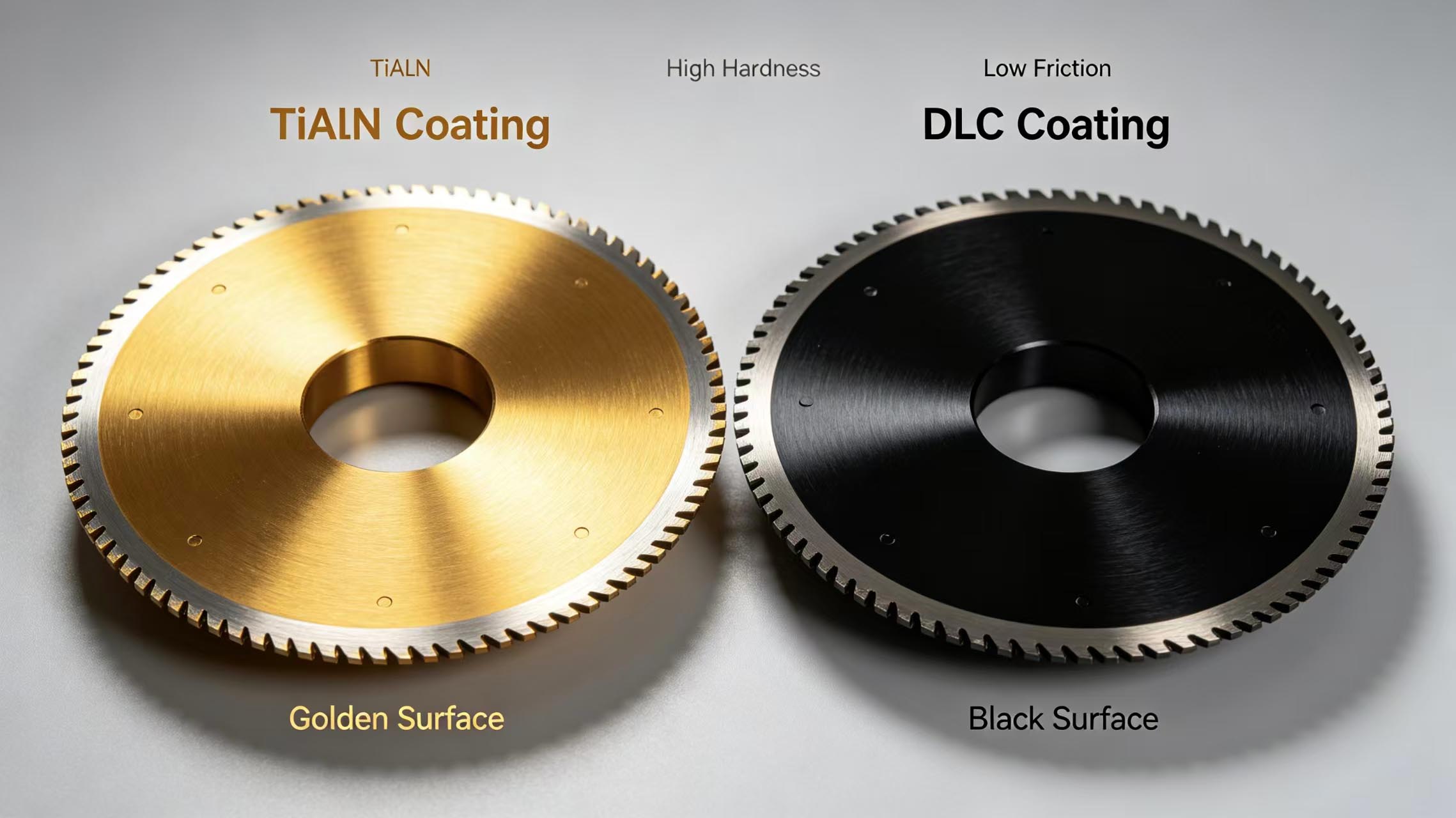
Coatings not only improve wear resistance but also reduce friction coefficient and reduce chipping caused by adhesion. High-hardness wear-resistant coated circular blades are highly effective in lithium battery slitting:
TiAlN coating: Reduces burr height by 35%-42% on copper foil electrodes.
DLC coating: Reduces burrs by 50%-58% on aluminum foil electrodes, with a friction coefficient as low as 0.1 (uncoated is 0.4).
TiCN coating: Reduces copper/aluminum adhesion by 40%.
4. Optimize edge geometry design
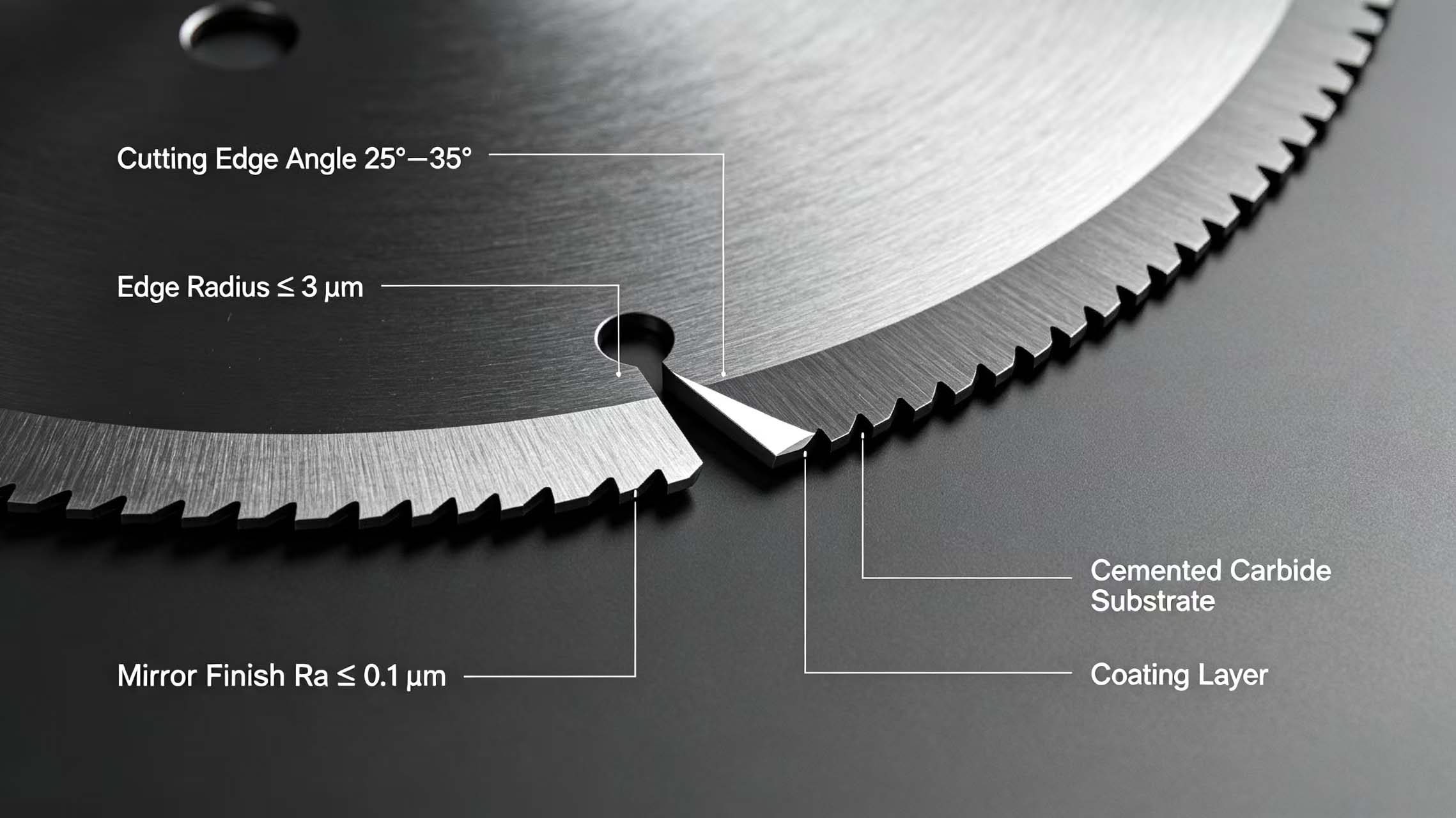
Edge angle directly affects chipping probability. High-precision electrode slitting circular blades are recommended with:
Edge angle 25°-35°, balancing sharpness and strength.
Edge radius controlled within 3μm, maintaining sharpness while avoiding micro-chipping.
Mirror finish grinding to Ra ≤ 0.1μm, with no chipping under 50-100x magnification.
3. Supporting Process Adjustment Recommendations
After material optimization, the following process adjustments are also recommended:
Blade gap: Controlled at 10%-20% of the total electrode thickness. Gap too large (>0.1mm) creates burrs; too small causes powder shedding.
Slitting speed: Controlled at 60-120 m/min. Excessive speed increases friction heat.
Regular inspection: Check the edge every 4 hours; if chipping >0.03mm, resharpening is needed.
4. Mingbai Technology's Electrode Slitting Blade Solutions
Mingbai Mechanical Tool Technology Co., Ltd. offers a dedicated blade series for lithium battery electrode slitting:
Ultra-fine grain carbide electrode slitting circular blades: Grain size ≤ 0.5μm, hardness HRA90-93.
Optional TiAlN/DLC/TiCN coatings, matching the optimal solution for positive/negative electrode materials.
Mirror finish edge grinding, no chipping under 50x magnification.
Material selection recommendations and on-site working condition diagnosis.
5. Case Comparison
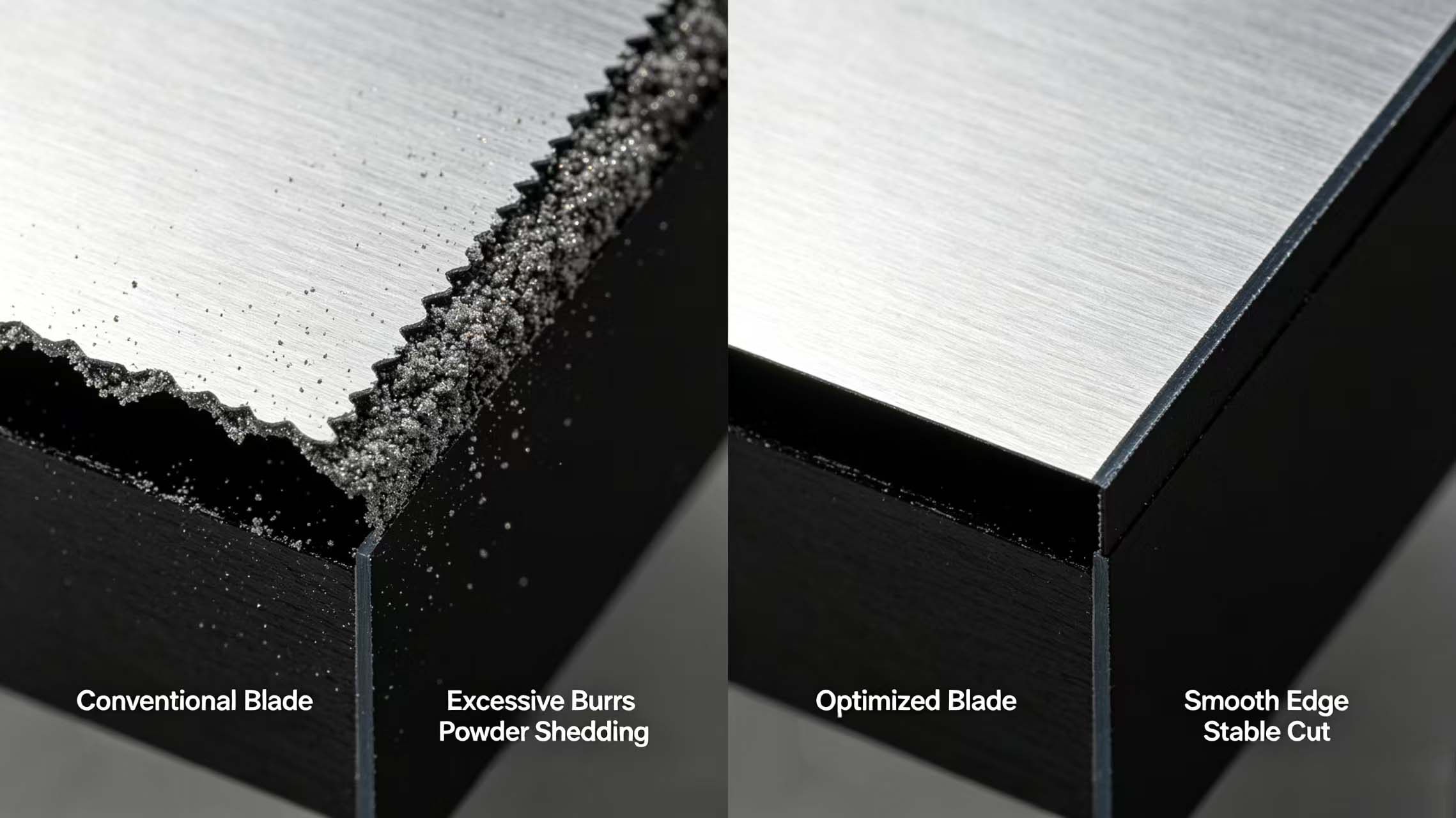
A lithium battery plant was slitting lithium iron phosphate positive electrode material. Ordinary carbide circular blades chipped every 2 hours, causing burrs to exceed tolerance. After switching to Mingbai Technology's ultra-fine grain carbide electrode slitting circular blades with TiAlN coating, the time between chipping events extended to 12 hours, blade life increased by 4 times, and electrode burrs were consistently controlled within 5μm.
Conclusion
Frequent chipping of circular blades in lithium battery electrode slitting often originates from the material. Systematic material upgrades — from ultra-fine grain carbide substrate, grade matching, PVD coatings, to edge geometry optimization — can significantly reduce chipping and extend blade life. Mingbai Technology is ready to help you overcome electrode slitting chipping challenges with professional material solutions.
Website: www.mingbaiblade.com
 IPv6 network supported |
Sitemap
|
Xml
|
Privacy Policy
IPv6 network supported |
Sitemap
|
Xml
|
Privacy Policy
leave a message
Scan to wechat :

Scan to whatsapp :
