Food-Grade Stainless Steel Plate Shearing: How to Prevent Blade Material Contamination of the Product Surface?
Aug 05, 2026
In the slitting and processing of food-grade stainless steel plates, contamination of the product surface by blade materials is a serious challenge faced by many manufacturers. Once a blade rusts or wears, tiny metal particles can detach and embed themselves into the plate surface, causing the product to fail food safety standards and even posing risks of heavy metal migration. Mingbai Mechanical Tool Technology Co., Ltd., based on food contact material standards and years of slitting experience, provides a systematic analysis of how to eliminate contamination risks from the blade side.
1. Where Does Contamination Come From? — Analysis of Three Contamination Sources
1. Rust and metal dust contamination
During shearing, ordinary carbon steel or low-alloy steel blades produce fine iron filings that adhere to the surface of stainless steel plates. In humid environments, these iron filings oxidize and rust, forming yellow-brown rust spots that are difficult to remove, directly compromising the food-grade appearance and corrosion resistance of the plates.
2. Heavy metal element migration contamination
According to GB 4806.9-2016 "National Food Safety Standard — Metal Materials and Products for Food Contact," metal materials that come into direct contact with food must not cause harm to human health. Harmful elements such as lead, cadmium, and arsenic that may be present in ordinary blades can migrate to the product surface when in contact with food or humid environments.
3. Cross-contact contamination
After blades come into contact with carbon steel tools, workbenches, or other non-food-grade materials, their surfaces may become contaminated with iron ions or pollutants, which are then transferred to the stainless steel plates.
2. How to Eliminate Contamination from the Blade Side? — Five Core Measures
1. Select compliant food-grade blade materials
For food-grade stainless steel blade, blade materials must comply with GB 4806.9-2016. According to FDA regulations, the chromium content of food contact-grade stainless steel must be at least 16%.
Mingbai Technology recommends the following material options:
· Martensitic stainless steel (420, 440C): High hardness (HRC52-58), good edge retention, suitable for long-term shearing operations. According to GB 4806.9-2016, martensitic stainless steel materials can be used for the main body of stainless steel tableware and drilling and grinding tools of food production machinery.
· Austenitic stainless steel (304, 316): Excellent corrosion resistance, suitable for humid or acidic environments. Among them, 316 contains molybdenum, providing stronger resistance to chloride ion corrosion.
· Food-grade carbide: For high-hardness or impurity-containing stainless steel plates, ultra-fine grain carbide that meets food contact requirements can be used, combining wear resistance with safety.
2. Strictly control edge surface finish
Surface roughness directly affects the ability of contaminants to adhere and the difficulty of cleaning. The surface roughness Ra value of food contact surfaces should be less than 0.8μm. For high-hygiene applications, it is recommended to polish the edge to Ra ≤ 0.1-0.4μm, which significantly reduces adhesion and bacterial growth.
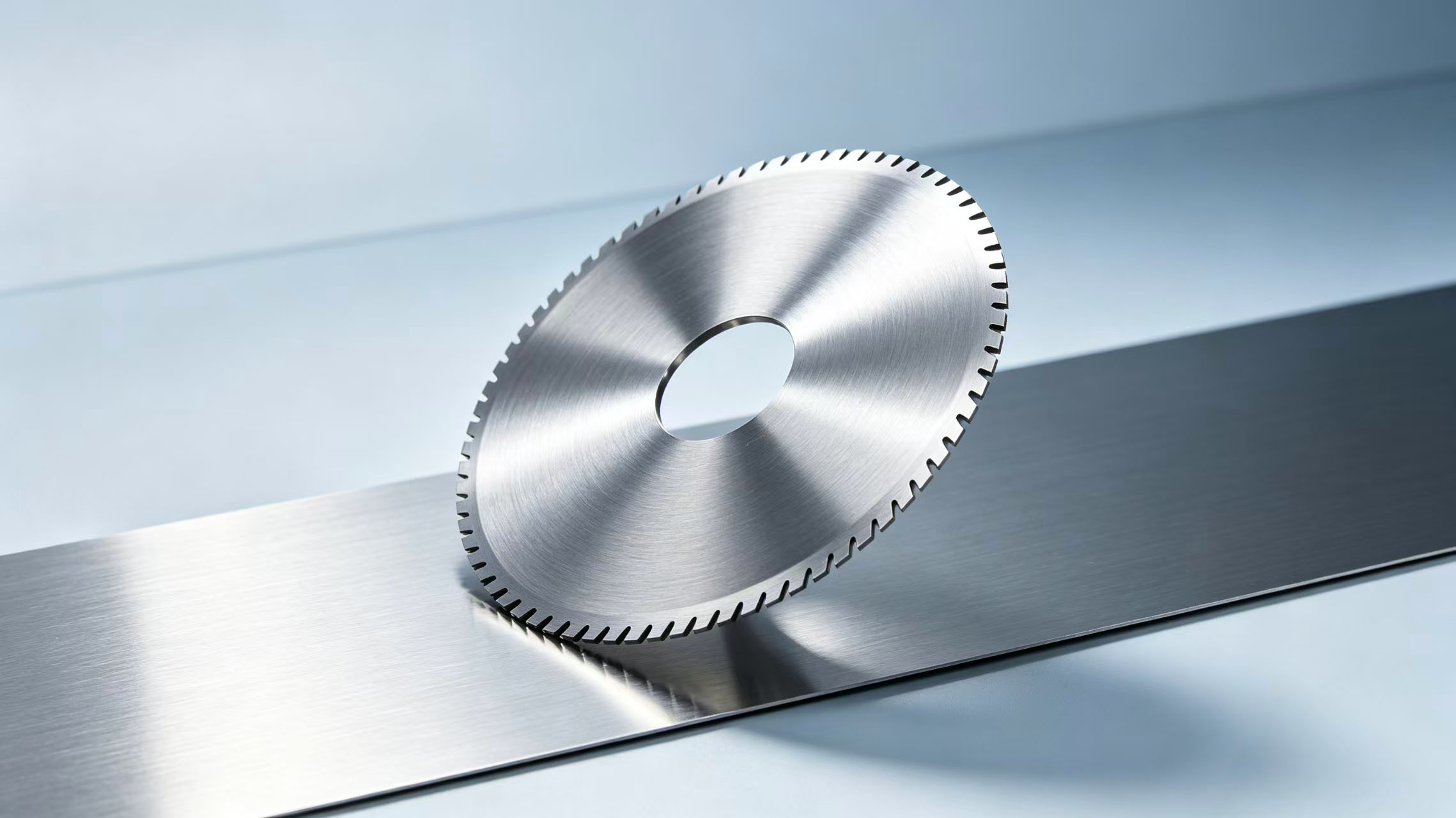
Mirror-polished food-grade stainless steel slitting blades from Mingbai Technology can achieve edge Ra values as low as 0.05μm, physically preventing contaminant adhesion.
3. Establish strict blade handling procedures
· Wear non-abrasive gloves: Food-grade blades must be handled with non-abrasive gloves (leather, Kevlar, or nitrile) to prevent sweat stains and oils from contaminating the blade surface.
· Use dedicated handling tools: Use plastic, wooden, or stainless steel lifting tools when moving blades. Carbon steel tools must not come into contact with blades.
· Dedicated blades for dedicated use: Food-grade blades must not be mixed with non-food-grade blades. Color-coded management is recommended to distinguish purposes.
4. Scientific blade storage management
· Dedicated blade racks: Use racks made of wood, plastic, or stainless steel, with each blade stored separately to avoid scratching from mutual contact.
· Dust protection covers: Use blade covers during storage to prevent dust and foreign matter from adhering.
· Environmental control: Storage area humidity should be controlled at 40%-60% to avoid rusting in humid environments.
5. Coating-assisted protection
For special working conditions, blades with food-grade coatings can be selected:
· DLC coating: Friction coefficient as low as 0.1, excellent anti-adhesion performance
· TiAlN coating: Heat-resistant up to 800°C, suitable for high-speed slitting
Coatings not only reduce friction heat but also form a physical barrier between the blade substrate and the plate, further reducing the risk of metal migration.
3. Mingbai Technology's Food-Grade Slitting Blade Solutions
Mingbai Mechanical Tool Technology Co., Ltd. offers a dedicated blade series for food-grade stainless steel plate slitting:
· Food-grade stainless steel slitting dedicated blades: Made of 420/440C or 304/316 materials, compliant with GB 4806.9-2016
· Mirror-polished edge, Ra ≤ 0.05μm
· Optional DLC/TiAlN food-grade coatings
· Each batch of blades comes with material test reports and food contact safety declarations
· On-site contamination risk assessment services
Conclusion
Contamination prevention in food-grade stainless steel plate shearing is a comprehensive battle from blade materials to operating procedures. Choosing the right blade material, controlling surface finish, standardizing handling and storage, and selecting appropriate coatings — every step is critical to the final product's food safety compliance. Mingbai Technology is ready to help you safeguard the first line of food safety with professional food-grade slitting blade solutions.
FAQ Module:
Q1: Can ordinary alloy blades be used for food-grade stainless steel plate shearing?
A: Not recommended. Ordinary alloy blades may contain harmful elements such as lead and cadmium, and have insufficient corrosion resistance, making them prone to rusting and producing iron filings contamination. Blades must be made of food-grade stainless steel or carbide that complies with GB 4806.9-2016.
Q2: What surface finish is required for food-grade blades?
A: The surface roughness Ra value of food contact surfaces should be less than 0.8μm. For high-hygiene food-grade stainless steel plate slitting, it is recommended to polish the edge to Ra ≤ 0.1-0.4μm. Mingbai Technology can provide mirror-grade edges with Ra ≤ 0.05μm.
Q3: Can a rusted blade continue to be used for food-grade plate shearing?
A: No. Rusted blades produce rust dust that contaminates the plate surface, and rusted areas easily harbor bacteria. Once rust spots are found, the blade should be immediately taken out of service and professionally derusted or replaced.
Q4: What is the difference between food-grade stainless steel plates and ordinary stainless steel plates regarding blade requirements?
A: Food-grade stainless steel plates have extremely high surface quality requirements. Any iron filing contamination, scratches, or rust spots can render the product non-compliant.Therefore, blades must be made of food-grade materials with excellent corrosion resistance, and edge finish must be much higher than ordinary slitting requirements.
Q5: Are coated blades safe for food-grade applications?
A: As long as the coating material complies with food contact standards (e.g., GB 4806.10), they are safe. Coatings such as DLC and TiAlN are widely used in food processing. They not only reduce friction and adhesion but also form a physical barrier between the blade substrate and the plate, further reducing the risk of metal migration. All coated blades from Mingbai Technology comply with relevant food safety standards.
Website: www.mingbaiblade.com

 Email: Mb@mingbaiblade.com
 Tel.: +86-13855519988


 IPv6 network supported |
Sitemap
|
Xml
|
Privacy Policy
IPv6 network supported |
Sitemap
|
Xml
|
Privacy Policy


 en
en