 en
en Our factory has served countless products across various industries for 30 years, making a significant contribution to the cutting industry. Let us customize the cutting tools you need!
Mabu - CEO RisingBamboo

 Email: Mb@mingbaiblade.com
 Tel.: +86-13855519988



In slitting production, alloy blades often need regrinding due to chipping. Many users ask: after chipping, how many times can an alloy blade be reground? Will too many regrinds ruin it? Mingbai Mechanical Tool Technology Co., Ltd., based on materials science and resharpening experience, provides clear answers and judgment standards.
1. The Nature of Chipping
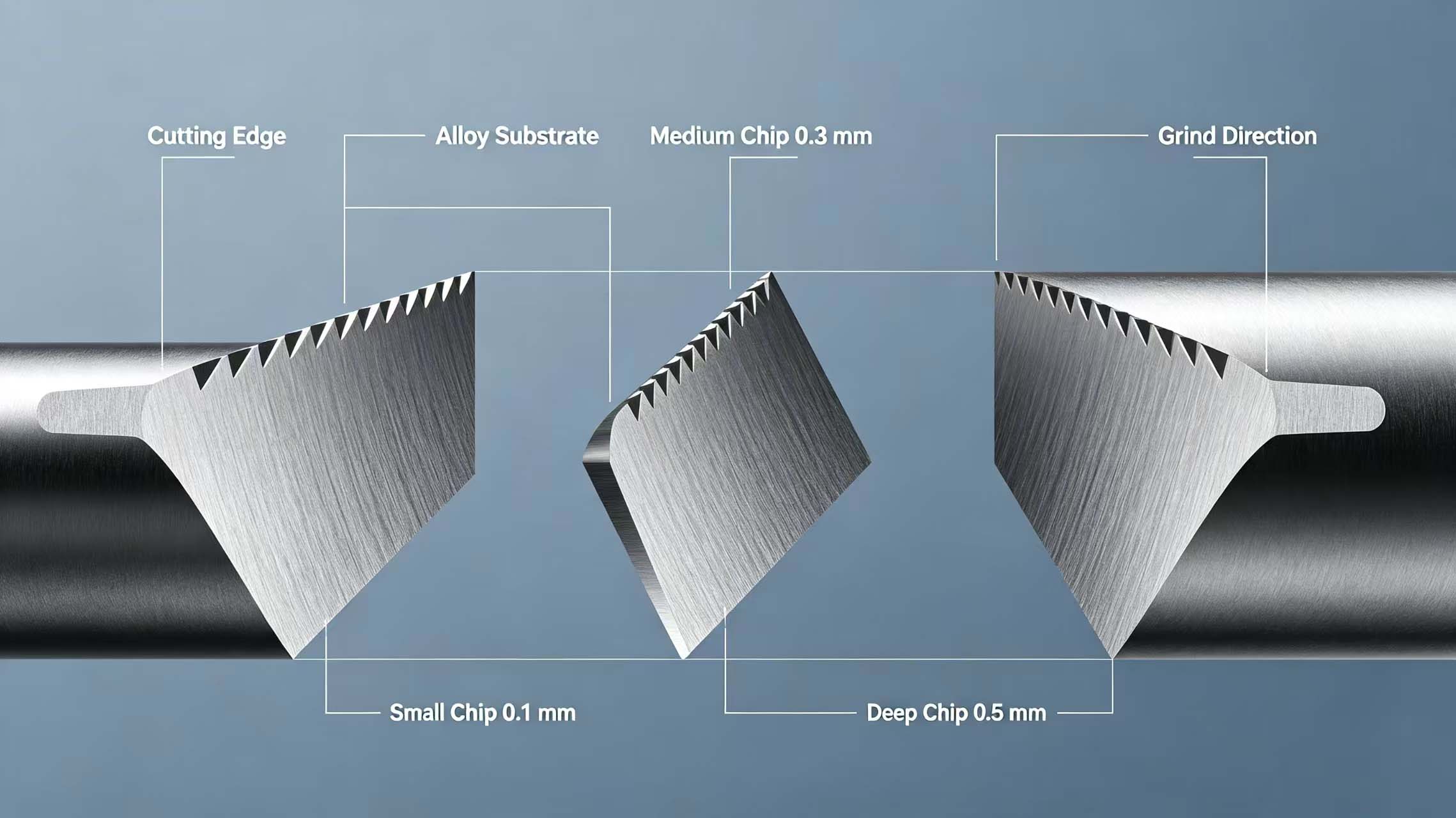
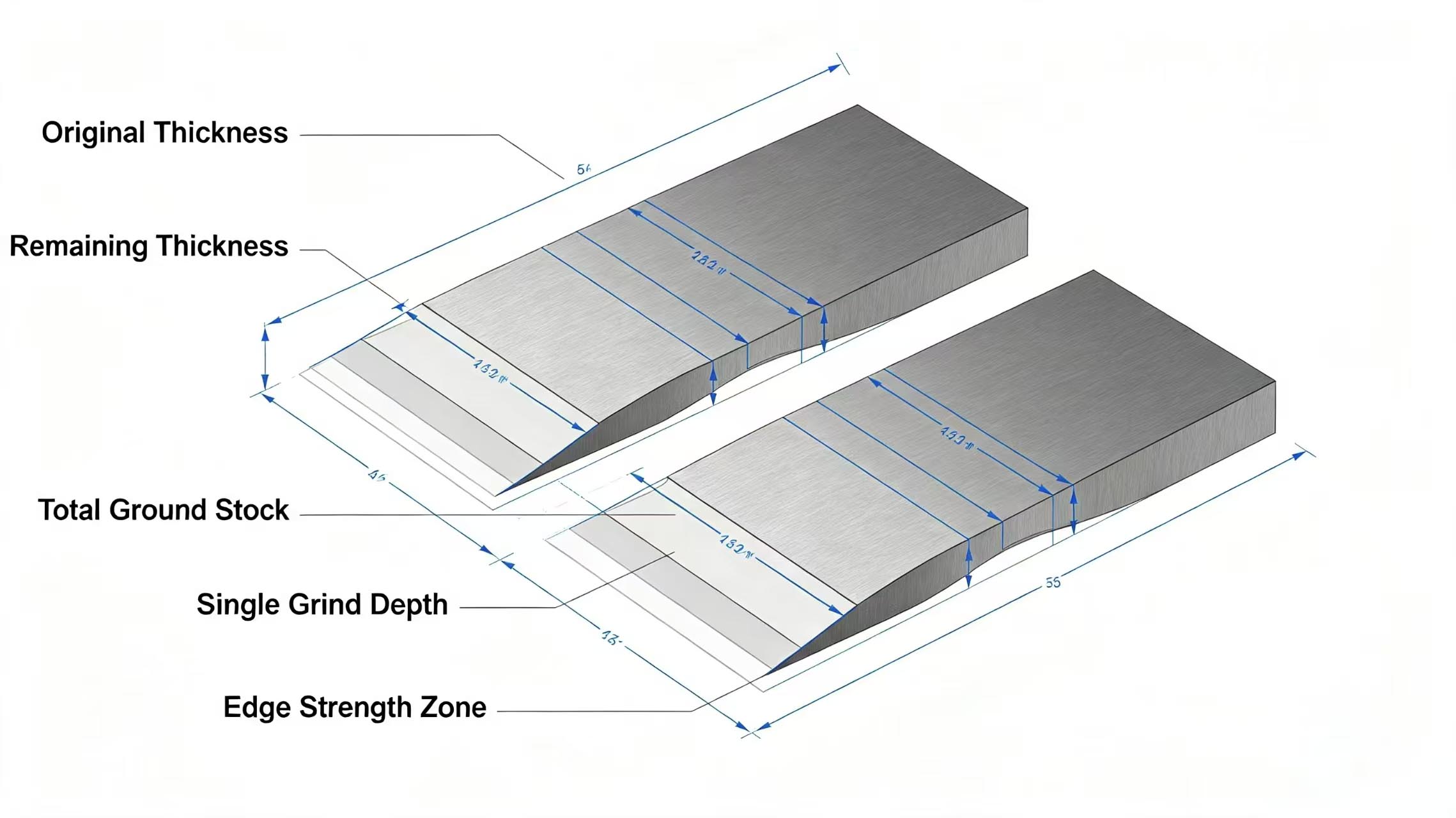
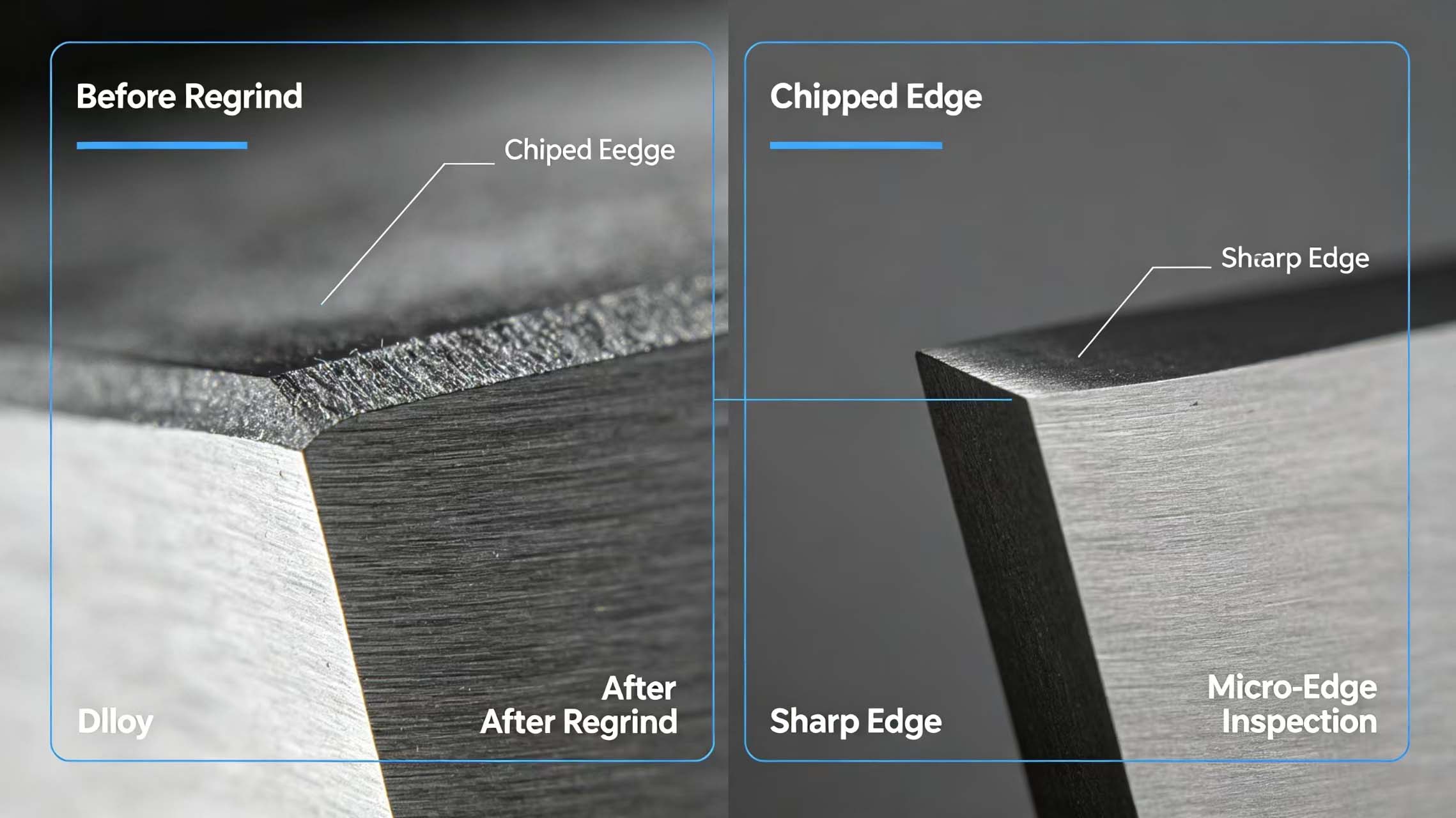
Chipping refers to small pieces of material breaking off from the cutting edge due to impact or fatigue, with depths ranging from 0.05mm to several millimeters. The purpose of regrinding is to remove the chipped layer and re-form a complete edge geometry. However, each regrinding consumes blade thickness. When the remaining thickness is insufficient to support normal cutting, the blade reaches the end of its life.
2. Four Factors Affecting the Number of Regrinds
1. Original blade thickness
Thicker blades can withstand more regrinds. For example, a carbide blade with 5mm thickness has several times more regrinding potential than a 2mm blade.
2. Chipping depth
Deeper chips require more material removal per regrind, resulting in fewer total regrinds. A 0.1mm chip can be removed with minimal grinding; a 1mm chip may require a significant amount of material removal in a single pass.
3. Grinding method
CNC grinding machines can precisely control each regrind removal amount (0.05-0.1mm), maximizing blade life. Manual grinding with a hand grinder is difficult to control and often results in excessive material removal.
4. Blade material
Different alloy blade materials have varying tolerance to grinding. Carbide blades for stainless steel strip slitting require more careful grinding due to their high hardness to avoid thermal cracks.
3. Reference Regrinding Counts for Different Blade Thicknesses
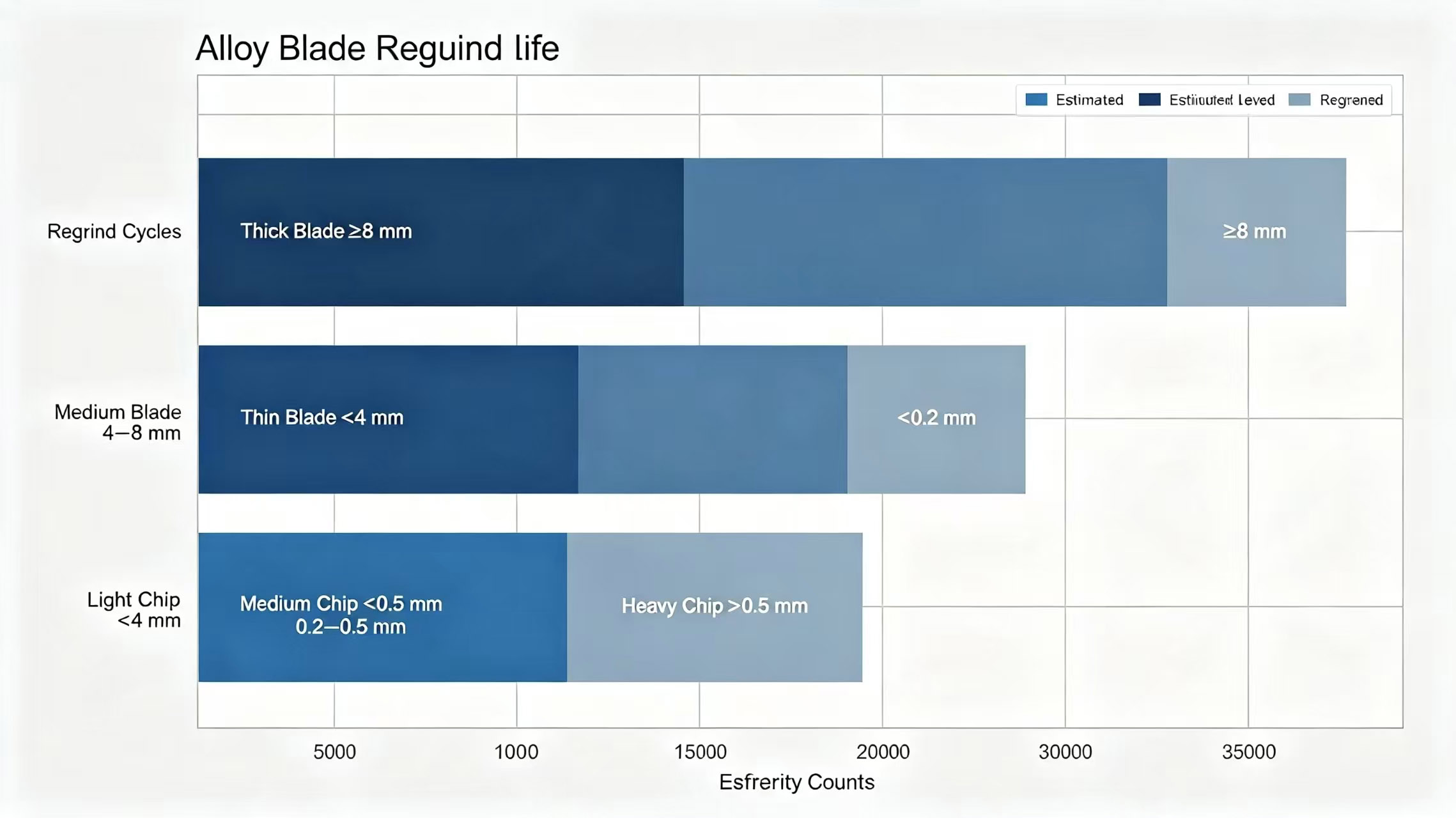
Thick alloy blades (thickness ≥ 8mm):
· Light chipping (<0.2mm): 8-12 regrinds
· Moderate chipping (0.2-0.5mm): 5-8 regrinds
· Severe chipping (>0.5mm): 3-5 regrinds
Medium alloy blades (thickness 4-8mm):
· Light chipping: 5-8 regrinds
· Moderate chipping: 3-5 regrinds
· Severe chipping: 2-3 regrinds
Thin alloy blades (thickness < 4mm):
· Light chipping: 3-5 regrinds
· Moderate chipping: 2-3 regrinds
· Severe chipping: recommended to scrap directly
4. When Should Regrinding Be Stopped?
1. Insufficient remaining thickness
When the remaining blade thickness is less than 60%-70% of the original thickness, the edge support strength decreases, making it prone to further chipping. Alloy blades for precision slitting are particularly sensitive to thickness changes.
2. Hardness drop after multiple regrinds
Each regrind generates heat. If cooling is insufficient, micro-cracks or hardness reduction may occur on the edge surface. Alloy blades for high-speed slitting should undergo hardness spot checks after multiple regrinds.
3. Blade deformation
After multiple regrinds, the blade may develop cumulative deformation (end face warping, flatness out of tolerance). If deformation exceeds 0.02mm, regrinding should be stopped.
4. Abnormal chip location
If chipping repeatedly occurs at the same location, it may indicate an internal defect in the blade. Continued regrinding will not solve the fundamental problem.
5. How to Maximize the Number of Regrinds?
1. Remove only the minimum necessary each time: Remove just enough to eliminate the chip; do not grind "just because."
2. Use a CNC grinder: Precisely control the removal amount and angle.
3. Ensure adequate cooling: Avoid grinding burns.
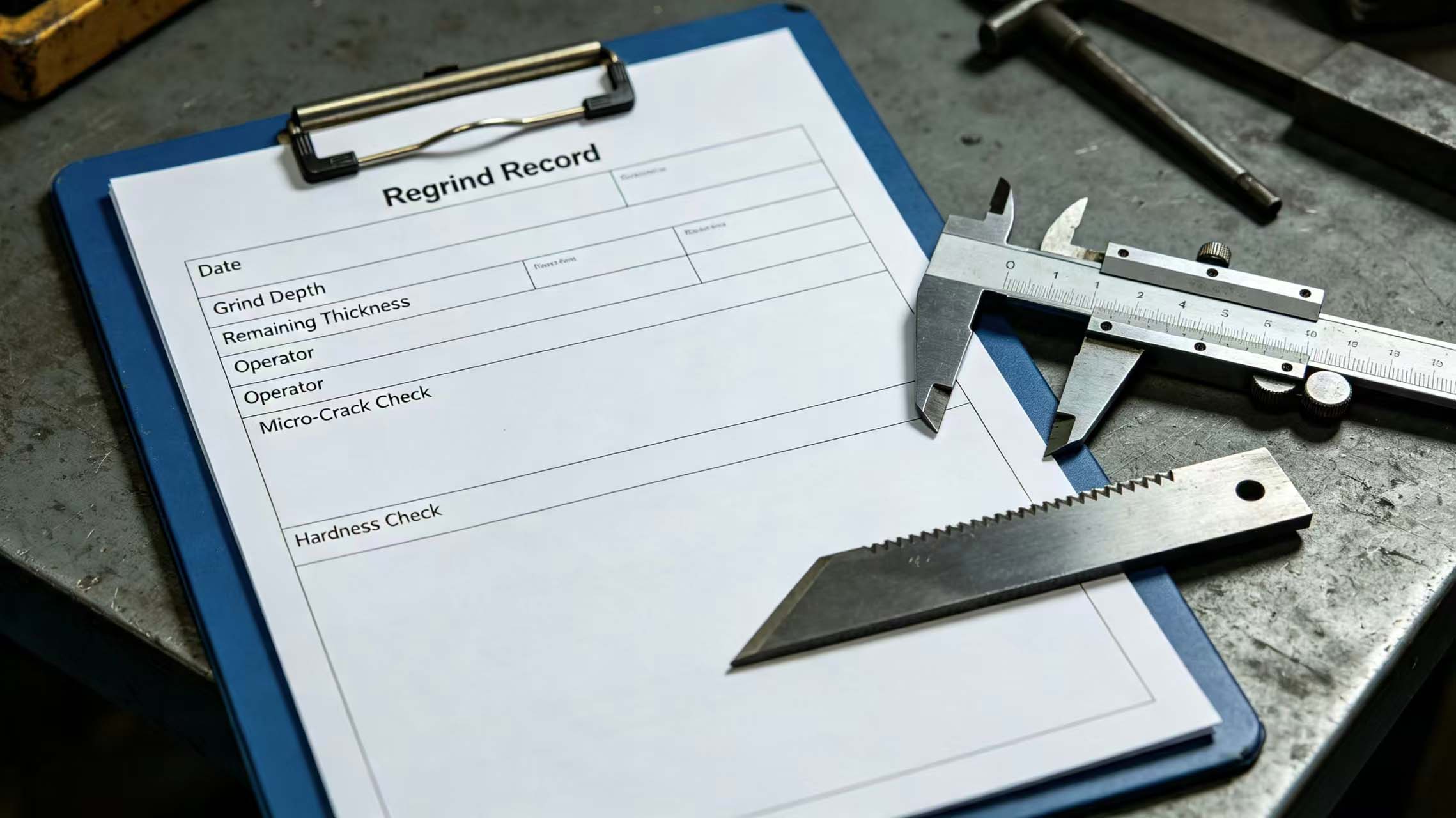
4. Record each regrind removal amount: When cumulative removal exceeds 15%-20% of the original thickness, consider replacement.
6. Mingbai Technology's Regrinding Services
Mingbai Mechanical Tool Technology Co., Ltd. offers professional alloy blade regrinding services:
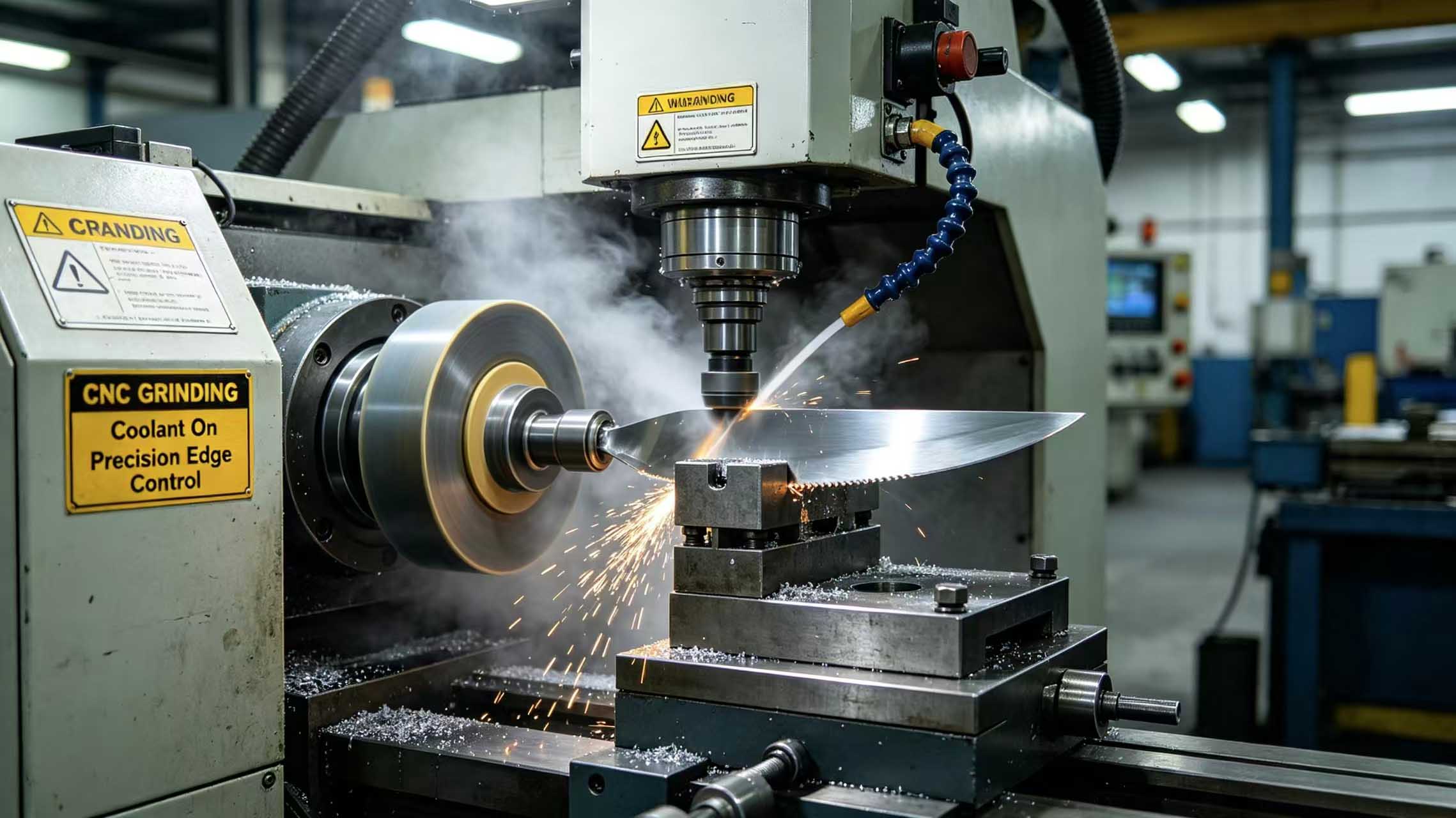
· CNC grinding machines with angle control of ±0.3°.
· Precise control of single regrind removal (0.03-0.10mm).
· Hardness testing before and after regrinding to ensure no annealing.
· Microscope inspection of the edge after regrinding to ensure no micro-cracks.
· Provision of regrinding records to track each regrind removal amount and remaining thickness.
7. Case Study
A precision strip slitting plant used alloy blades for precision strip slitting with an initial thickness of 6mm. The first chip depth was 0.15mm. Mingbai Technology used a CNC grinder with 0.06mm removal per regrind. After a cumulative 9 regrinds, the remaining thickness was 4.8mm, still meeting cutting quality requirements, achieving a total life 2.5 times that of a new blade.
Conclusion
There is no fixed answer to how many times an alloy blade can be reground after chipping. It depends on the original thickness, chipping depth, grinding method, and blade material. However, by adopting a strategy of "remove only the minimum necessary + CNC precision control + adequate cooling," most alloy blades can be reground 5-10 times. Mingbai Technology is ready to help you maximize blade life with professional regrinding services.
Website: www.mingbaiblade.com
 IPv6 network supported |
Sitemap
|
Xml
|
Privacy Policy
IPv6 network supported |
Sitemap
|
Xml
|
Privacy Policy
leave a message
Scan to wechat :

Scan to whatsapp :
