 en
en Our factory has served countless products across various industries for 30 years, making a significant contribution to the cutting industry. Let us customize the cutting tools you need!
Mabu - CEO RisingBamboo

 Email: Mb@mingbaiblade.com
 Tel.: +86-13855519988



In slitting operations, the alignment accuracy of circular blades directly determines cut edge quality, blade life, and equipment stability. Even when using high-quality slitter blades or custom slitter blades, if the axial position, radial overlap, or parallelism between upper and lower blades deviates, problems such as burrs, dust, wavy cut edges, or even frequent blade breakage will occur. Mingbai Mechanical Tool Technology Co., Ltd. summarizes a standardized method for aligning circular blades based on years of on-site commissioning experience.
1. The Three Core Dimensions of Alignment
Alignment of circular blades involves three independent but interacting parameters:
1. Axial alignment (horizontal direction): The relative position of the upper and lower blade edges along the axis. Ideally, the edge plane of the upper blade should coincide with that of the lower blade (or have a specific offset depending on material characteristics).
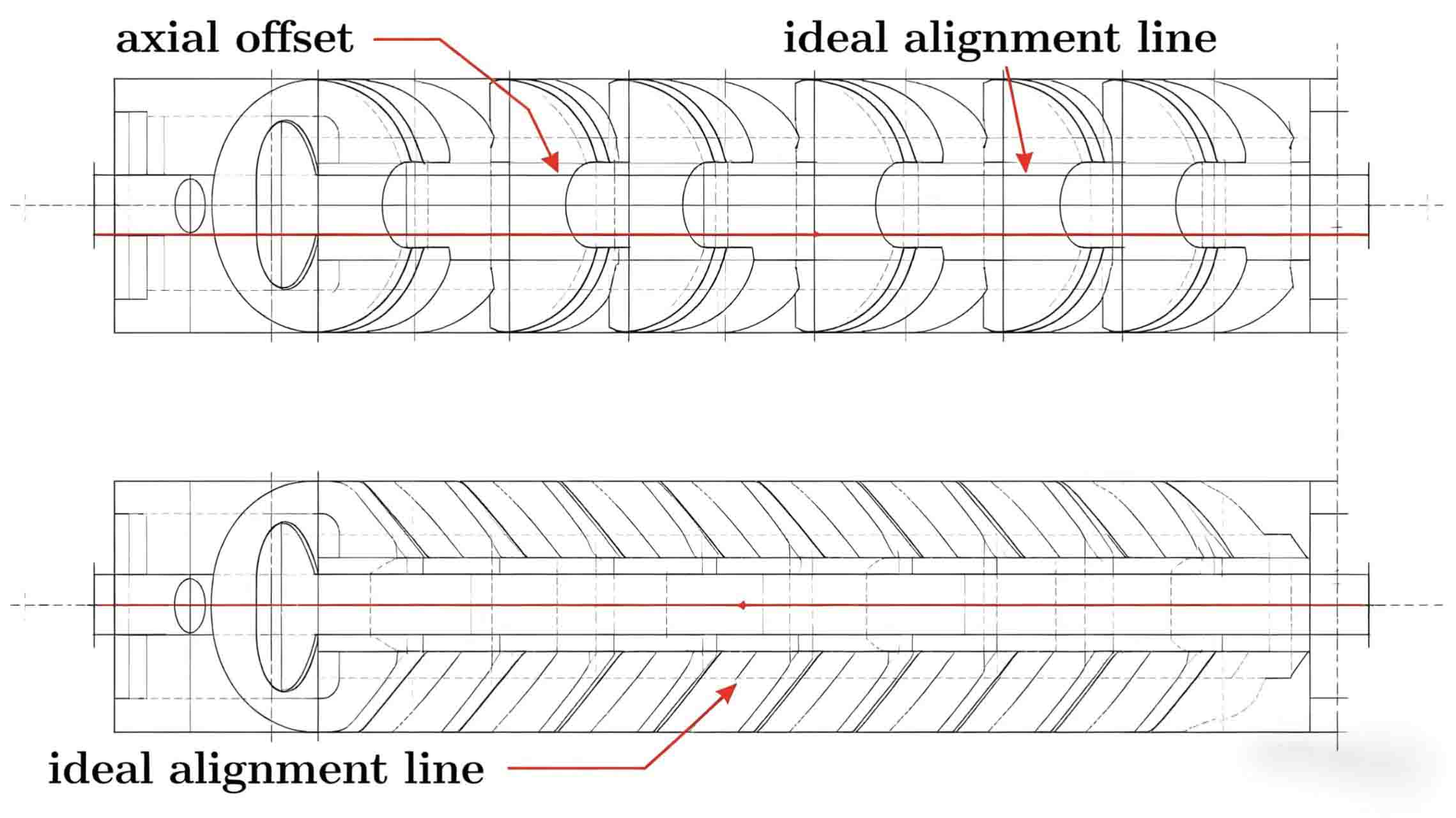
2. Radial overlap (vertical direction): The vertical overlapping depth of the upper and lower blade edges. Insufficient overlap leads to incomplete cutting, while excessive overlap accelerates wear.
3. Blade parallelism: The degree of parallel alignment between the upper and lower blade axes in the horizontal plane. Non-parallelism causes the blade gap to vary along the axial direction.
2. Preparation: Cleaning and Inspection
Before alignment, complete the following steps:
· Clean the blade shaft and blades: Wipe the shaft surface, blade bore, and end faces with a lint-free cloth moistened with alcohol to remove rust preventive oil, dust, and fine particles. Any foreign matter will cause installation errors.
· Inspect blade condition: Visually check the edge of precision machine blades for chipping or obvious wear land. If present, resharpening should be done before installation.
· Check shaft runout: Mount a dial indicator on the frame with the probe perpendicular to the shaft outer diameter. Slowly rotate the shaft; radial runout should be ≤ 0.005 mm. If out of tolerance, repair the shaft.
3. Precise Setting of Axial Alignment
Goal: Make the edge planes of the upper and lower circular blades lie in the same vertical plane (zero offset), or set a slight offset according to material type.
Method 1: Straight edge method (quick coarse adjustment)
· Press a precision straight edge vertically against the side faces of the upper and lower blade edges.
· Adjust the axial position of the upper or lower blade holder until the straight edge contacts both blade side faces without any gap.
· Suitable for applications with lower precision requirements.
Method 2: Feeler gauge / shim method (precision adjustment)
· Use the edge plane of the upper blade as the reference surface.
· Insert precision shims between the lower blade and the shaft spacer, or use the fine adjustment screw on the blade holder to move the blade.
· Measure the gap between the edge planes of the upper and lower blades with a feeler gauge. Target value is 0 (zero gap). For ultra-thin foils, a negative offset of 0.01-0.03 mm (upper blade slightly protruding) can be set.
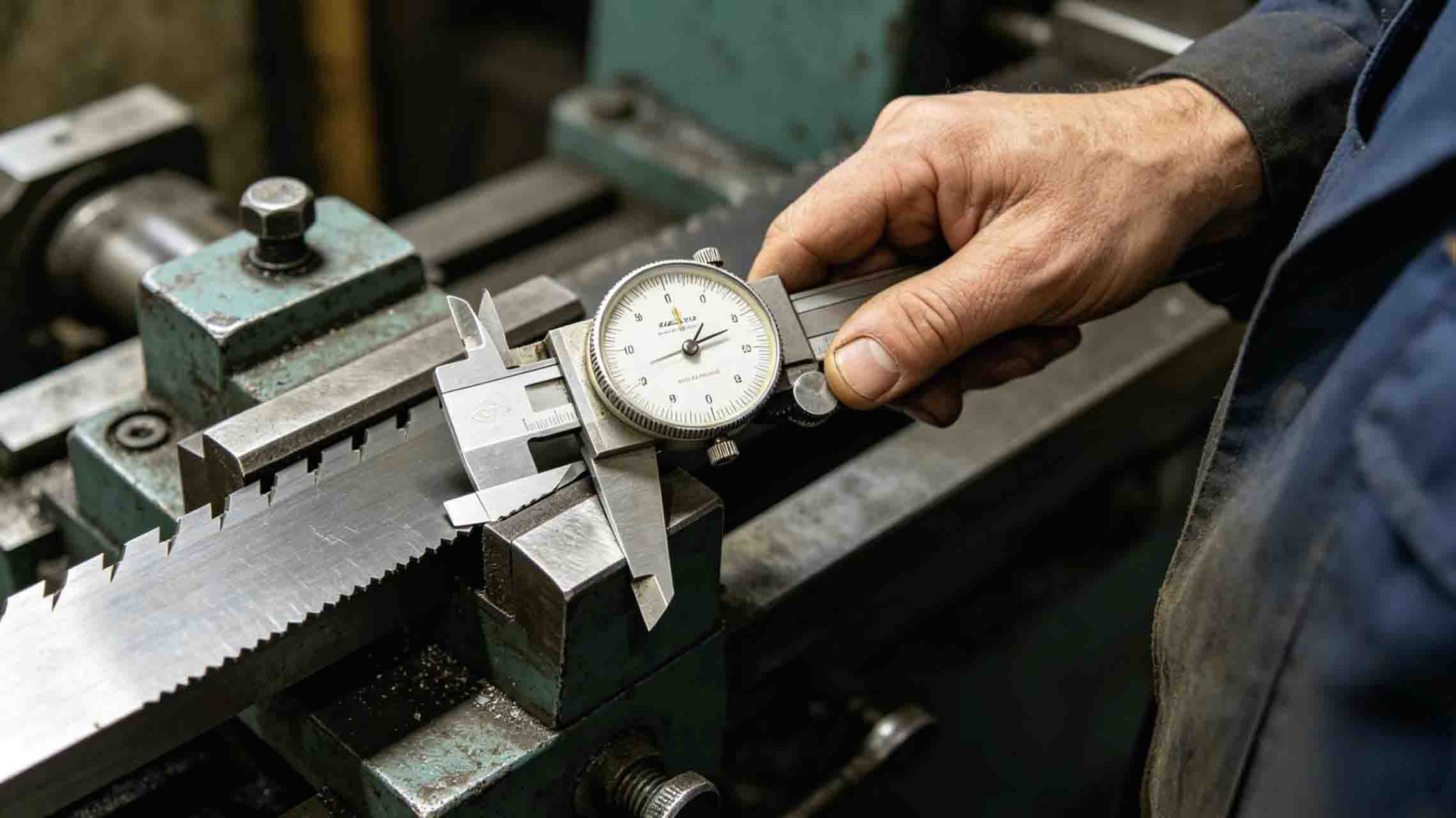
Method 3: Laser alignment tool (highest precision)
· Use a dual-beam laser alignment tool with sensors mounted on the upper and lower blade shafts, displaying axial deviation in real time.
· Adjust until deviation ≤ 0.01 mm. Suitable for high-speed, wide-width slitters.
4. Setting Radial Overlap
Overlap is the distance by which the lowest point of the upper blade edge extends below the highest point of the lower blade edge.
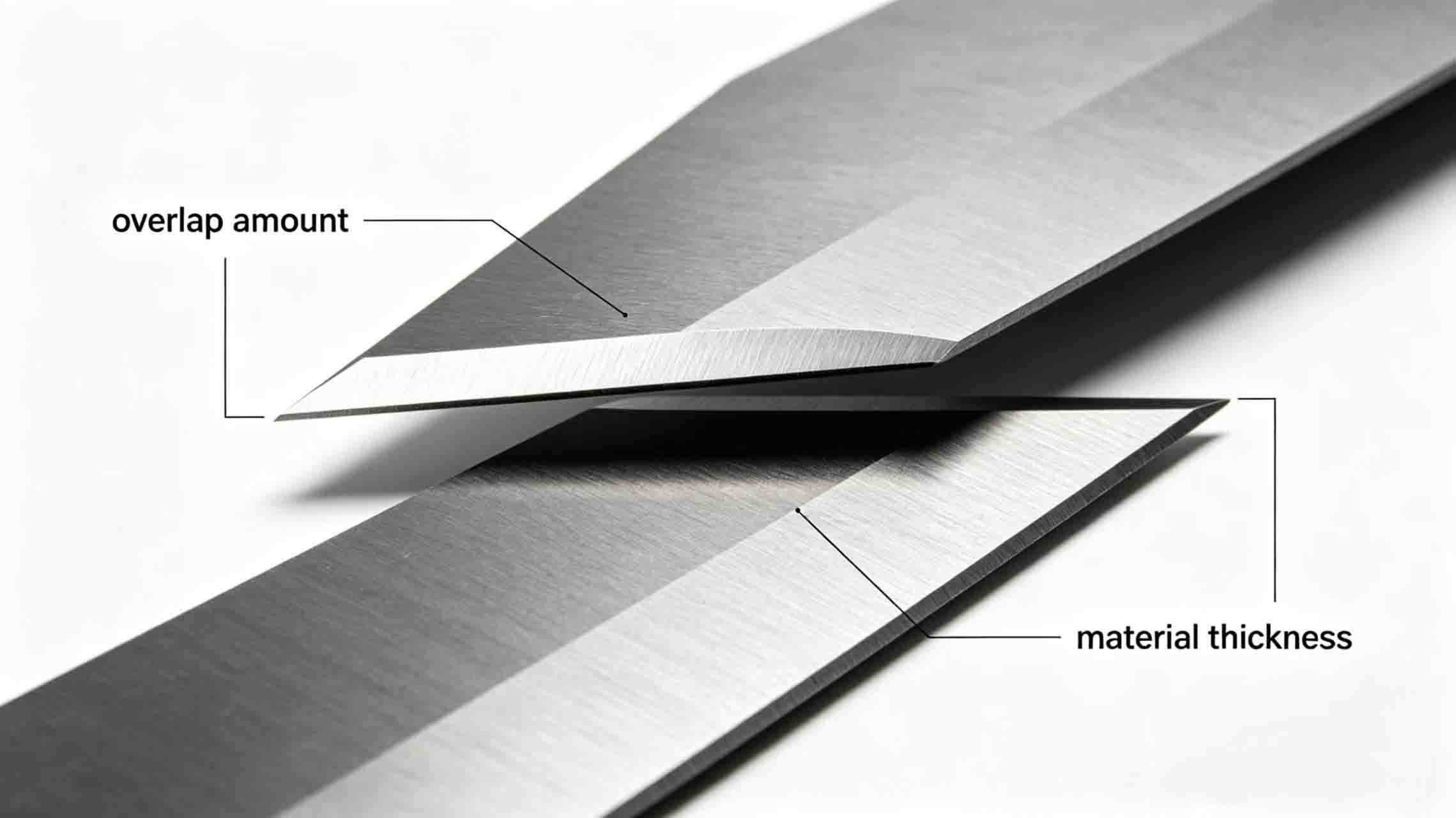
Rule of thumb: Overlap = Material thickness × (30% ~ 50%)
· Thin materials (<0.1 mm): Use smaller overlap (30%) to avoid edge deformation due to excessive compression.
· Thick materials (>1 mm): Use larger overlap (50%) to ensure complete cutting.
· Hard and brittle materials (silicon steel, fiberglass): Reduce overlap appropriately to lower chipping risk.
Adjustment method:
· Loosen the blade holder lifting lock nut, turn the fine adjustment screw, and simultaneously measure the vertical distance between the upper and lower blade edges using a feeler gauge or vernier caliper.
· For CNC machined blades, overlap can be controlled within 0.05-0.3 mm, with the exact value optimized through trial cuts.
5. Checking and Correcting Parallelism
Even if axial position and overlap are correct, if the upper and lower blade shafts are not parallel, the blade gap will vary along the axis.
Inspection method:
· Measure the gap between the upper and lower blades at both ends of the shaft using a feeler gauge.
· The difference in gap between the two ends is the parallelism error. Allowable deviation ≤ 0.02 mm per meter.
Correction method:
· For adjustable blade holders, eliminate the error by adjusting shims or eccentric sleeves on the bearing housing at one end.
· For fixed shafts, grind the mounting base surface or replace with higher precision spacers.
6. Verification and Trial Cutting
After completing the above adjustments, verify the effect with a trial cut:
1. Static impression test: Place carbon paper and white paper strip between the upper and lower blades. Rotate the blade shaft manually for one revolution and observe whether the impression is continuous and uniform in width.
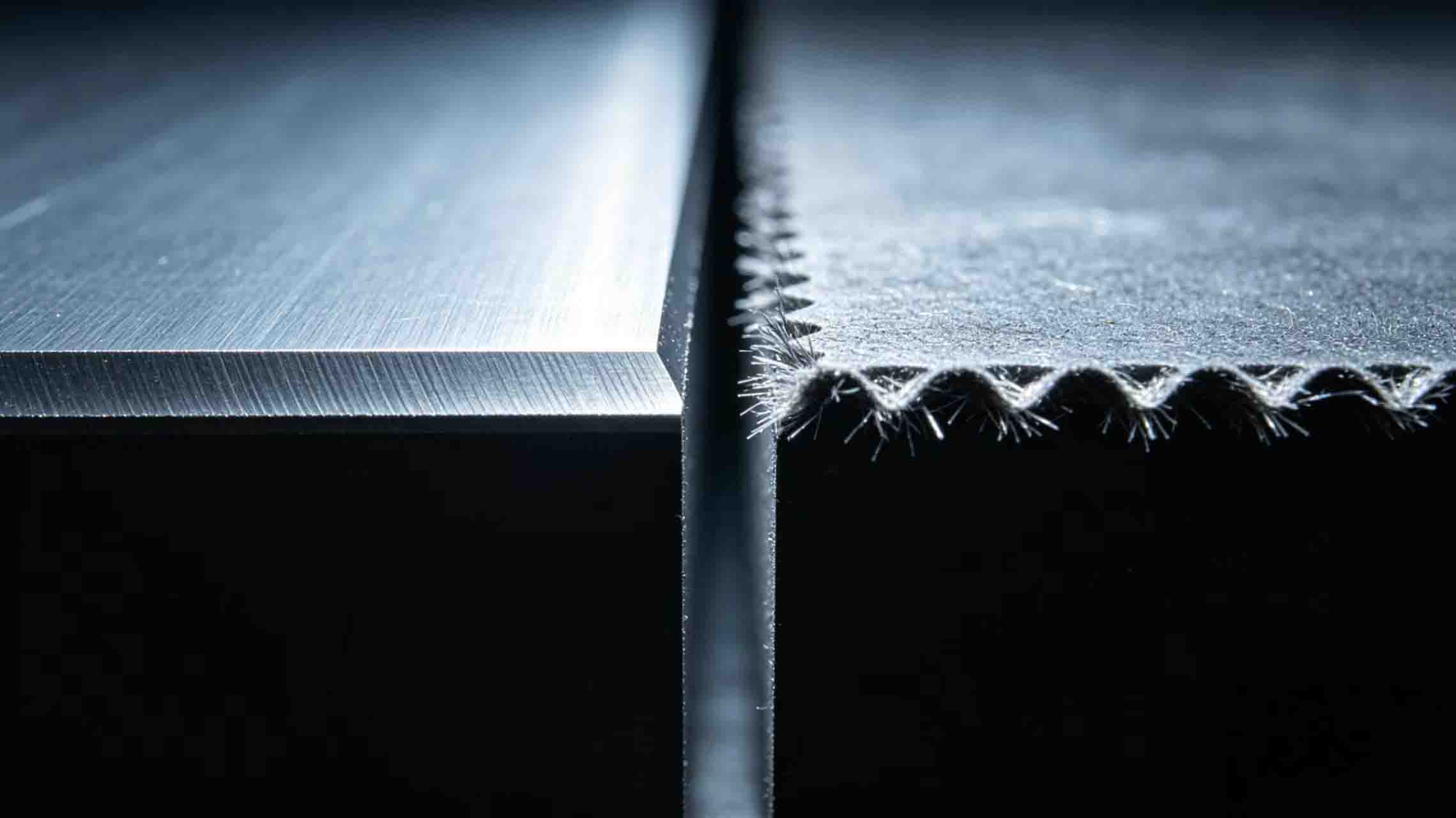
2. Dynamic trial cut: Slit a section of material at normal speed and inspect the cut edge:
· Smooth, burr-free → good alignment
· Burrs on one side → axial offset
· Burrs all around with whitened edge → insufficient overlap or dull blade
· Wavy edge → poor parallelism or excessive blade runout
3. Retain sample: Keep the trial cut sample as a reference for future adjustments.
7. Mingbai Technology's Professional Support
Mingbai Mechanical Tool Technology Co., Ltd. not only provides high-precision custom blades, circular blades, and slitter blades, but also offers customers:
· On-site blade alignment training services
· Precision spacer and shim sets

· Blade runout inspection reports (with each shipped blade)
· Remote video guidance for adjustments
Conclusion
Properly aligning circular blades is not complicated, but it requires patience, appropriate tools, and an understanding of the three core parameters. Incorporating alignment into the standardized procedure for each blade change can significantly improve cut quality, extend blade life, and reduce equipment failure rates. If you still have questions about blade alignment, please contact Mingbai Technology's technical team.
Website: www.mingbaiblade.com
 IPv6 network supported |
Sitemap
|
Xml
|
Privacy Policy
IPv6 network supported |
Sitemap
|
Xml
|
Privacy Policy
leave a message
Scan to wechat :

Scan to whatsapp :
