 en
en Our factory has served countless products across various industries for 30 years, making a significant contribution to the cutting industry. Let us customize the cutting tools you need!
Mabu - CEO RisingBamboo

 Email: Mb@mingbaiblade.com
 Tel.: +86-13855519988



In the field of precision slitting for flexible materials such as paper, film, and aluminum foil, blade geometry often determines the success or failure of the converting process. A seemingly minor difference in angle can turn a smooth, clean cut edge into one covered with burrs. An improper edge design choice can cause a high-speed production line to shut down due to dust accumulation. As a professional manufacturer of slitter blades, circular blades, and various types of custom blades, Mingbai Mechanical Tool Technology Co., Ltd. has conducted in-depth research into the mechanisms by which blade geometry affects the slitting quality of paper and film materials and has developed a scientific optimization framework.
1. Why Are Paper and Film Slitting So Sensitive to Blade Geometry?
Unlike metal cutting, flexible materials such as paper, film, and foil have characteristics like low stiffness, high ductility, and heat sensitivity. Their failure mode during slitting is not "shear fracture" but rather "tensile tearing" or "thermal melting." Therefore, blade geometry must be precisely matched to the physical properties of these materials to achieve a clean, crisp cut.
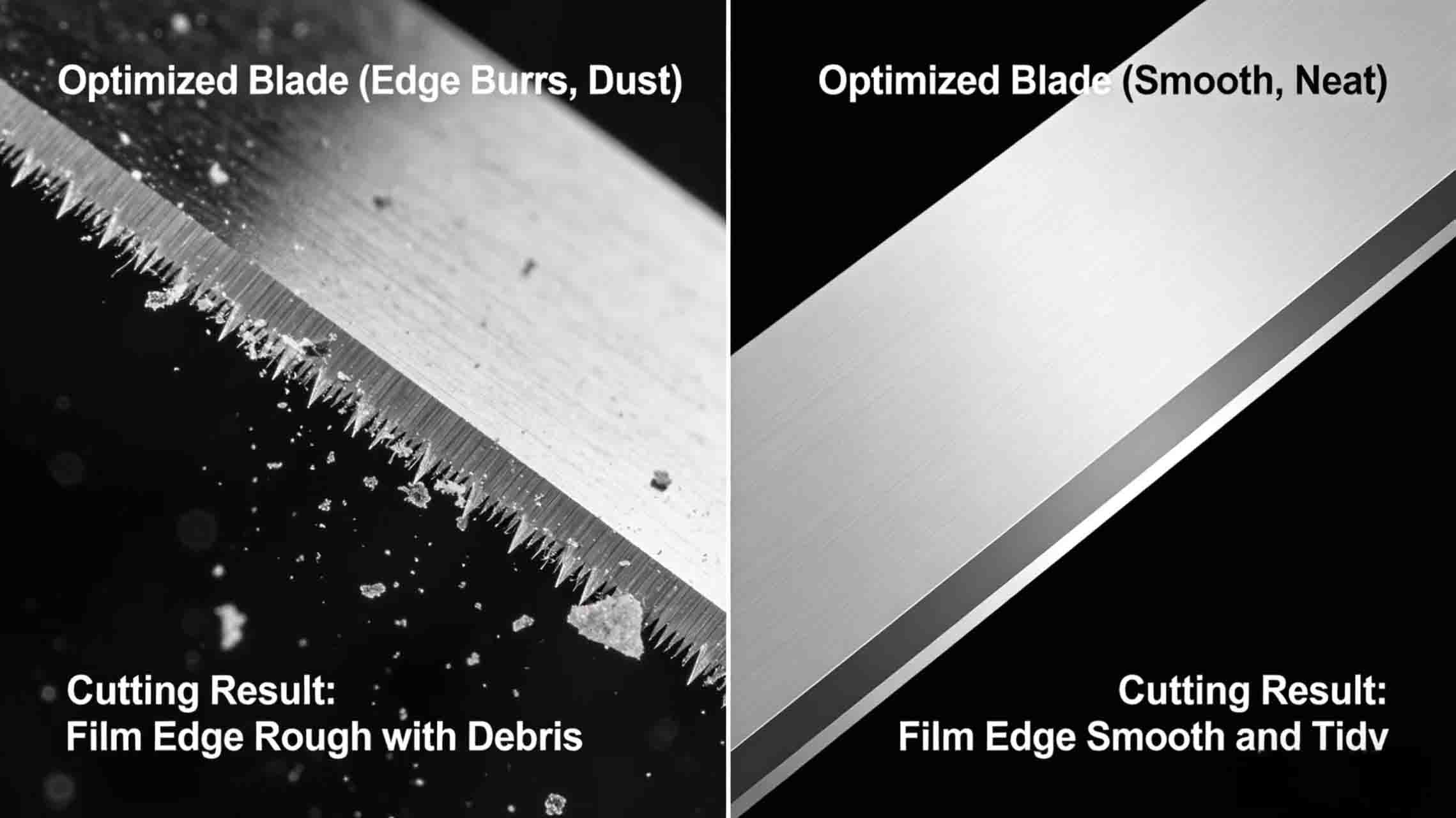
When blade geometry is inappropriate, common issues include:
· Edge burrs or dust (paper dust, film debris)
· Curled or wavy cut edges
· Material stretching and deformation leading to inconsistent width
· Edge melting or adhesion caused by heat accumulation
2. Key Geometric Parameters and Their Effects
1. Edge Angle
The edge angle is the primary parameter affecting cut quality. For paper and film materials, the edge angle is typically selected between 15° and 30°.
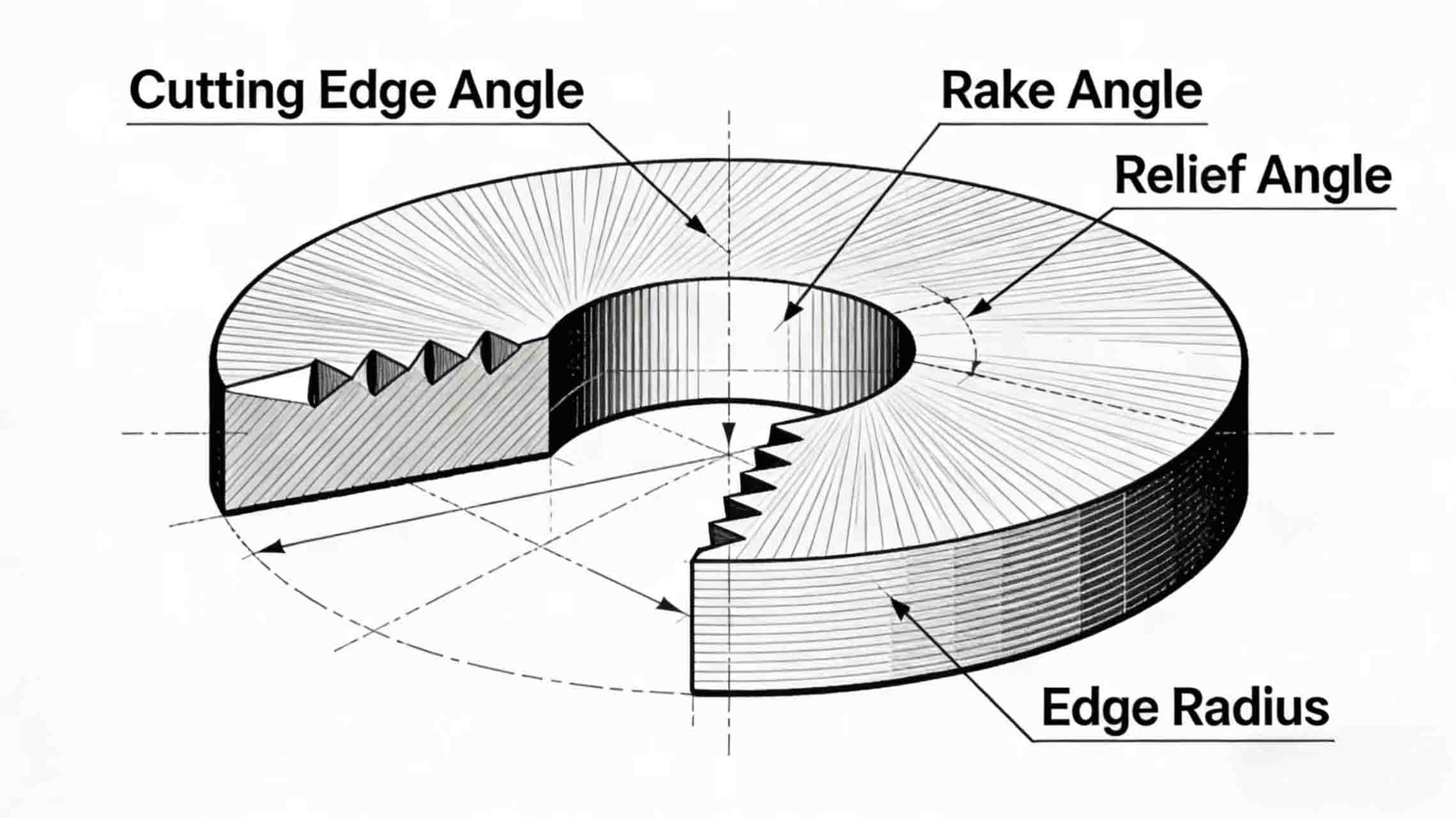
· Small Angle (15°-20°): The edge is sharp with low cutting resistance, suitable for extremely thin materials such as capacitor film and aluminum foil. However, an excessively small angle reduces edge strength, making it prone to chipping during high-speed cutting or when materials contain impurities.
· Large Angle (25°-35°): The edge is more robust, suitable for thicker paper or filled composite materials. However, an overly large angle increases cutting resistance, easily causing indentation or burrs on the material edge.
For precision machine blades, Mingbai Technology can recommend the optimal edge angle based on material thickness and speed, precisely controlling it during sharpening.
2. Rake Angle and Clearance Angle
The rake angle affects the flow direction of chips (or trim), while the clearance angle determines the contact area between the blade and the material.
· Rake Angle: A positive rake angle (+5° to +15°) allows chips to discharge smoothly, reducing friction, and is suitable for most films and papers. A zero or negative rake angle is used for extremely thin or easily stretched materials to provide better support.
· Clearance Angle: Too small a clearance angle increases friction between the blade and material, generating heat and dust. Too large a clearance angle weakens edge support, easily causing vibration. Typically, the clearance angle is controlled between 5° and 12°.
3. Edge Radius
The edge radius is the core indicator distinguishing "sharp" from "dulled." For paper and film slitting, the edge radius must be finely controlled based on material characteristics.
· Mirror-Grade Sharp (R ≤ 5μm): Suitable for applications demanding no burrs or dust, such as PET film, polyimide film, and aluminum foil. However, extremely sharp edges have a relatively shorter lifespan and need to be paired with high-quality coatings.
· Micro-Passivated (R ≈ 10-20μm): Suitable for kraft paper, self-adhesive labels, and composite films. Micro-passivation ensures cutting quality while significantly extending blade life.
Using CNC machined blade technology, Mingbai Technology can control the edge radius within a tolerance of ±1μm, meeting the stringent requirements of various materials.
4. Blade Flatness and Concentricity
For rotary slitting (such as circular blade slitting), blade flatness and concentricity directly affect cutting stability.
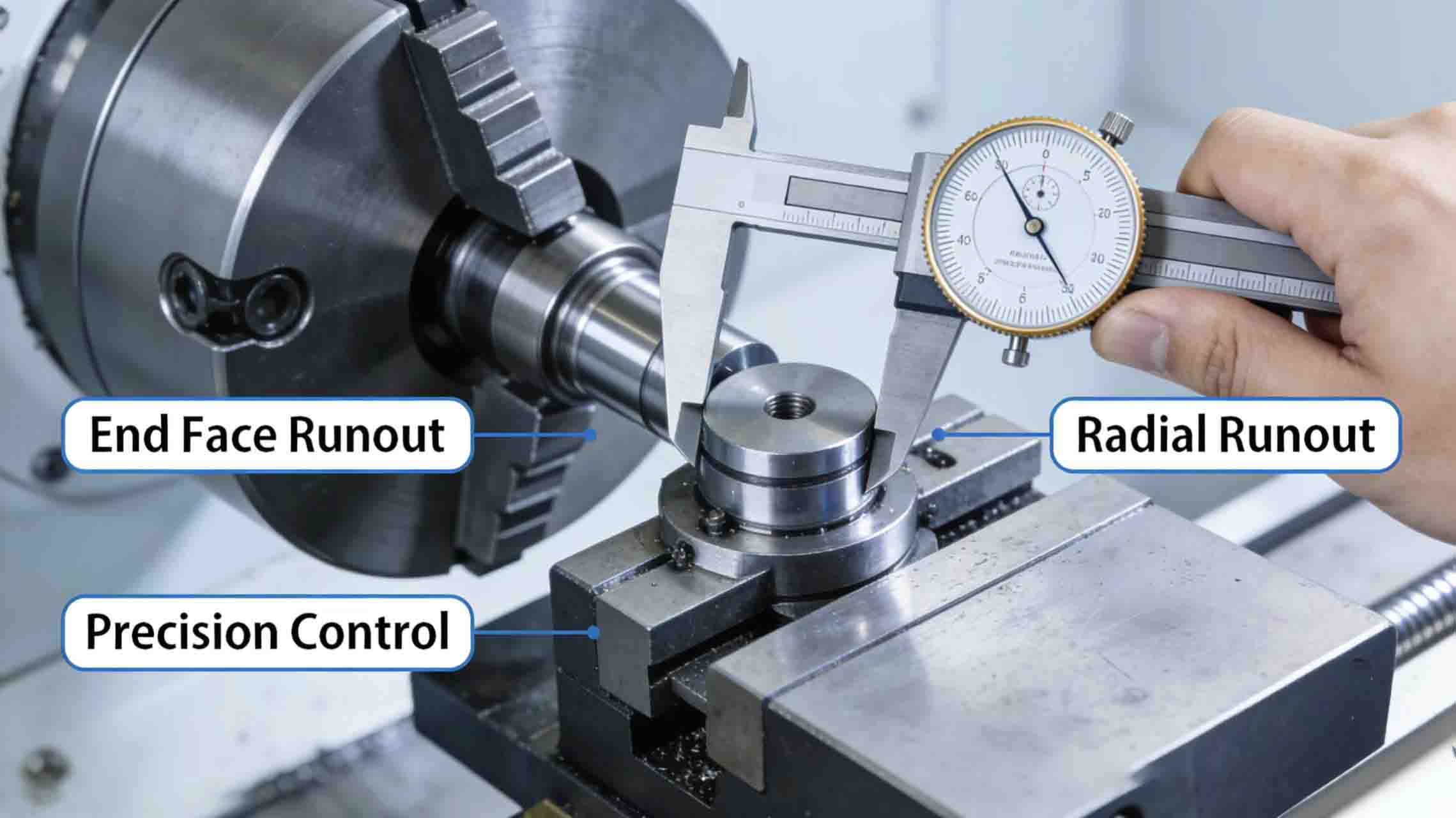
· Insufficient Flatness: Axial runout during blade rotation leads to wavy cut edges and width fluctuations.
· Excessive Concentricity Tolerance: Radial runout causes periodic variation in blade gap, leading to localized burrs and dust.
The circular blades produced by Mingbai Technology can achieve flatness controlled within 0.002mm and concentricity ≤ 0.005mm, ensuring high-speed, stable slitting.
3. Geometric Parameter Optimization Recommendations for Different Materials
For capacitor film with typical thickness of 2-12μm, the recommended edge angle is 15°-18° with a clearance angle of 6°-8°, an edge radius of R ≤ 3μm, and DLC coating is suggested.
For PET film ranging from 12-100μm, an edge angle of 18°-22° and clearance angle of 8°-10° are recommended, with edge radius R ≤ 5μm and TiN or TiAlN coating.
Aluminum foil between 7-50μm typically performs best with edge angle 16°-20°, clearance angle 6°-8°, edge radius R ≤ 5μm, and DLC or TiN coating.
For kraft paper of 80-300μm thickness, an edge angle of 22°-28° and clearance angle of 10°-12° work well, with edge radius approximately 12μm and either no coating or hard chrome.
Self-adhesive labels from 100-200μm require an edge angle of 20°-25°, clearance angle of 8°-10°, edge radius approximately 10μm, and anti-stick coating.
Composite film between 50-150μm is best served with edge angle 20°-25°, clearance angle 8°-10°, edge radius approximately 8μm, and TiN or TiCN coating.
Note: The above values are references and should be fine-tuned based on equipment rigidity and speed.
4. Synergistic Effects of Geometry, Coating, and Material
Blade geometry does not exist in isolation; together with coating and substrate, it determines the slitting outcome.
· Coating Matching: A sharp edge (small angle, small radius) combined with a low-friction coating such as DLC significantly reduces adhesion, particularly suitable for adhesive materials. A more robust edge (larger radius) combined with a wear-resistant coating such as TiAlN is suitable for thick paper slitting requiring long life.
· Substrate Selection: Powder metallurgy high-speed steel is ideal for manufacturing custom slitter blades with complex geometries; its fine grain structure can withstand extremely small edge radii without chipping. Carbide is used for ultra-thin foil slitting but is more difficult to process and demands extremely high geometric precision.
5. Mingbai Technology's Optimization Practices
In serving the paper and film converting industry, Mingbai Mechanical Tool Technology Co., Ltd. has accumulated extensive experience in optimizing geometric parameters. We help customers achieve high-quality slitting through:
1. Material Analysis: Testing customer materials for thickness, hardness, friction coefficient, heat sensitivity, and other parameters.
2. Geometric Design: Designing the optimal combination of edge angle, radius, rake angle, and clearance angle based on material characteristics and equipment parameters.
3. Precision Manufacturing: Using five-axis CNC grinding machines to achieve micron-level geometric precision control.
4. On-Site Commissioning: Technical personnel assisting on-site to adjust blade gap, overlap, and speed, ensuring the advantages of the designed geometry are fully realized.
Conclusion
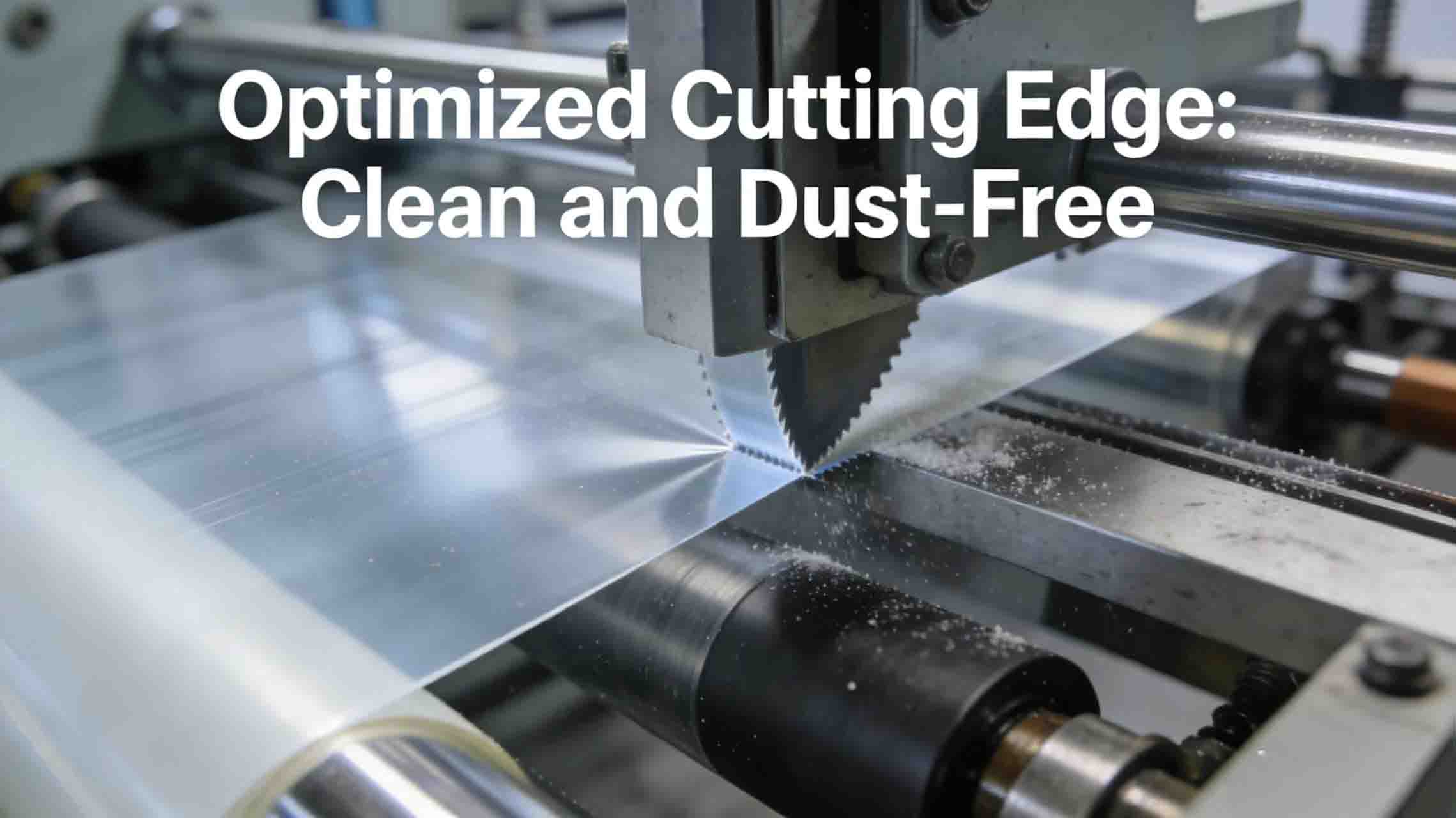
In the field of paper and film slitting, blade geometry is never a "close enough" parameter. It is the core code determining cut quality, an art balancing sharpness with durability, speed with stability. Leveraging its deep understanding of geometric parameters and precision manufacturing capabilities, Mingbai Technology provides custom blades, circular blades, and slitter blades to global users, helping ensure every slitting operation is clean, crisp, and flawless.
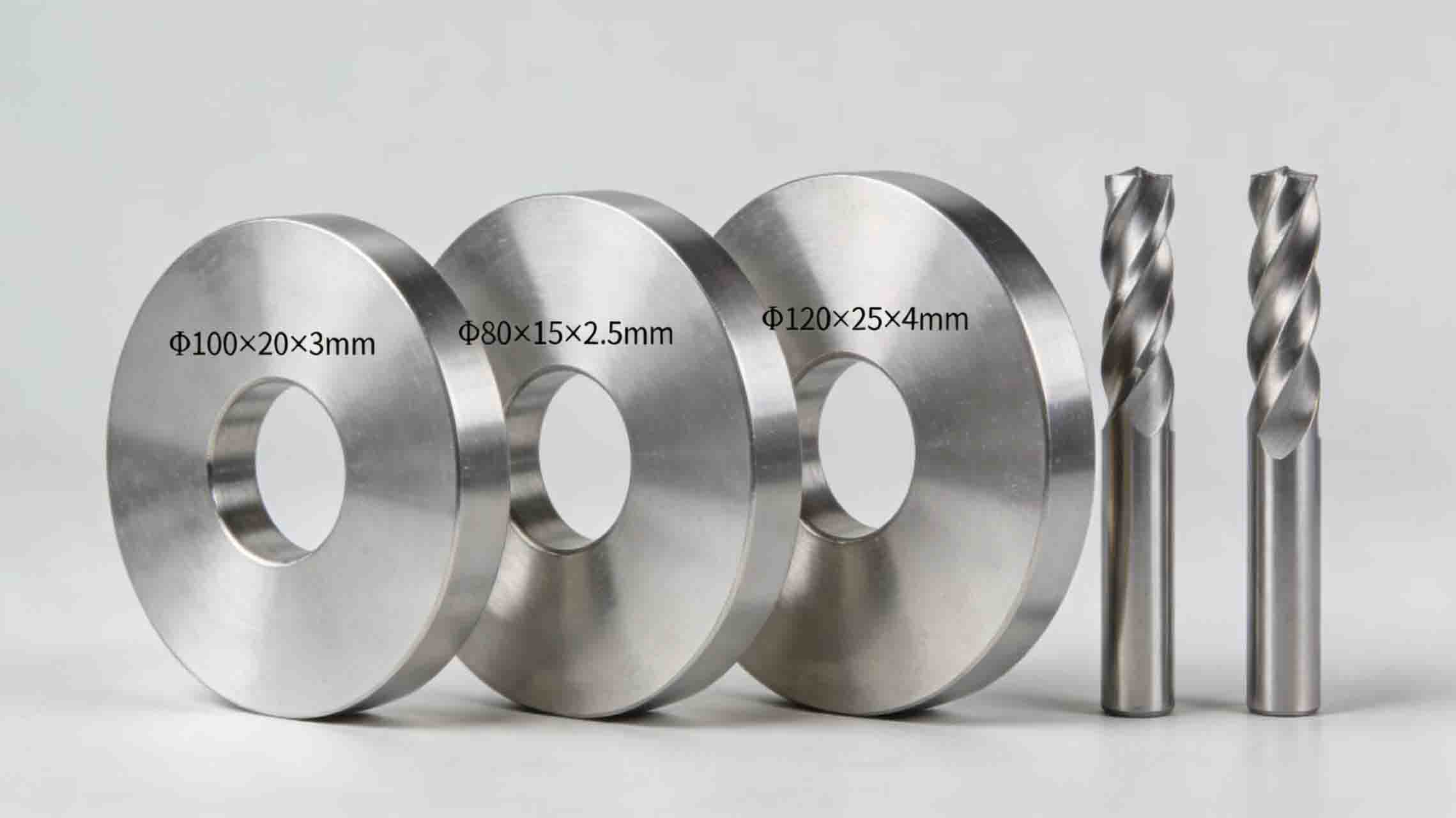
If you are struggling with slitting quality issues, please contact Mingbai Technology. Let our professional geometric optimization solutions safeguard your converting efficiency.
Website: www.mingbaiblade.com
 IPv6 network supported |
Sitemap
|
Xml
|
Privacy Policy
IPv6 network supported |
Sitemap
|
Xml
|
Privacy Policy
leave a message
Scan to wechat :

Scan to whatsapp :
