 en
en Our factory has served countless products across various industries for 30 years, making a significant contribution to the cutting industry. Let us customize the cutting tools you need!
Mabu - CEO RisingBamboo

 Email: Mb@mingbaiblade.com
 Tel.: +86-13855519988



During the slitting of web materials such as paper, film, and self-adhesive labels, tension fluctuations are a common issue affecting finished product quality. Many operators first check the unwind, rewind, or pull rolls, but often overlook a critical factor: whether the slitting blade positioning is correct. In fact, the mounting position, alignment accuracy, and axial positioning of circular blades and slitter blades directly affect the force distribution on the material in the cutting zone, thereby inducing tension abnormalities throughout the production line. Today, Mingbai Mechanical Tool Technology Co., Ltd. explains the intrinsic relationship between blade positioning and tension issues from an engineering perspective and provides systematic solutions.
1. How Does Incorrect Blade Positioning Cause Tension Problems?
Slitting blade positioning involves three dimensions: axial position (left-right direction), radial height (up-down direction), and parallelism between blades. When these parameters deviate from ideal conditions, the following tension disturbances occur:
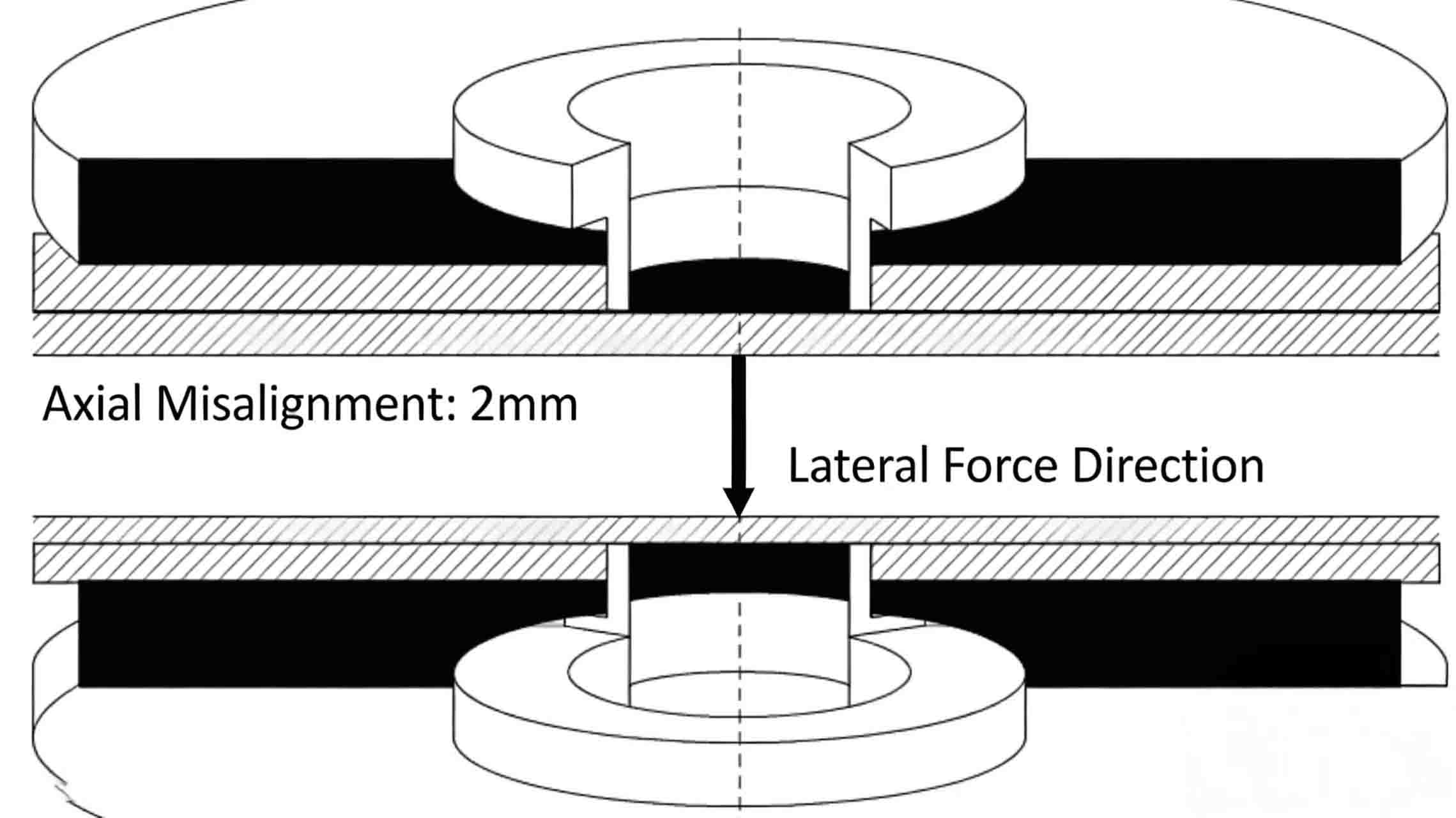
1. Axial Positioning Deviation Causes Web Misalignment
If the axial misalignment between upper and lower blades exceeds the allowable range, the slit strip is subjected to a lateral force. This lateral force causes the material to deviate from a straight path after cutting, resulting in uneven strip edges during rewinding and a "telescoping" phenomenon. To correct the misalignment, operators often increase the correction force of the steering roller, which in turn causes periodic tension fluctuations.
2. Non-Parallel Blades Cause Localized Stretching
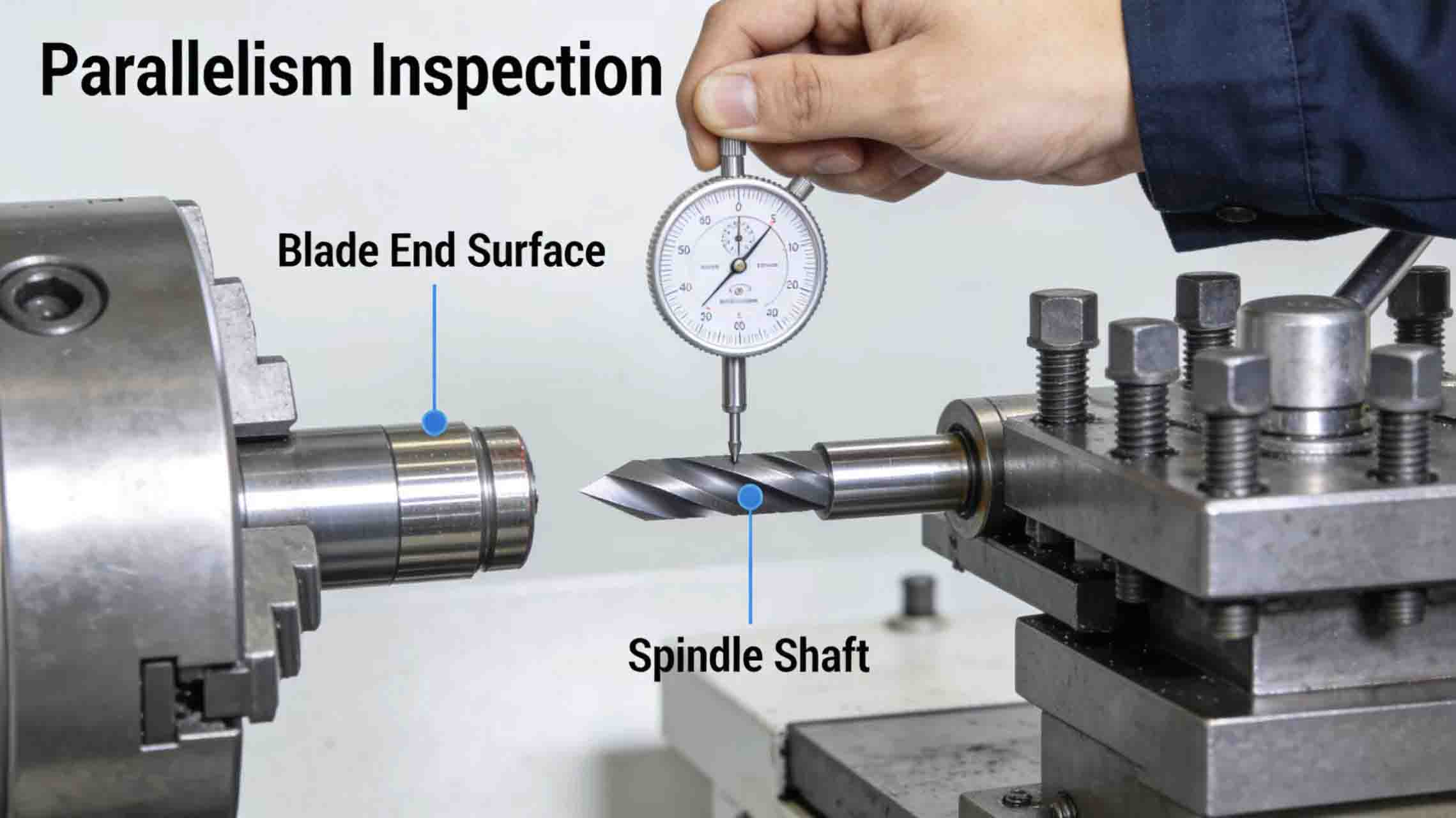
When the axes of left and right circular blades are not parallel (pitch or yaw angle exists), the blade gap varies along the axial direction. The material is squeezed more in regions with a smaller gap and stretched in regions with a larger gap. This uneven stress distribution causes tension imbalance across the material width, leading to edge waviness in mild cases and frequent web breaks in severe cases.
3. Inconsistent Radial Height of Blades Causes Cyclic Impact
In a multi-blade slitting system, if the radial height (overlap) of one set of blades differs from others, that cutting point imposes an extra impact load on the material. This impact propagates as tension waves toward the unwind and rewind ends, manifesting as violent fluctuations in tension sensor readings.
4. Loose or Eccentric Blade Mounting
If a slitter blade is not tightened properly or the blade shaft has eccentricity, the blade applies an alternating stress to the material once per revolution. This high-frequency, low-amplitude tension disturbance is difficult for ordinary tension controllers to filter out and leaves visible "chatter marks" on the slit edge.
2. Three Steps to Diagnose Blade Positioning Problems
Before adjusting tension controller parameters, it is recommended to check blade positioning using the following methods:
1. Static Alignment Check
Use a dial indicator or laser alignment tool to check the parallelism between upper and lower blade shafts. The deviation at both ends should not exceed 0.02 mm/m. Also check the axial runout and radial runout of each custom blade. Typically, axial runout ≤ 0.005 mm and radial runout ≤ 0.01 mm.
2. Dynamic Marking Test
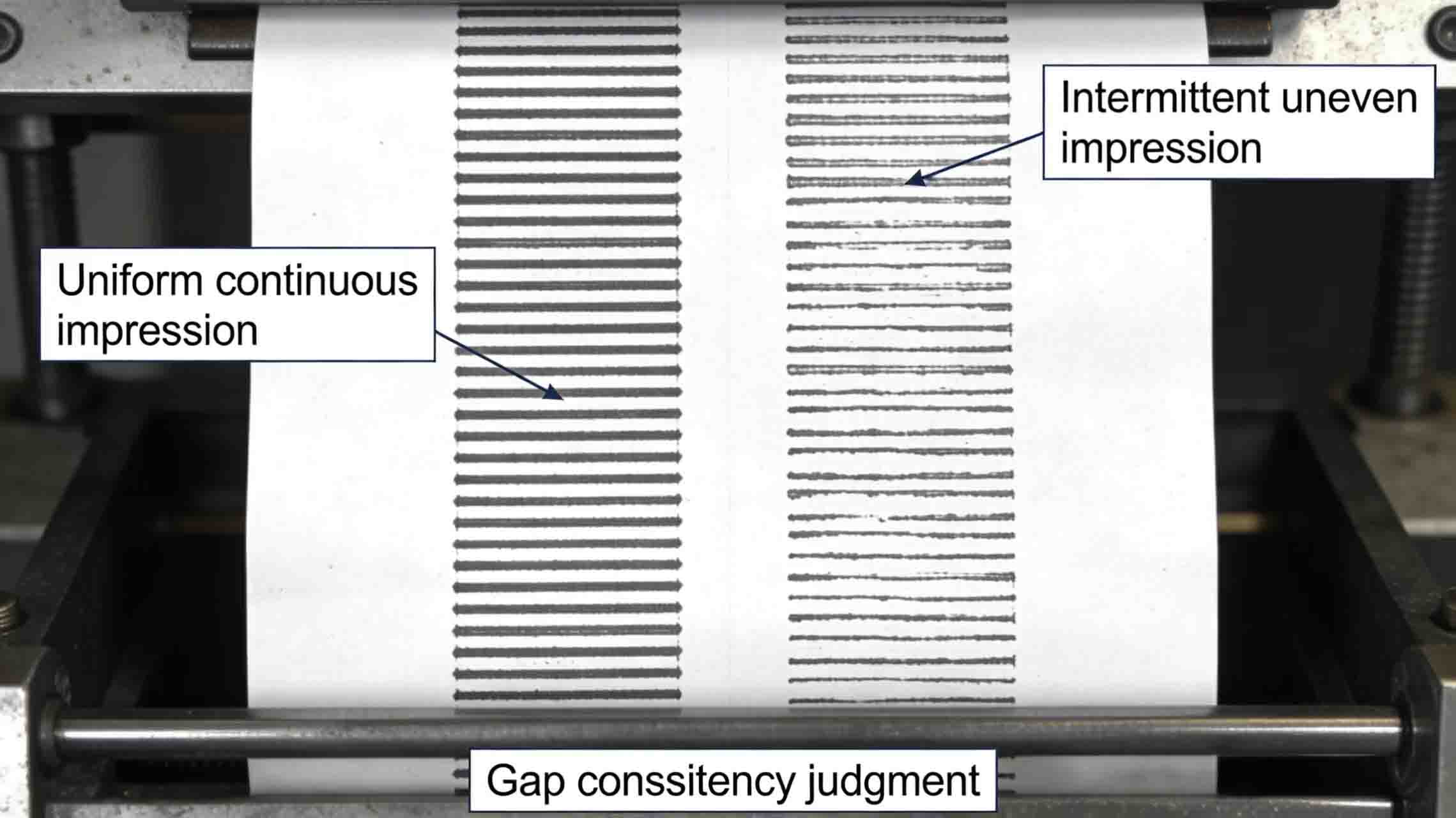
Apply a thin layer of marking ink or use carbon paper on the blade edges. Run at low speed for a short time, then examine the impressions on the material. If the impression width is inconsistent or intermittent, it indicates uneven blade gap or axial misalignment.
3. Tension Fluctuation Spectrum Analysis
Collect data from tension sensors and observe whether the fluctuation frequency matches the blade shaft rotation frequency or blade passing frequency. If they match, it can basically be determined that the blade or blade shaft positioning is the problem.
3. Systematic Solutions
1. Standardize Blade Installation Procedure
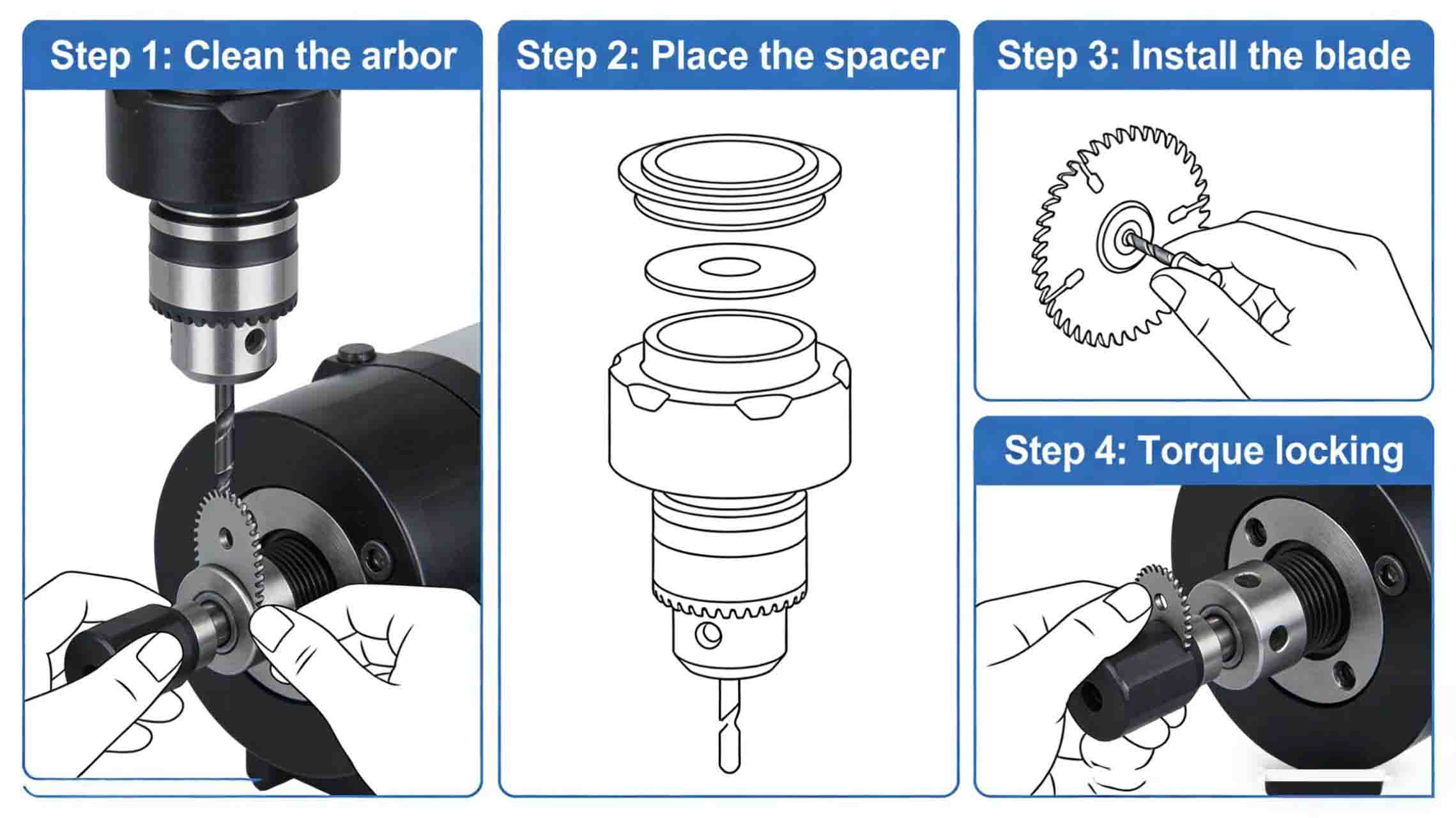
· Before installing precision machine blades, thoroughly clean the blade shaft and blade bore, removing burrs and foreign matter.
· Use a torque wrench to tighten the blade retaining nuts according to the specified sequence and torque to prevent blade distortion due to over-tightening at a single point.
· For multi-blade slitting, it is recommended to use a "spacer + nut" positioning method. The parallelism of the spacer end faces should be ≤ 0.002 mm.
2. Optimize Blade Axial Positioning
· Calculate the theoretical axial positions of each custom slitter blade based on the slitting width, and reserve a fine-tuning allowance of 0.1-0.3 mm.
· Use a feeler gauge or laser displacement sensor to re-verify the spacing between adjacent blades, ensuring all blades are evenly distributed along the axial direction.
· For production lines that require frequent specification changes, choose graduated positioning sleeves or quick-change blade shafts to reduce human error.
3. Adjust Blade Parallelism and Gap
· First roughly adjust the horizontal parallelism of the upper and lower blade shafts, then fine-tune the tilt angle of individual blades using precision shims.
· Adopt a "progressive gap setting method": start from zero gap, increase the gap by 0.01 mm each time and test cut until a burr-free cut with stable tension is achieved.
· Record the optimal gap values for different materials to form standardized operating instructions.
4. Introduce Active Alignment and Closed-Loop Control
For high-speed, wide-width slitters, the following technologies can be upgraded:
· Online blade position monitoring: Install eddy current sensors to provide real-time feedback on blade radial runout and axial displacement.
· Automatic tool setting system: Servo motors drive blade shaft fine-tuning mechanisms to automatically correct blade position based on tension fluctuation signals.
· Intelligent spacers: Use hydraulic expansion or shape memory alloy spacers to achieve one-button blade positioning.
4. Mingbai Technology's Blades and Technical Services
Mingbai Mechanical Tool Technology Co., Ltd. not only provides high-precision circular blades, slitter blades, and CNC machined blades, but also offers comprehensive installation and commissioning support:
· Each blade shipped comes with a runout inspection report, ensuring geometric accuracy meets tension-sensitive applications.
· Customized "blade + spacer" complete solutions are available to reduce on-site assembly errors.
· Technical engineers can visit the site to help diagnose blade positioning issues and provide tension optimization recommendations.
5. Case Study
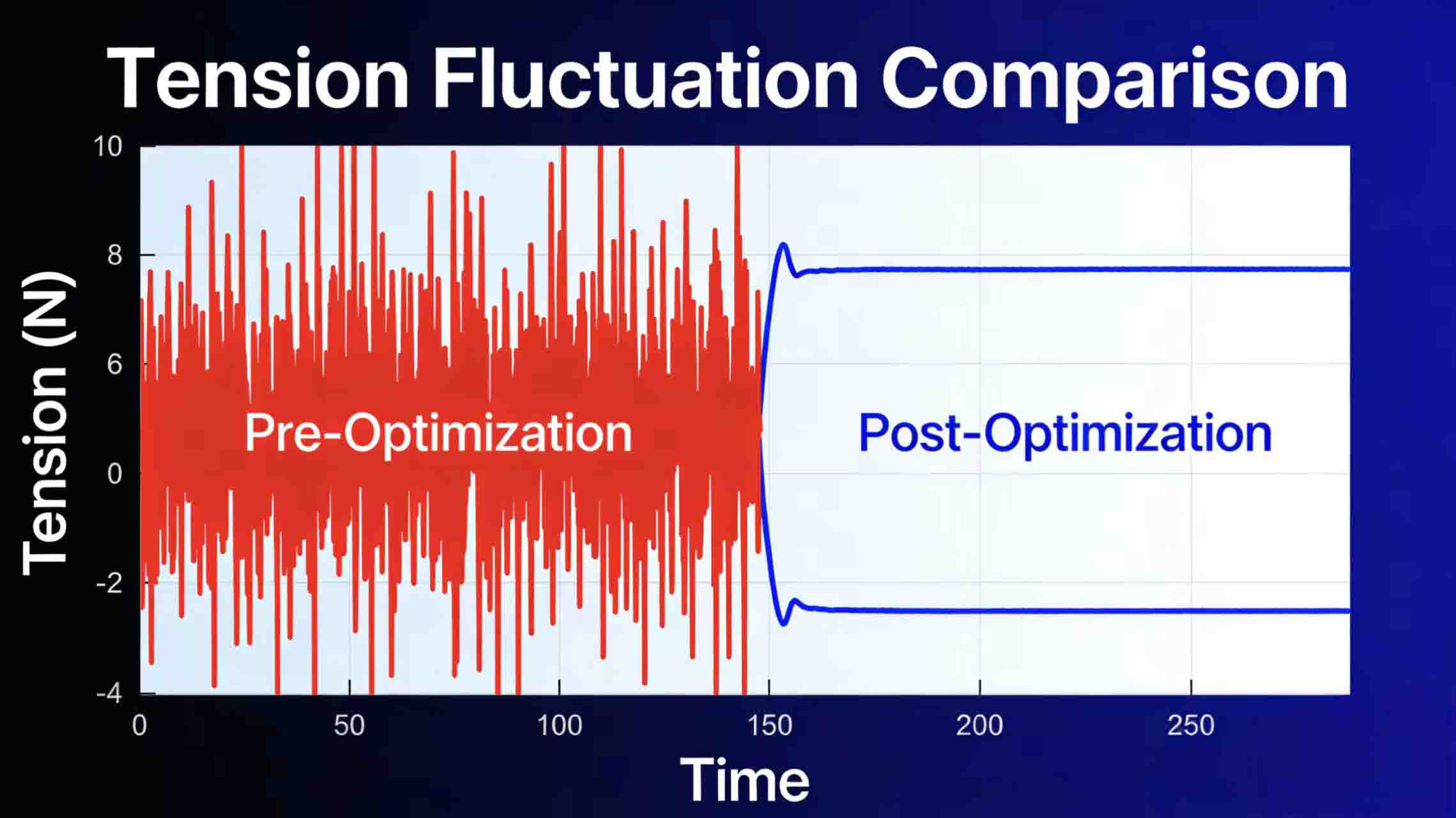
A self-adhesive label coating company had long been troubled by "core flower" and edge burrs after slitting. The Mingbai team on-site inspection found that the axial misalignment of the upper and lower circular blades was 0.15 mm, and the blade shaft parallelism exceeded 0.08 mm/m. After recalibrating the positioning, tension fluctuation amplitude decreased by 60%, the reject rate dropped from 5.2% to 1.1%, and blade life increased by 30%.
Conclusion
Tension problems in slitting are sometimes not due to the tension controller itself, but originate from the "mechanical origin" of blade positioning. Every detail—from precise blade installation, gap setting, to parallelism adjustment—affects the stress state of the material in the cutting zone. Leveraging its deep understanding of circular blades, slitter blades, and custom blades, Mingbai Technology helps you eliminate tension hidden dangers at the source and achieve smooth, efficient slitting production.
Website: www.mingbaiblade.com
 IPv6 network supported |
Sitemap
|
Xml
|
Privacy Policy
IPv6 network supported |
Sitemap
|
Xml
|
Privacy Policy
leave a message
Scan to wechat :

Scan to whatsapp :
