 en
en Our factory has served countless products across various industries for 30 years, making a significant contribution to the cutting industry. Let us customize the cutting tools you need!
Mabu - CEO RisingBamboo

 Email: Mb@mingbaiblade.com
 Tel.: +86-13855519988



Industrial blades are the core tools of precision machining. For slitter blades, circular blades, and various types of custom blades, high procurement costs and sophisticated manufacturing processes mean they require proper storage and handling. Improper operations can not only directly damage the cutting edge but also cause blade deformation, corrosion, and even safety incidents. Today, Mingbai Mechanical Tool Technology Co., Ltd. summarizes a scientific and practical set of blade storage and handling specifications to help you extend blade life and ensure production safety.
1. Why Are Blade Storage and Handling So Important?
Many users focus only on blade performance during use but neglect storage and handling. In fact, most of the following problems originate from these stages:
· Edge contact with hard objects causing microscopic nicks (chipping)
· Humid environment causing blade surface rust
· Stacking and pressing causing blade flatness deformation
· Collisions during unprotected transport causing damage
· Bare-handed handling leaving fingerprints on the edge and causing corrosion
These damages often exist before the blade is even mounted, directly leading to reduced cutting quality and shortened life.
2. Best Methods for Blade Storage
1. Environmental Control: Dry, Constant Temperature, Non-Corrosive
· Humidity: Relative humidity in the storage environment should be controlled between 40% and 60%. Excessively high humidity causes surface rust on precision machine blades, especially those made of high-carbon steel and high-speed steel.
· Temperature: Avoid drastic temperature fluctuations to prevent condensation. The ideal temperature is 15-25°C.
· Corrosion Sources: Keep away from acids, alkalis, salts, and other corrosive chemicals. Blades should not be in prolonged contact with rubber, PVC, or other chlorine-releasing materials.
2. Dedicated Blade Storage Racks/Boxes
· Vertical or Horizontal Separation: For circular blades with a center hole, dedicated blade racks that hold each blade separately are recommended, ensuring edges do not contact each other. For large slitter blades, vertical slot-type storage cabinets can be designed to avoid stacking pressure.
· Blade Boxes: Small blades can be stored in anti-static foam boxes with compartments, each blade separated by soft padding. Mingbai Technology provides matching blade packaging boxes with molded interiors that perfectly fit the blade contour.
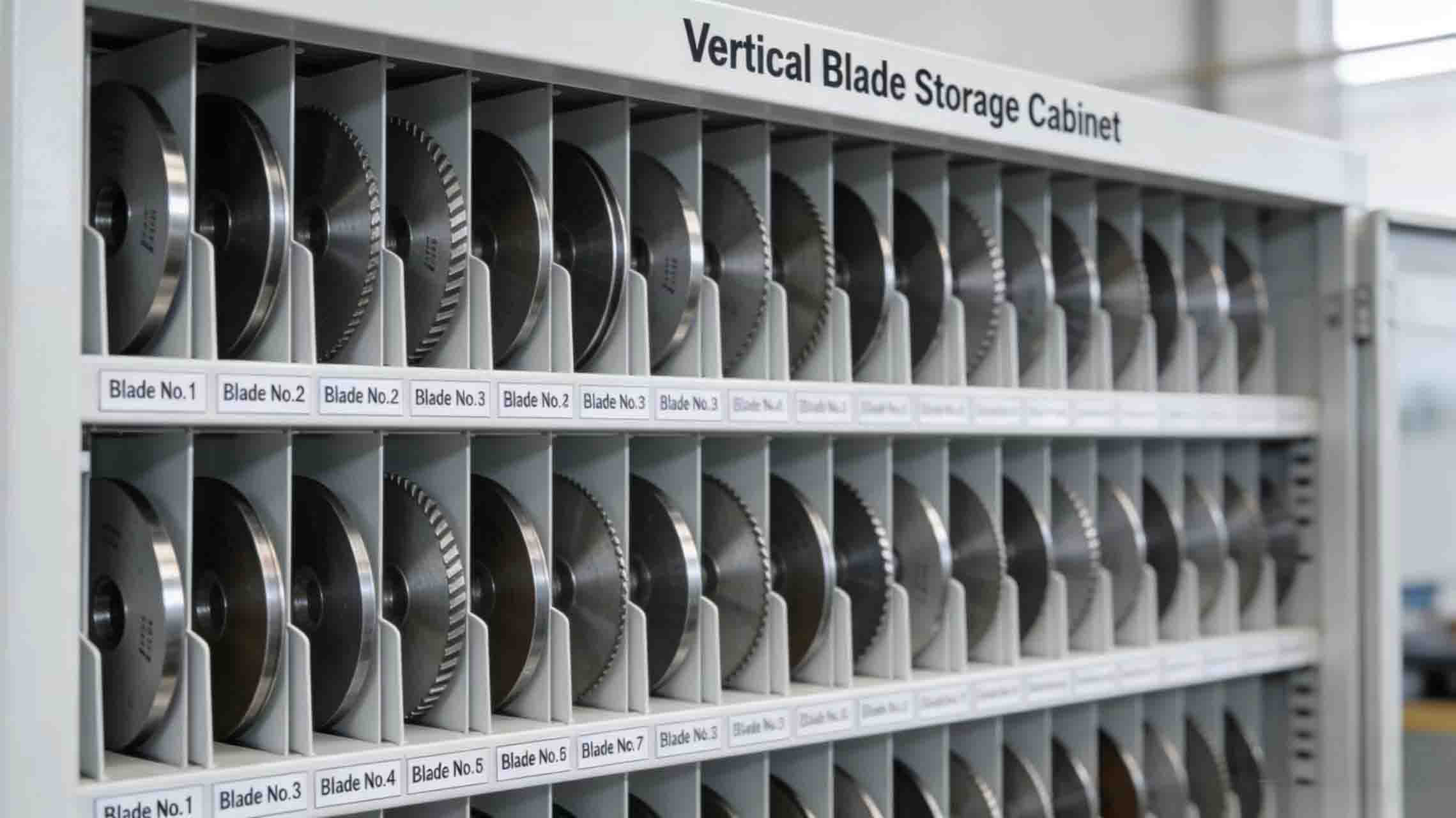
· Labeling: Each storage location should be clearly marked with blade specifications, material, coating, edge direction, etc., to prevent incorrect selection or use.
3. Rust Prevention and Protection
· Apply rust preventive oil: For custom blades made of carbon steel or high-speed steel, apply a thin, even layer of rust preventive oil before long-term storage.
· Use desiccants: Place silica gel desiccants in the blade cabinet and replace them regularly.
· Sealed packaging: For PVD-coated CNC machined blades, it is recommended to keep the original vacuum or heat-sealed packaging until just before use.
3. Best Methods for Blade Handling (Transport and Installation)
1. Wear Protective Gloves
When handling blades with bare hands, sweat can corrode the blade surface, especially leaving hard-to-remove fingerprint marks on high-finish circular blades. Non-woven or nitrile gloves must be worn to protect both the blade and the operator from cuts.
2. Use Specialized Handling Tools
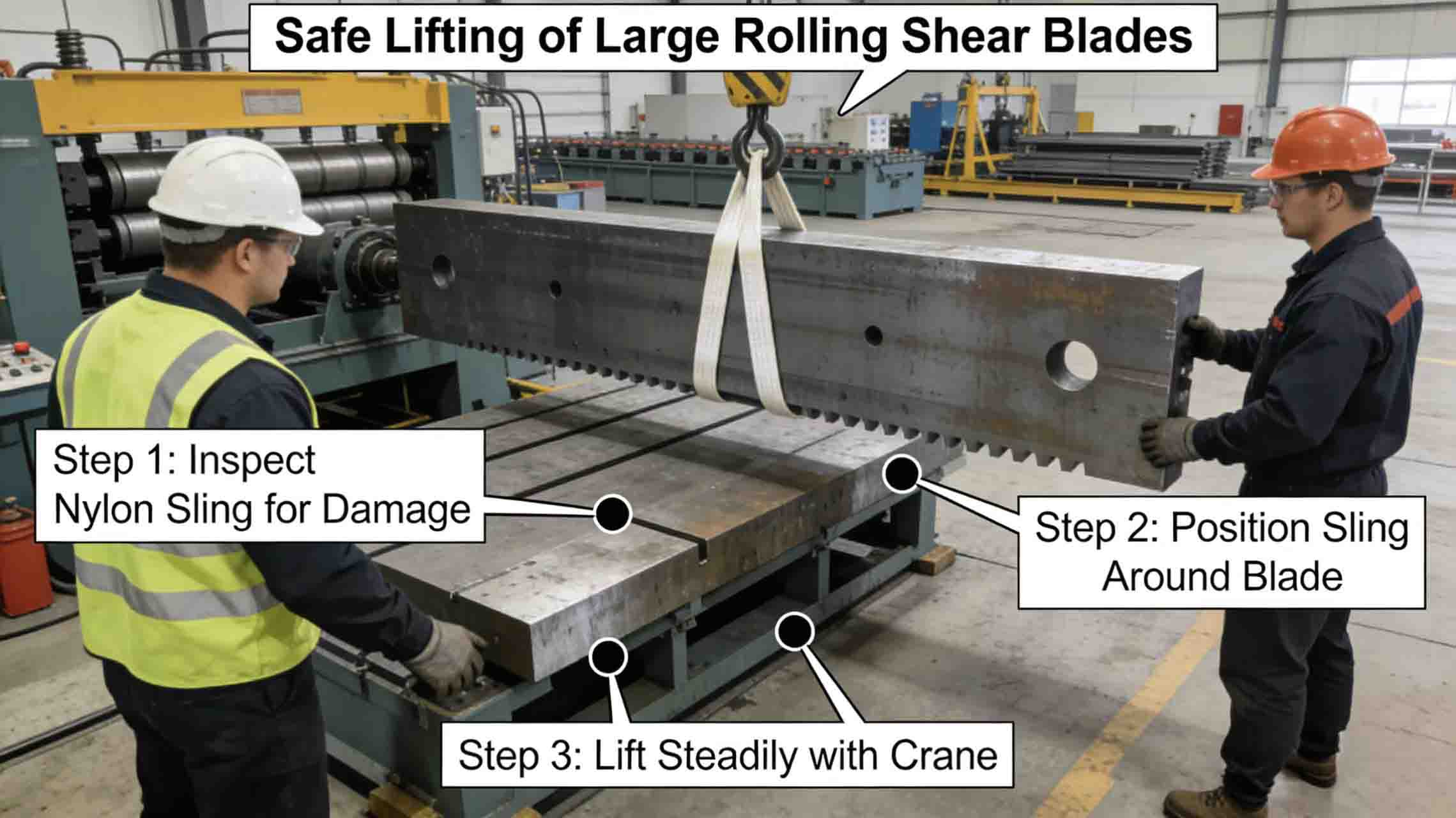
· Blade lifting slings: For large custom slitter blades weighing more than 5 kg, use nylon slings or suction cup lifters. Never use wire ropes directly on the cutting edge.
· Blade trolley: Use a dedicated blade cart with shock-absorbing wheels for batch transport to avoid vibration and impact during transit.
3. Clean and Inspect Before Installation
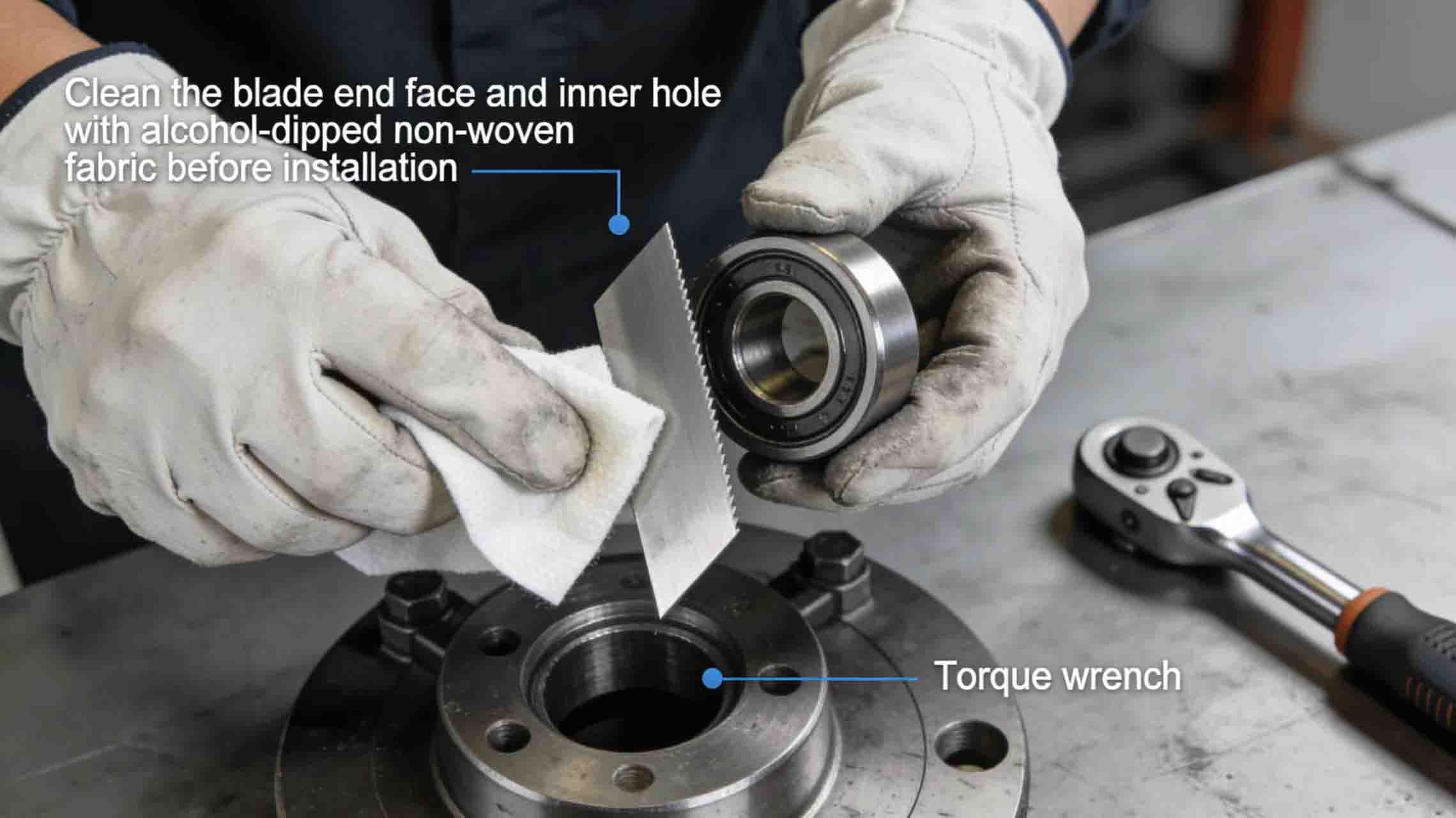
· Before installation, wipe the blade bore and end faces with a lint-free cloth moistened with alcohol or a specialized cleaner to remove rust preventive oil and fine particles.
· Inspect the edge under magnification for any invisible nicks. Mingbai Technology recommends spot-checking with a stereo microscope of at least 20x magnification.
4. Correct Installation Technique
· Clean the blade shaft, removing burrs and old spacer residues.
· When installing slitter blades, ensure the fit clearance between the blade and the shaft is appropriate. Too tight will damage the bore; too loose will cause eccentricity.
· Use a torque wrench to tighten screws in a crisscross sequence to avoid blade distortion due to over-tightening on one side.
4. Common Mistakes and Preventive Measures
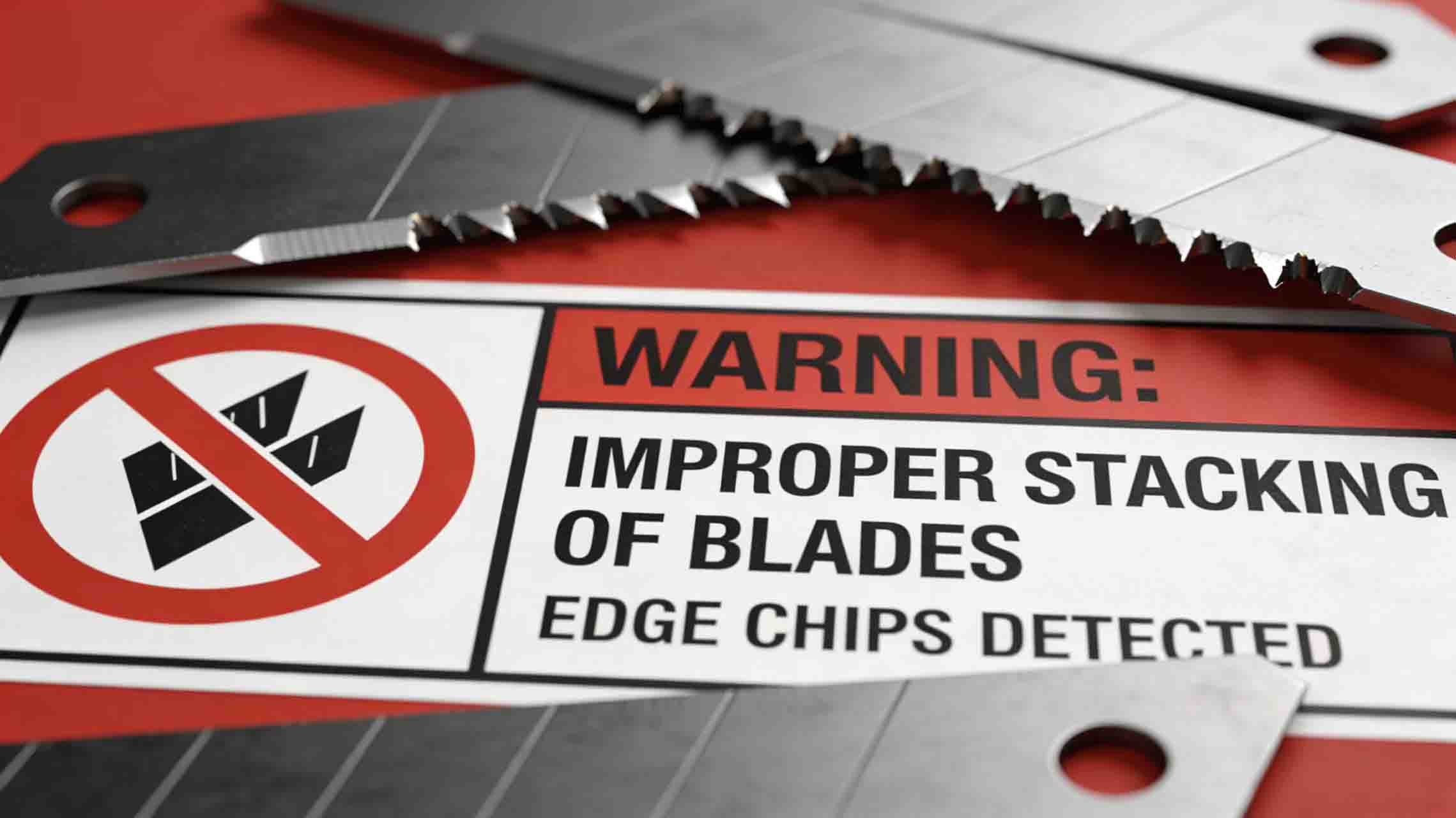
One common mistake is stacking blades. This risks edge chipping and flatness deformation. The correct practice is vertical suspension or separate compartments.
Another mistake is bare-handed grasping of the edge. This can cause rust and cuts. The correct practice is to wear gloves and grasp by the bore or back.
Using wire rope for lifting can cause edge indentation. Nylon slings or suction cups should be used instead.
Installing blades without cleaning them first allows particles to scratch the edge. Wiping with alcohol is recommended.
Storing blades directly on a concrete floor leads to moisture absorption and rust. Blades should be placed on wooden pallets or shelves.
Mixing new and old blades together may lead to misuse of worn blades. Separate zones and label management should be implemented.
5. Mingbai Technology's Blade Packaging and Technical Support
Mingbai Mechanical Tool Technology Co., Ltd. understands that every step from factory to use can affect blade quality. Therefore, we provide:
· Professional packaging: Each circular blade or slitter blade is protected by triple-layer protection: individual plastic sealing + shockproof foam + high-strength carton, ensuring damage-free transport.
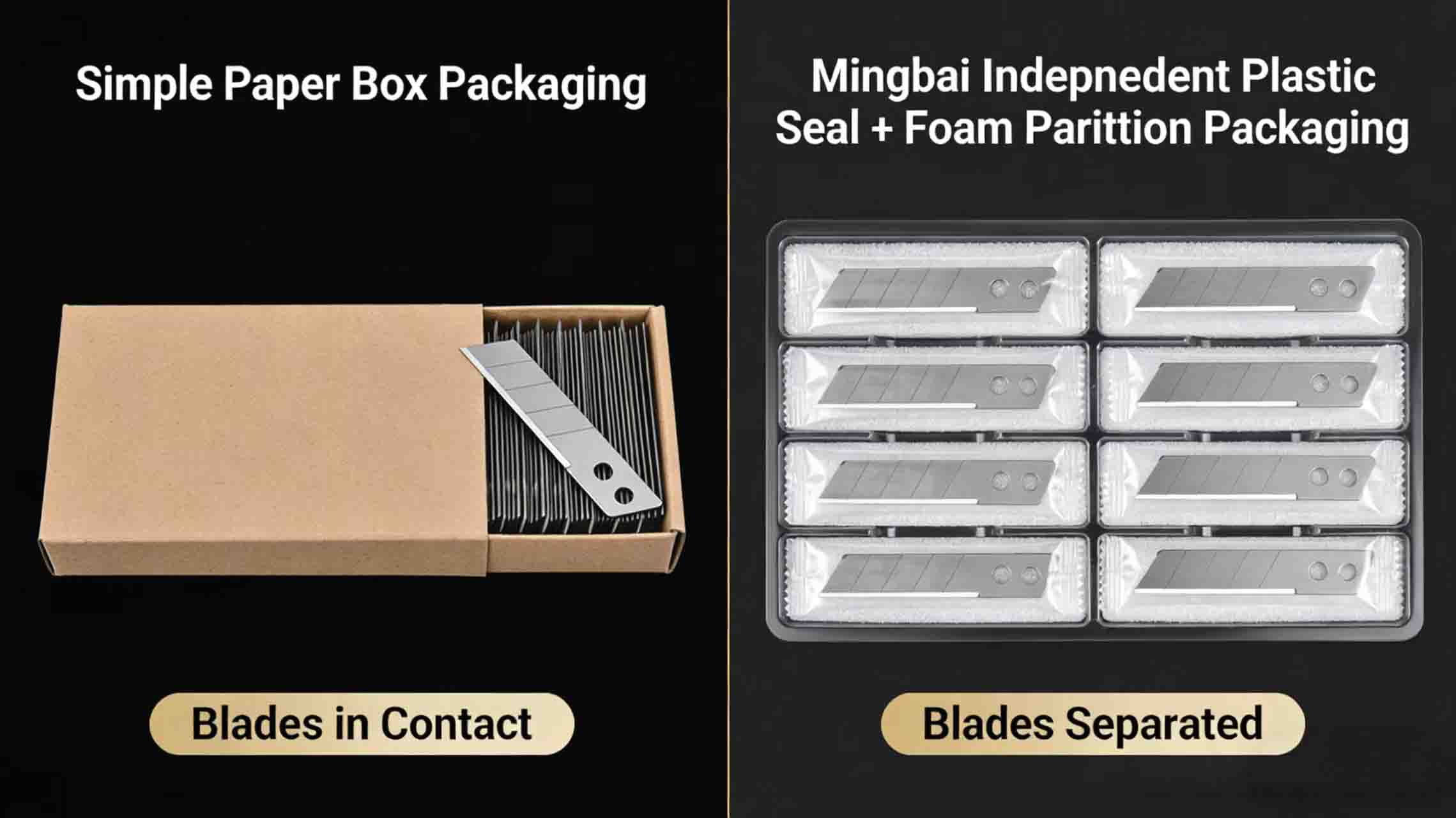
· Instruction manual: A blade storage and handling guide is included with each shipment to help customers establish internal procedures.
· On-site training: Engineers can be arranged to visit and explain blade mounting, storage, and daily maintenance points.
· Re-sharpening and recycling: We offer professional re-sharpening services for worn blades and also recycle old blades for compliant disposal.
6. Case Study
A metal processing company once suffered significant losses due to a batch of Cr12MoV slitter blades being randomly stacked in a damp corner, resulting in extensive surface rust. After introducing the "vertical slot cabinet + regular rust preventive oil" solution recommended by Mingbai Technology, the blade rust rate dropped to below 0.1%, and accidental edge damage was reduced by 70%.
Conclusion
Storing and handling blades may seem like minor matters, but they directly affect cutting quality and production costs. From environmental control to handling techniques, every detail deserves serious attention. Mingbai Mechanical Tool Technology Co., Ltd. not only manufactures high-quality precision machine blades, custom blades, and CNC machined blades, but is also committed to helping customers use every blade properly. If you need a more detailed blade management program, please feel free to contact us.
Website: www.mingbaiblade.com
 IPv6 network supported |
Sitemap
|
Xml
|
Privacy Policy
IPv6 network supported |
Sitemap
|
Xml
|
Privacy Policy
leave a message
Scan to wechat :

Scan to whatsapp :
