 en
en Our factory has served countless products across various industries for 30 years, making a significant contribution to the cutting industry. Let us customize the cutting tools you need!
Mabu - CEO RisingBamboo

 Email: Mb@mingbaiblade.com
 Tel.: +86-13855519988



In metal slitting, film cutting, or foil slitting operations, a clean cutting edge is the core indicator of product quality. Burrs, tears, dust, or uneven edges not only affect downstream processes but also reduce yield rates. To achieve "clean cuts," systematic optimization of the slitting blade is key. As a professional manufacturer of slitter blades, circular blades, and various types of custom blades, Mingbai Mechanical Tool Technology Co., Ltd. summarizes the following optimization strategies based on years of field experience.
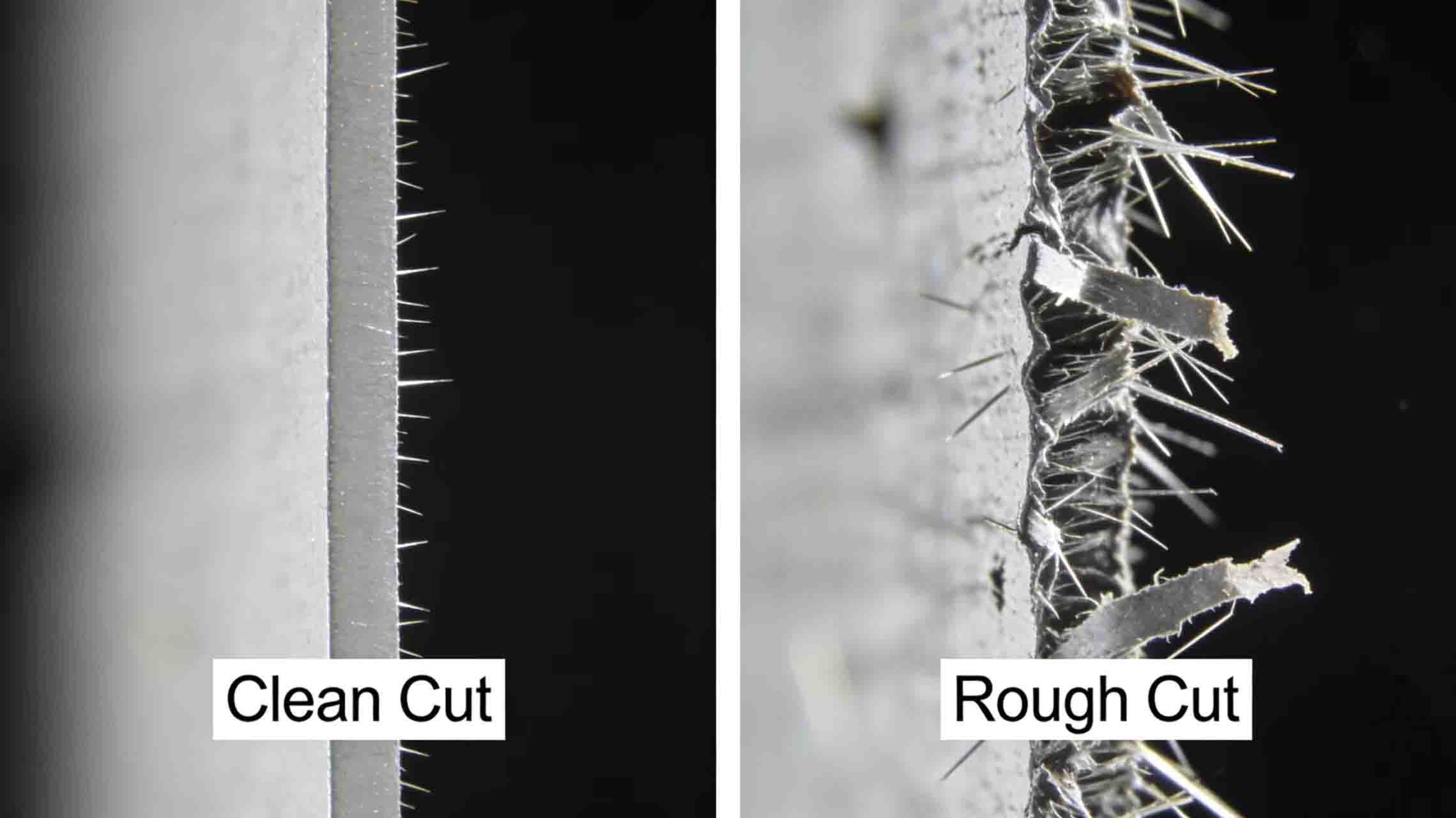
1.Start with Blade Selection: Matching is the Key
The first principle of clean cutting is using the right blade. Different materials, thicknesses, and speeds require different blade parameters.
1. Material Selection
· For cutting ordinary carbon steel and stainless steel, high-carbon high-chromium tool steel (such as Cr12MoV) or powder metallurgy high-speed steel precision machine blades are recommended, offering both wear resistance and toughness.
· For silicon steel sheets, copper foil, aluminum foil, etc., ultra-fine grain carbide or PVD-coated CNC machined blades can significantly reduce burrs.
· For sticky materials (such as adhesive films, rubber), circular blades with mirror-grade surface finish should be selected to prevent material adhesion.
2. Geometric Angle Optimization
· Shear angle: Appropriately increasing the shear angle can reduce cutting forces and lower the risk of material tearing.
· Edge radius: Extremely thin materials require a sharp edge (R ≤ 5μm), while thick plates need slight edge passivation (R ≈ 15-25μm) to avoid chipping.
· Rake angle and clearance angle: Adjust according to material hardness. Use a large rake angle for soft materials and a small rake angle for hard materials.
2. Precisely Set Blade Gap and Overlap
Blade gap (the horizontal distance between the cutting edges of the upper and lower blades) and overlap (the vertical overlapping depth of the upper and lower blades) are the most critical parameters affecting cutting cleanliness.
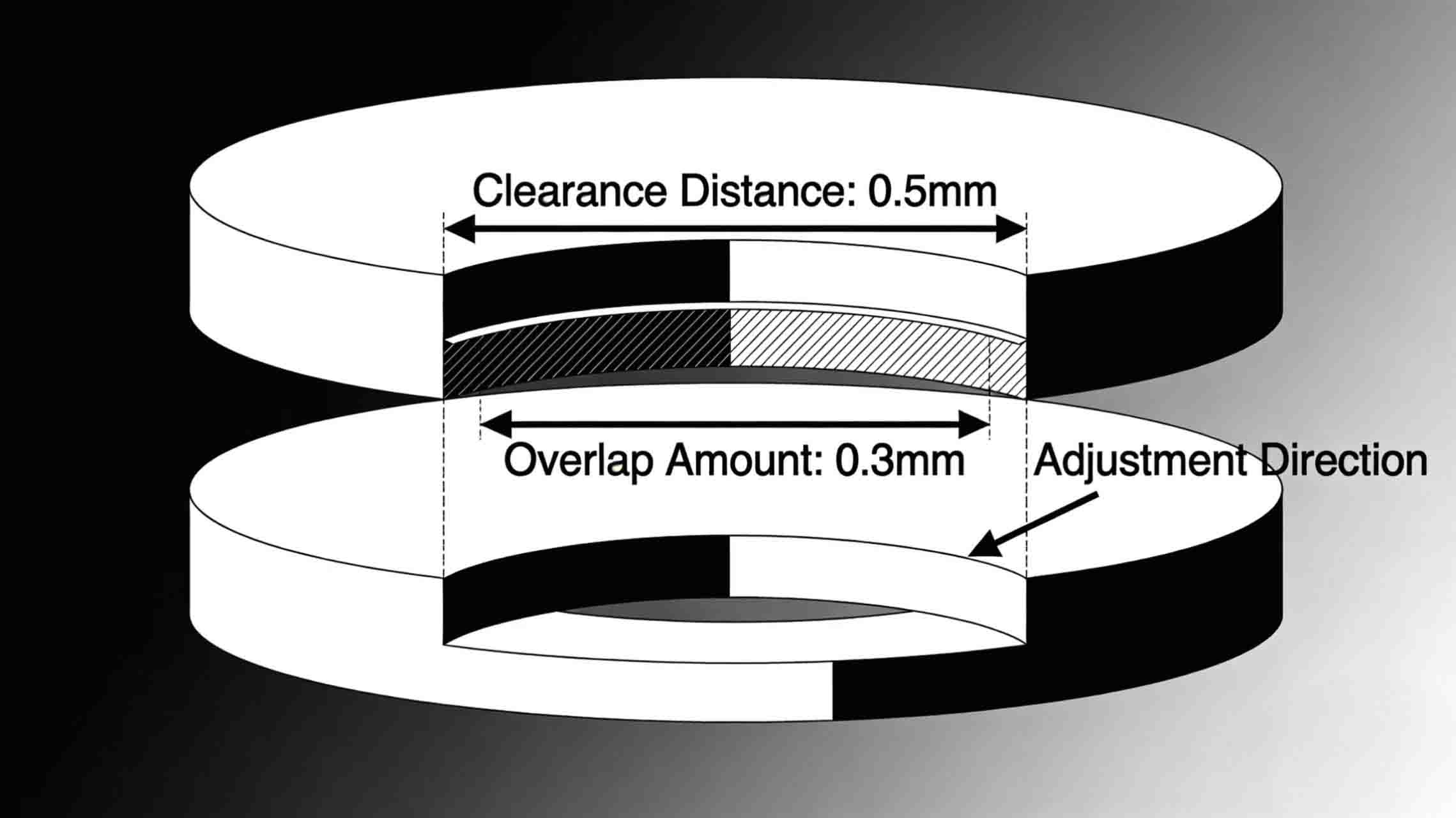
Gap principle: Typically 5%-10% of the material thickness. Too small a gap increases blade friction, generates heat, and causes edge powdering; too large a gap results in tensile tearing of the material and increased burrs. For custom slitter blades, it is recommended to start with a gap of 8% of the material thickness and then fine-tune based on actual cut edge results.
Overlap principle: Generally 30%-50% of the material thickness. Insufficient overlap leads to incomplete cutting; excessive overlap increases blade load and accelerates wear. When using high-precision circular blades, the overlap should be controlled between 0.05-0.3mm, depending on equipment rigidity.
3. Keep Blades Extremely Sharp and Smooth
Clean cutting requires that the blade edge has no microscopic defects and that the surface is mirror-smooth.
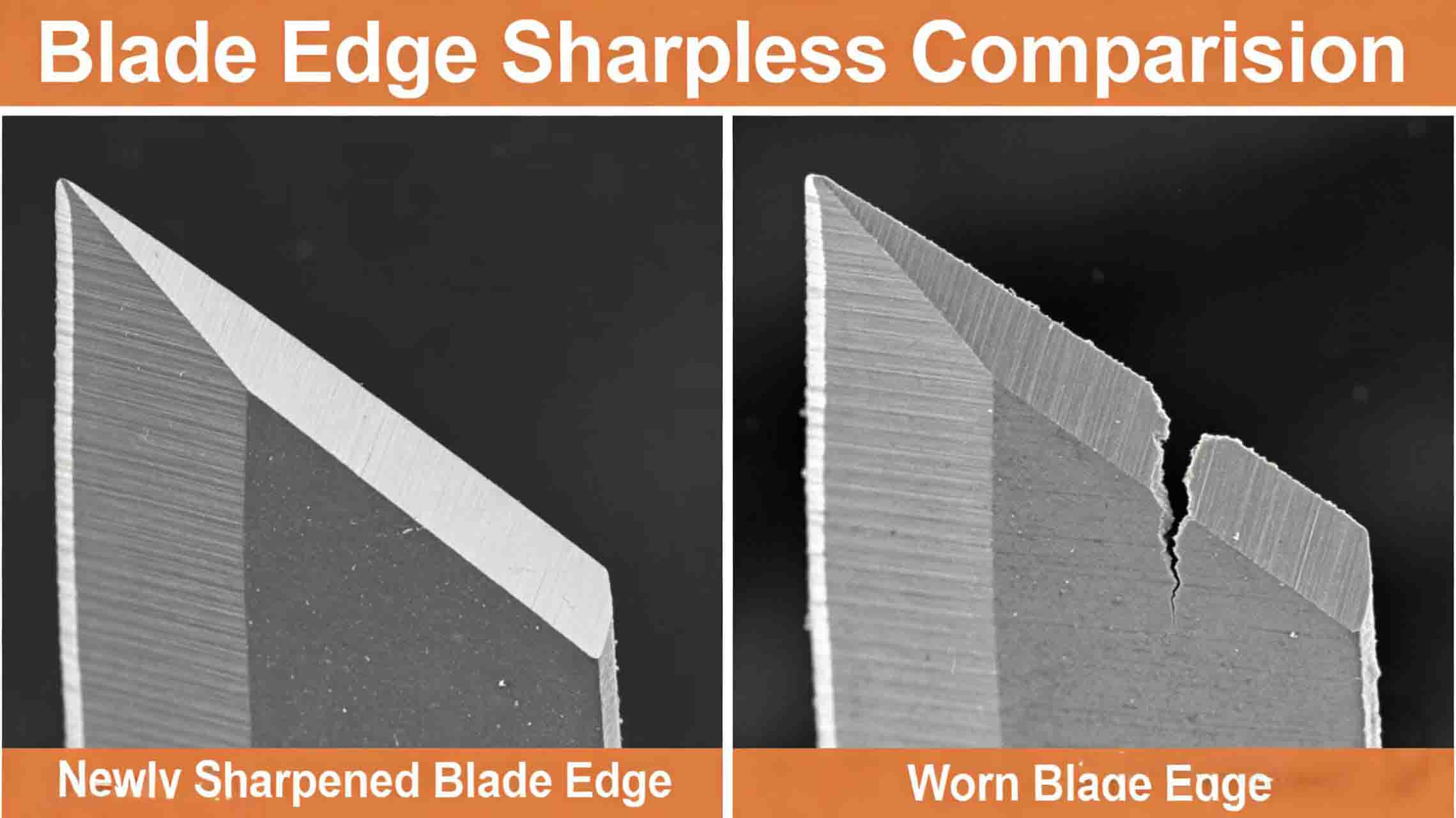
1. Precision Sharpening: Use CNC grinders for superfinishing to ensure edge straightness ≤ 2μm and surface roughness Ra ≤ 0.2μm. All slitter blades from Mingbai Technology undergo 100% edge inspection before shipment.
2. Regular Re-sharpening: When fine burrs begin to appear on the cut edge, re-sharpen promptly. Do not wait until the blade is severely dulled, as this will damage the blade substrate and shorten overall life.
3. Coating Assistance: TiN, TiAlN, or DLC coatings can reduce the friction coefficient and minimize material adhesion, especially suitable for non-ferrous metals and film slitting. Coated custom blades excel in cleanliness.
4. Optimize Equipment Operating Parameters
1. Line Speed: Select an appropriate cutting speed based on material characteristics. For metal materials, generally control at 30-150 m/min; for plastic films, speeds can exceed 300 m/min. Excessively high speed leads to heat accumulation, causing edge melting or burrs.
2. Tension Control: Unwind and rewind tension during slitting must be constant. Tension fluctuations cause material stretching and deformation, resulting in curved cut edges. For ultra-thin foils, use low-tension closed-loop control.
3. Guiding and Alignment: Ensure the blade is perfectly perpendicular to the material travel direction and that the upper and lower blade axes are parallel. Any skew will cause uneven wear and cutting defects.
5. Perfect Lubrication and Cooling
Lubrication not only removes heat but also flushes away fine chips, preventing them from scratching the finished edge.
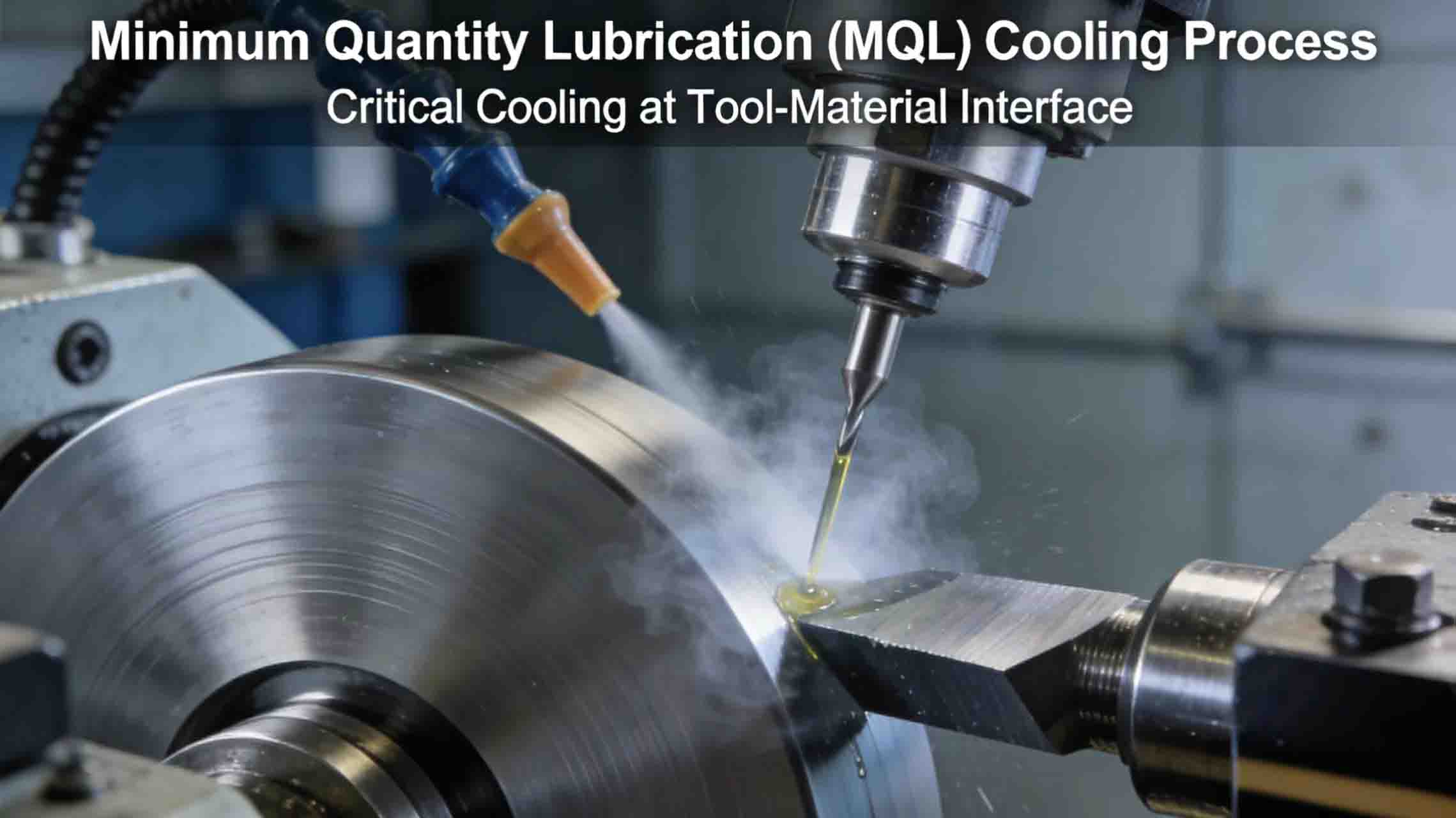
· For metal slitting, use oil mist lubrication or Minimum Quantity Lubrication (MQL), with oil volume controlled at 5-20ml per hour.
· For dry cutting applications such as films and paper, use anti-static spray or compressed air blow-off.
· Regularly check nozzle positions to ensure lubricant reaches the cutting zone accurately.
6. Establish a Scientific Blade Replacement and Maintenance System
Clean cutting is not a one-time effort; it requires process monitoring.
· First-piece inspection: After each blade change or parameter adjustment, inspect the cut edge of the first product using a magnifying glass or burr detector to confirm acceptance.
· Regular sampling: Sample every 2-4 hours, recording burr height trends.
· Life management: Set recommended blade usage length based on historical data (e.g., re-sharpen every 50,000 meters of slitting) to avoid excessive wear.
Mingbai Technology's Clean Cutting Solutions
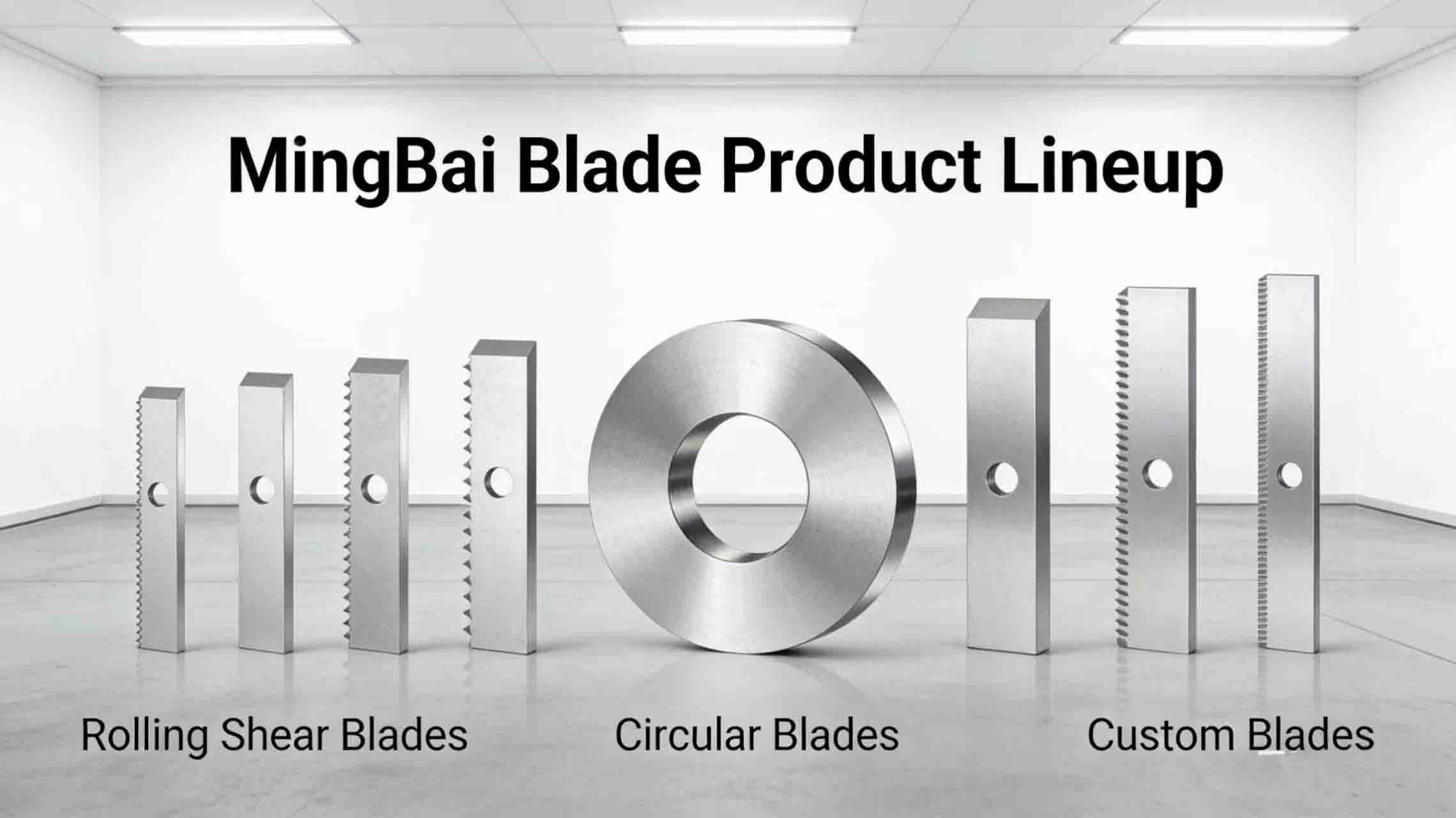
We understand that each customer's material, equipment, and quality requirements are unique. Therefore, Mingbai Technology provides full-process support from blade selection, geometry design, coating application, to on-site commissioning. Our custom slitter blades, circular blades, and precision machine blades have helped numerous users in the new energy, steel, packaging, and electronics industries achieve burr-free, dust-free clean cutting.
If you are troubled by cut edge quality, please contact Mingbai Technology. Let our professional blade optimization technology help you achieve "clean cuts."
Website: www.mingbaiblade.com
 IPv6 network supported |
Sitemap
|
Xml
|
Privacy Policy
IPv6 network supported |
Sitemap
|
Xml
|
Privacy Policy
leave a message
Scan to wechat :

Scan to whatsapp :
