 en
en Our factory has served countless products across various industries for 30 years, making a significant contribution to the cutting industry. Let us customize the cutting tools you need!
Mabu - CEO RisingBamboo

 Email: Mb@mingbaiblade.com
 Tel.: +86-13855519988



In the entire manufacturing process of precision mechanical tools, if the material is the "flesh and blood" of the blade, then heat treatment is the key process that endows the blade with a "soul." A scientifically sound heat treatment process can fully unleash the potential of high-quality raw materials, enabling slitter blades, circular blades, and various types of custom blades to achieve optimal hardness, toughness, wear resistance, and fatigue resistance. Today, Mingbai Mechanical Tool Technology Co., Ltd. will provide a systematic introduction from a professional perspective to the main types of blade heat treatment processes and conduct a comparative analysis of different process grades.
1. Why is Heat Treatment So Important for Blades?
During service, mechanical blades often have to withstand enormous cutting forces, impact loads, and intense friction. Whether it's precision machine blades shearing silicon steel sheets or circular blades slitting lithium battery electrodes, blades are required to possess high hardness to maintain edge sharpness, while also having sufficient toughness to prevent chipping and fracture.
Heat treatment is the core method for balancing this pair of contradictions. By precisely controlling the heating temperature, holding time, and cooling rate, the metallographic structure inside the steel is altered, thereby achieving the desired mechanical properties. It can be said that the level of heat treatment directly determines the final quality grade of the blade.
2. Introduction to Main Heat Treatment Process Types
1. Annealing
Annealing is a heat treatment process where steel is heated to above the critical temperature, held there, and then cooled slowly. Its main purposes are to eliminate internal stress, reduce hardness, improve machinability, and prepare the structure for subsequent quenching.
For blanks of CNC machined blades, annealing treatment is crucial. For example, forgings made of high-carbon high-chromium tool steel Cr12MoV typically require annealing at 940-960°C, held at temperature, then furnace cooled to around 700°C before being removed for air cooling, in order to obtain a uniform spheroidized pearlite structure, laying a good foundation for subsequent quenching.
2. Quenching
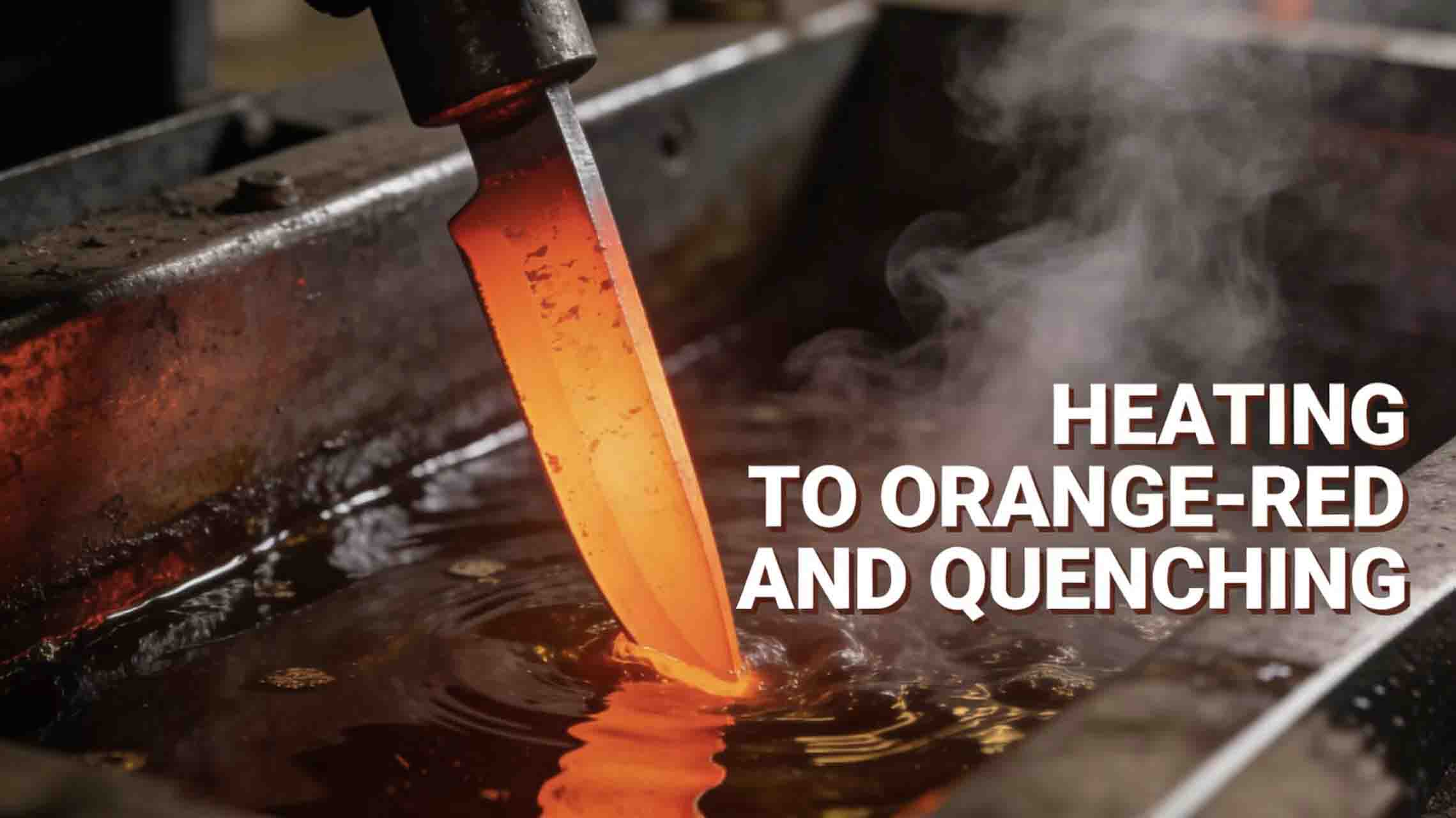
Quenching is the core process in blade heat treatment. By heating the steel above the critical temperature and then cooling it rapidly (e.g., in oil, salt bath), austenite transforms into martensite, thereby achieving high hardness and high wear resistance.
Quenching processes vary significantly for custom slitter blades made of different materials. Taking Cr12MoV material as an example, slitter blades are typically heated to 1020-1050°C and quenched in oil, achieving a hardness of 58-62 HRC. For 9Cr18 stainless steel circular blades, heating to 1000-1050°C followed by oil quenching results in a hardness of over 55 HRC, combined with good corrosion resistance. High-speed steel custom blades require even higher quenching temperatures, reaching 1180-1240°C, to obtain sufficient red hardness, achieving a hardness of 63-67 HRC.
3. Tempering
The structure of a blade after quenching is in a metastable state, with high internal stress and brittleness, so tempering must be carried out promptly. Tempering involves reheating the quenched blade to a temperature below the critical point, holding, and then cooling, to eliminate internal stress, stabilize the structure, and adjust hardness and toughness.
For example, Cr12MoV precision machine blades are typically tempered at 500±10°C for 2-3 hours. For high-speed steel tools, 3-4 tempering cycles are often necessary to ensure complete transformation of retained austenite and achieve the optimal balance of toughness.
4. Cryogenic Treatment
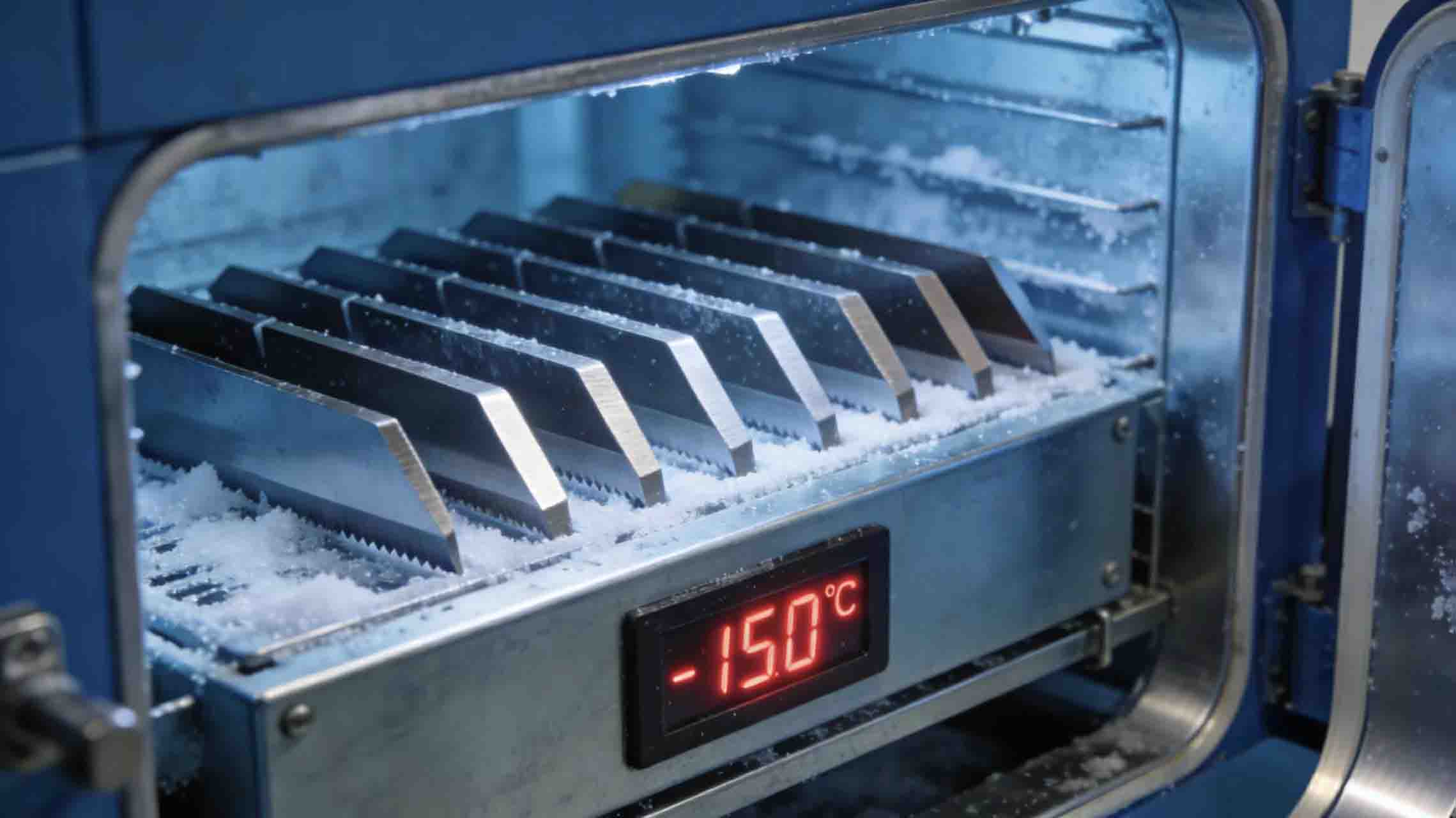
Cryogenic treatment involves further cooling the quenched blade to ultra-low temperatures of -80°C or even -160°C, promoting the transformation of retained austenite into martensite, thereby enhancing hardness, wear resistance, and dimensional stability.
Research indicates that for high-precision circular blades, cryogenic treatment at -140°C to -160°C for 4-6 hours can significantly improve blade life and cutting quality. For custom slitter blades requiring extreme wear resistance, cryogenic treatment at -80°C to -90°C is also highly effective, potentially extending blade life by 20%-30%.
3. Comparison of Hardness Grades for Common Blade Materials
When selecting blade materials, different materials correspond to different heat treatment hardness ranges and applicable working conditions.
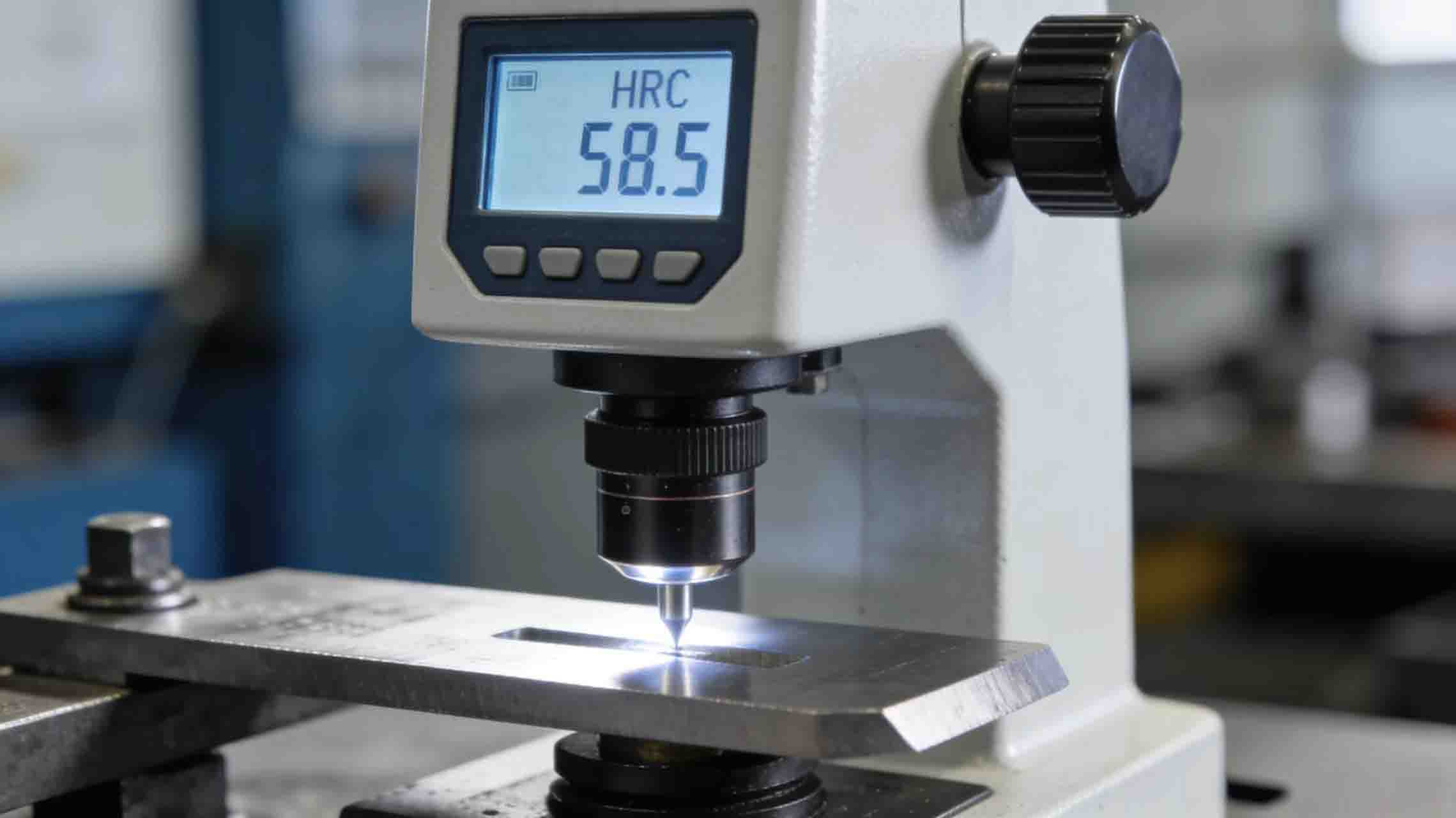
Carbon tool steels, such as T8 and T10, are relatively basic blade materials. After quenching, they can achieve a hardness of 58-62 HRC. These materials are low-cost and suitable for light-duty cutting applications, but their wear resistance and red hardness are relatively average, often used for temporary processing where performance requirements are not high.
Low-alloy tool steels, such as 9CrSi and CrWMn, offer good hardenability and minimal heat treatment distortion, achieving a hardness of 58-63 HRC. These materials are particularly suitable for manufacturing thin blades or custom blades with complex shapes, balancing hardness with controlled deformation.
High-carbon high-chromium tool steels, represented by Cr12MoV, are common materials for manufacturing slitter blades and circular blades. Their quenched hardness ranges from 58-62 HRC. Their outstanding advantage lies in excellent wear resistance, attributed to the presence of a large number of high-hardness carbides in the material, making them suitable for continuous shearing of metals like steel and copper.
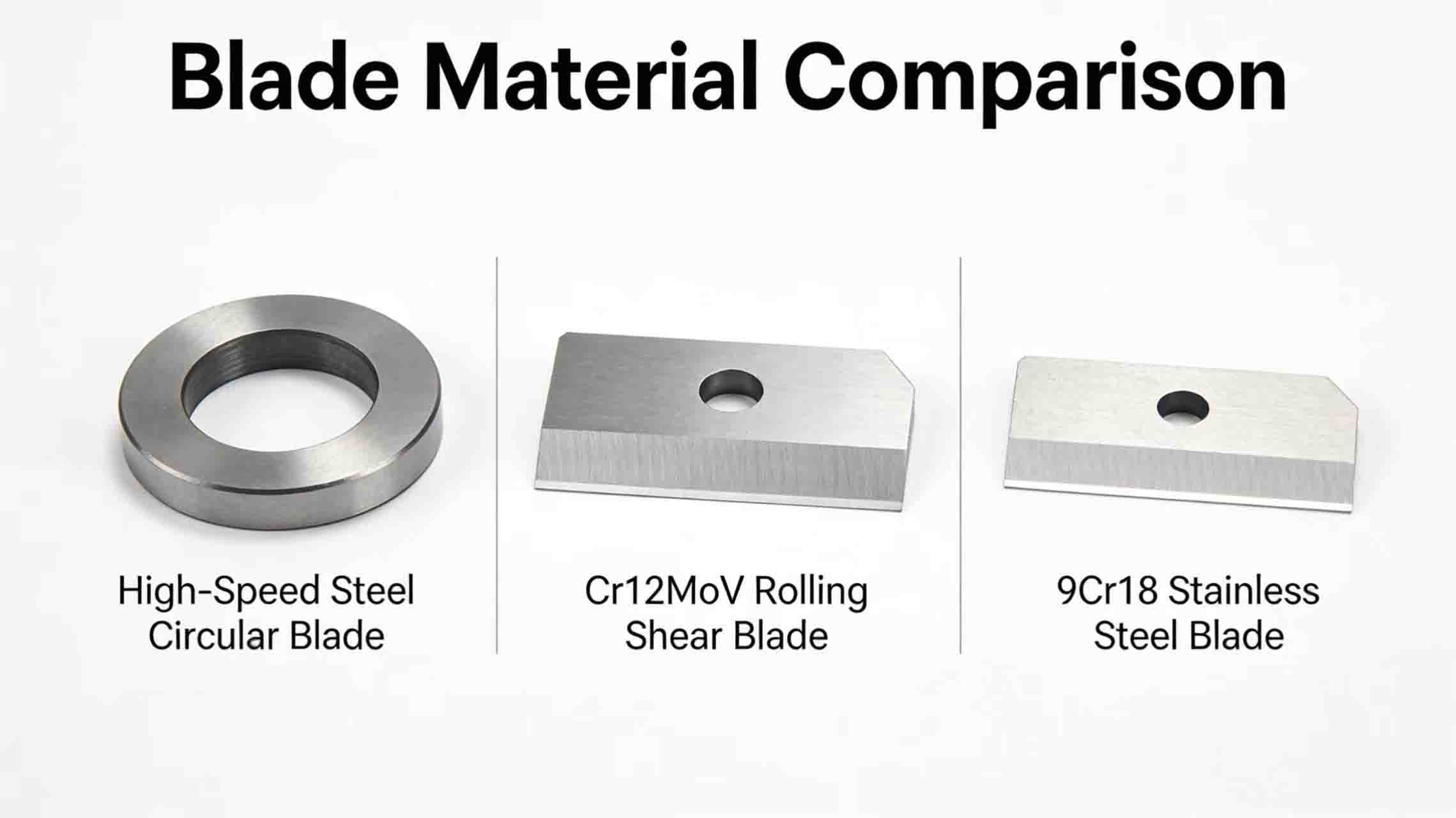
Martensitic stainless steels, such as 9Cr18, can achieve a hardness of over 55 HRC after quenching. The main characteristic of these materials is their combination of hardness and corrosion resistance, suitable for cutting applications in food processing, medical devices, or humid environments, maintaining edge sharpness while resisting rust.
High-speed steels, such as W6Mo5Cr4V2, represent high-performance tool materials. Their quenched hardness can reach 63-67 HRC. Their core advantage lies in high red hardness—the ability to maintain hardness even at high temperatures generated during high-speed cutting—making them suitable for high-speed cutting tools and applications demanding extreme wear resistance.
It is particularly important to note that hardness is not the sole indicator of blade performance. Precision machine blades seek the optimal match between hardness and toughness—too hard leads to brittleness and chipping; too soft results in poor wear resistance and short life. Therefore, in formulating heat treatment processes, Mingbai Technology always adheres to the principle that "hardness is a surface phenomenon, but the metallographic structure is the essence," pursuing high hardness targets while ensuring an ideal metallographic structure.
4. Application of Advanced Heat Treatment Technologies
As the manufacturing industry continues to upgrade, blade heat treatment technologies are also constantly innovating. Currently, industry-leading processes include:
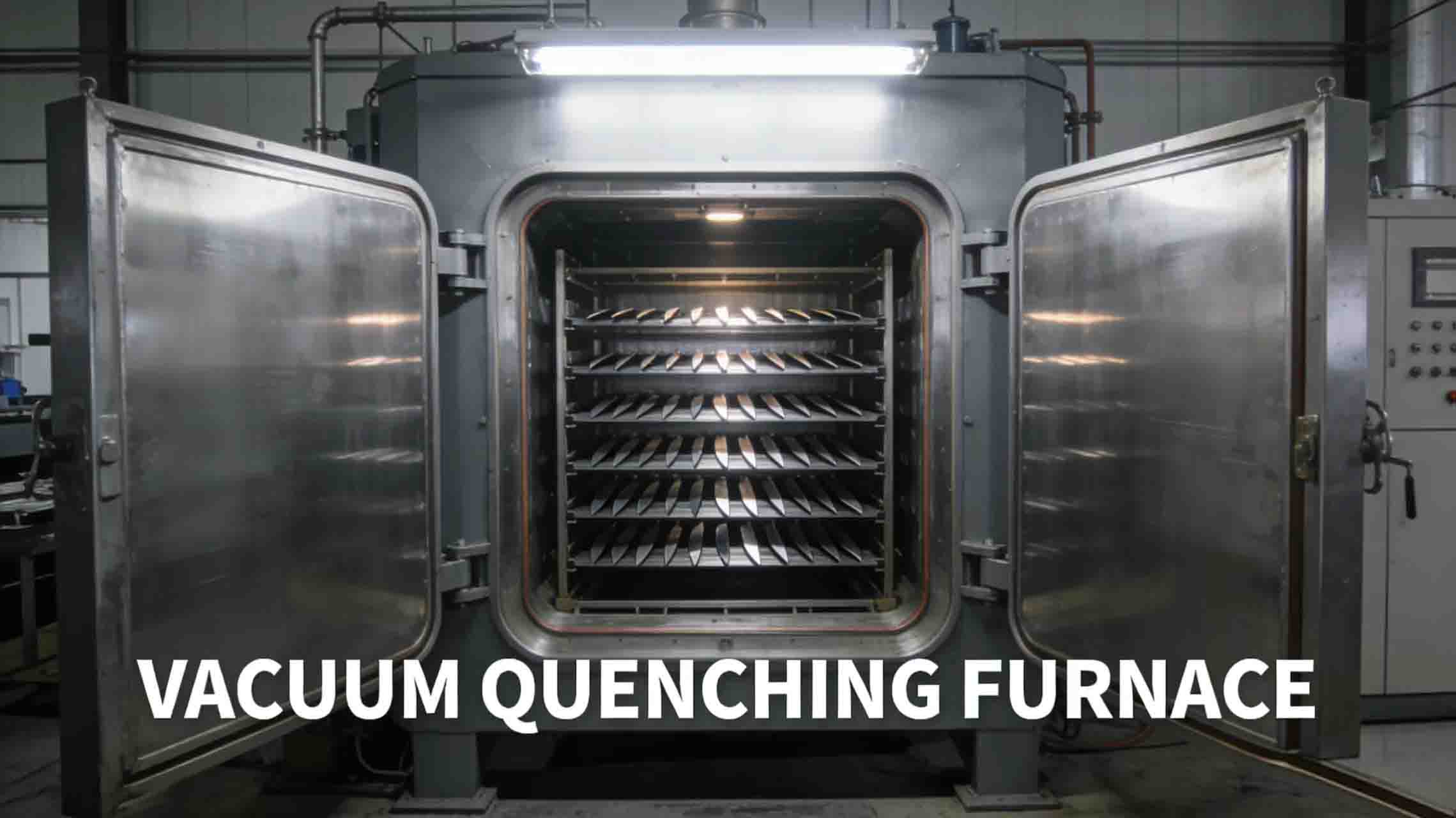
Vacuum protective atmosphere heat treatment, which involves heating in a vacuum environment to effectively prevent surface oxidation and decarburization, ensuring edge quality. This is especially suitable for high-precision circular blades and CNC machined blades with extremely high surface quality requirements.
Induction hardening local quenching technology is mainly applied to blades with a bimetallic structure (e.g., tool steel edge on a tougher backing). This process rapidly induction heats and quenches only the edge steel portion, while the blade body maintains its original toughness. This ensures edge hardness while preserving overall strength, offering energy efficiency and high effectiveness.
Thermomechanical treatment is an advanced process that combines forging and heat treatment. By quenching directly during plastic deformation of the metal, a finer grain structure and superior comprehensive mechanical properties can be achieved.
The application of computer precision temperature control technology enables digital control throughout the entire heat treatment process. Through real-time monitoring and automatic adjustment of furnace temperature, consistency in mass-produced products is ensured, avoiding quality fluctuations caused by manual operation errors.
5. Mingbai Technology's Heat Treatment Practice
As a professional tool manufacturer, Mingbai Mechanical Tool Technology Co., Ltd. has always regarded heat treatment as a core process link. In the production of our CNC machined blades, custom slitter blades, and various circular blades, we precisely design heat treatment process parameters based on the characteristics of different materials and customer operating conditions, strictly implementing quality inspection standards.
We deeply understand that only by perfectly combining material, heat treatment, and precision machining can truly blade products be manufactured. From annealing, quenching, tempering to cryogenic treatment, every step is meticulously designed and strictly controlled to ensure that every precision machine blade shipped achieves the optimal balance between performance and service life. In the future, Mingbai Technology will continue to delve deeper into the field of heat treatment processes, serving global customers with higher quality products.
Website: www.mingbaiblade.com
 IPv6 network supported |
Sitemap
|
Xml
|
Privacy Policy
IPv6 network supported |
Sitemap
|
Xml
|
Privacy Policy
leave a message
Scan to wechat :

Scan to whatsapp :
