 en
en Our factory has served countless products across various industries for 30 years, making a significant contribution to the cutting industry. Let us customize the cutting tools you need!
Mabu - CEO RisingBamboo

 Email: Mb@mingbaiblade.com
 Tel.: +86-13855519988



In the field of precision slitting and metal processing, blade performance is often reflected in seemingly minor yet critically important technical indicators. Among these, concentricity and surface finish are core parameters that measure the quality of circular blades, slitter blades, and various types of precision machine blades. These two indicators directly determine the stability of the cutting process, the quality of the cut edge, and the service life of the blade. Today, Mingbai Mechanical Tool Technology Co., Ltd. will provide an in-depth technical analysis of the specific impacts of concentricity and surface finish on cutting quality.
1. What is Blade Concentricity?
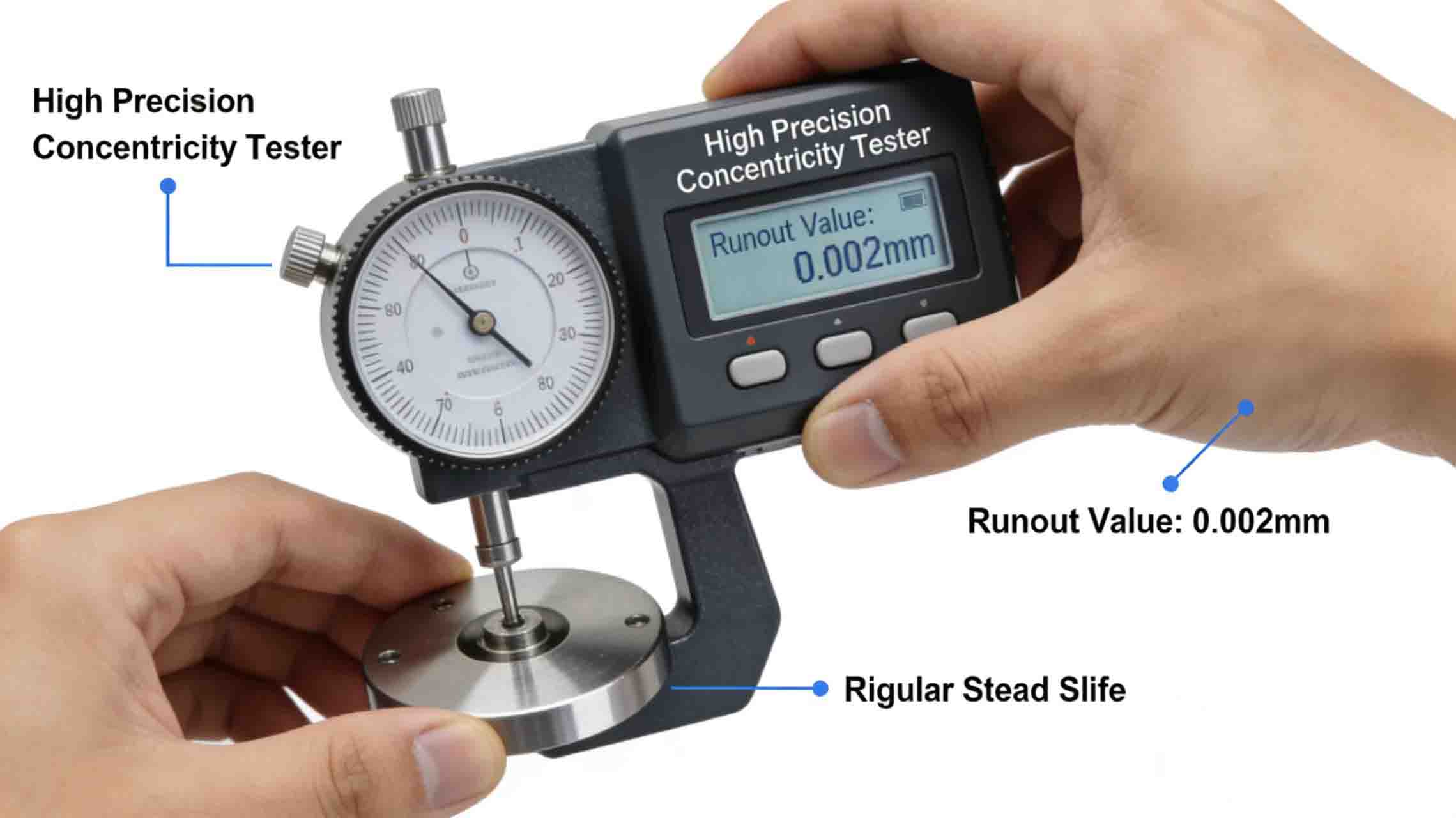
Blade concentricity refers to the coaxiality error between the outer diameter of the blade and its center hole. Simply put, it describes whether the outer edge of the blade rotates around its true center when the blade is spinning. For high-precision circular blades, concentricity is the foundation for ensuring cutting accuracy.
When a blade is mounted on a rotating shaft, if there is an eccentricity between the outer diameter and the center hole, the blade will experience radial runout during high-speed rotation. This runout causes the actual position of the blade edge during cutting to constantly change, thereby affecting cutting quality.
2. Impact of Concentricity on Cutting Quality
1. Inconsistent Cutting Width
During the slitting process, the gap between the upper and lower blades is precisely set. If the blade concentricity is poor, the edge position changes periodically during rotation, causing the blade gap to fluctuate. The result is inconsistent strip widths that cannot meet the precision requirements of downstream processes. For custom slitter blades, this problem is particularly critical because customization often implies demanding dimensional accuracy requirements.
2. Increased Burr Formation
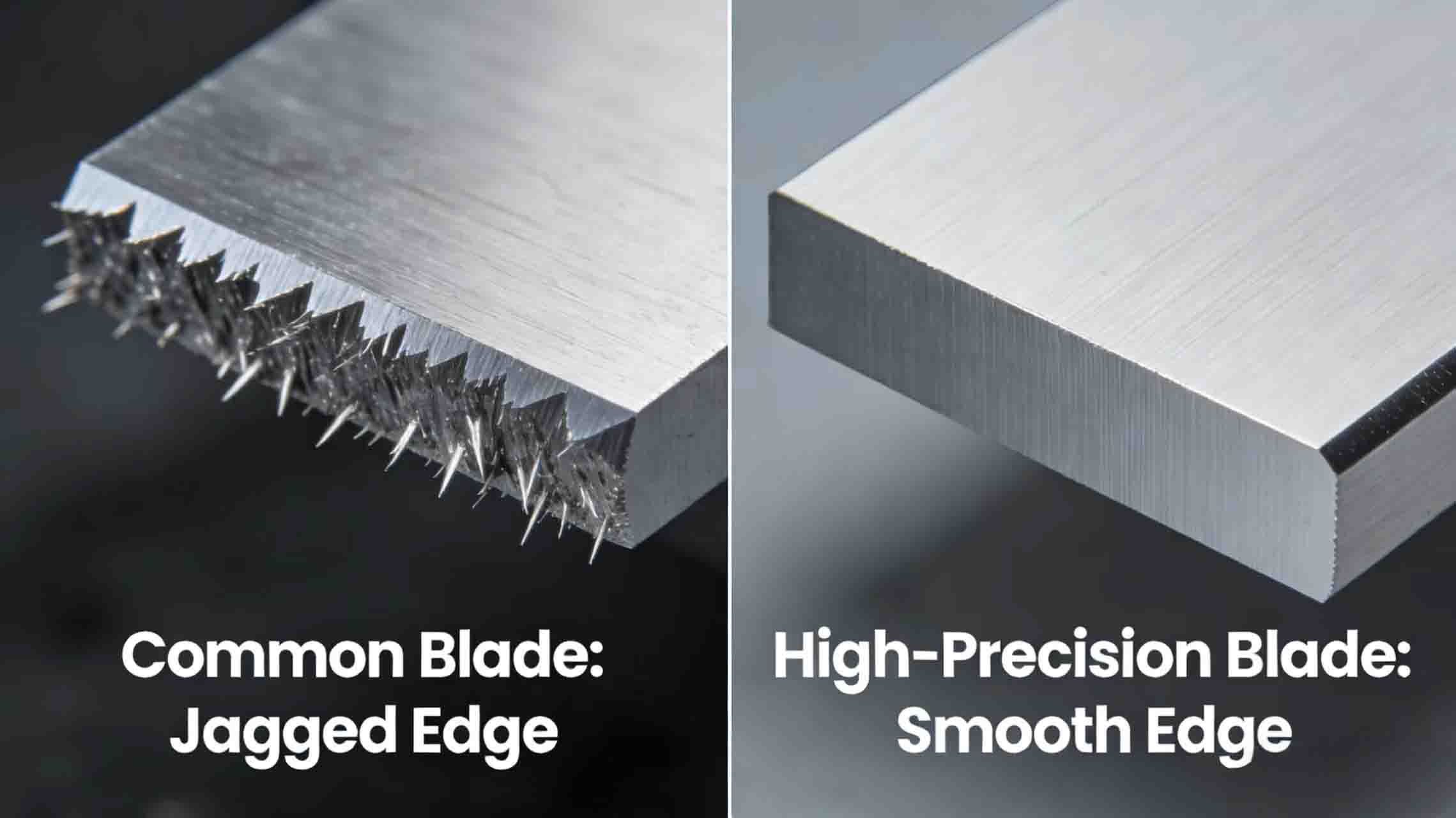
The radial runout caused by poor blade concentricity makes the shearing process unstable. When the blade rotates to the position of maximum eccentricity, the actual shearing force changes, leading to the material being partially torn rather than cleanly cut. This tearing is inevitably accompanied by burr formation. For slitter blades used for shearing materials like silicon steel, copper foil, and aluminum foil, burr issues directly impact the product yield rate.
3. Reduced Blade Life
Radial runout means the blade experiences uneven forces during cutting. At a certain phase of each rotation, the blade edge bears a greater impact load, while other phases are relatively stress-free. This cyclical impact accelerates localized wear on the edge and can even lead to chipping. Precision machine blades that could normally last for months might fail within weeks due to concentricity problems.
4. Increased Equipment Vibration
Blade runout transmits throughout the entire equipment system, causing vibration in the spindle and frame. Operating under these conditions long-term not only affects cutting quality but also damages equipment bearings, shortening the machine's lifespan.
3. What is Blade Surface Finish?
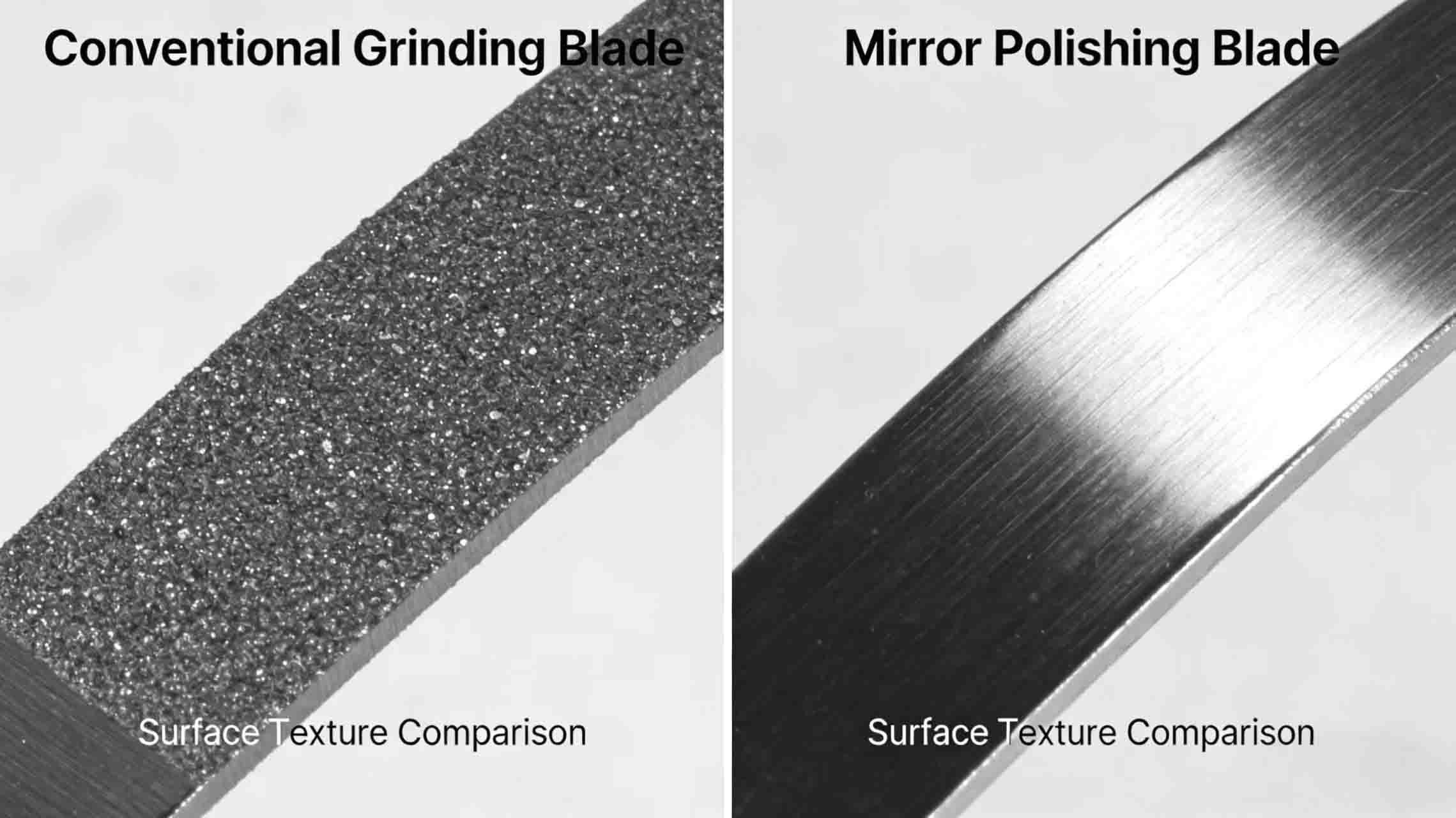
Blade surface finish, also known as surface roughness, refers to the characteristics of the microscopic geometry of the blade surface, typically expressed by the Ra value (arithmetical mean deviation of the profile). For CNC machined blades, surface finish is not just about aesthetics; it directly relates to friction, heat generation, and chip evacuation during the cutting process.
4. Impact of Surface Finish on Cutting Quality
1. Friction Coefficient and Heat Generation
The rougher the blade surface, the greater the friction coefficient when contacting the material being cut. During high-speed cutting, friction generates significant heat. Excessive temperature rise can cause the blade hardness to decrease (especially for high-speed steel materials), accelerating wear. Simultaneously, heat transferred to the material's edge may cause thermal deformation or burning. For circular blades slitting heat-sensitive materials like lithium battery electrodes, the importance of surface finish is self-evident.
2. Chip Evacuation Efficiency
During machining, chips need to flow smoothly along the blade's rake face. If the blade surface is rough, chips encounter greater resistance during evacuation, are prone to clogging in the cutting zone, can scratch the machined surface, and may even lead to tool chipping. Good surface finish allows chips to glide smoothly across the blade surface, ensuring a stable cutting process.
3. Anti-Adhesion Performance
When processing materials with high adhesion tendency, such as copper, aluminum, or stainless steel, a rough blade surface is more likely to serve as a starting point for material adhesion. Once adhesion begins, the built-up material expands rapidly, forming a built-up edge (BUE) that completely destroys the edge geometry. Custom blades with high surface finish effectively inhibit material adhesion, keeping the edge clean.
4. Microscopic Edge Strength
The microscopic unevenness of a blade surface consists of countless tiny pits and peaks. These microscopic defects can become stress concentration points under load, initiating micro-cracks. As cutting continues, crack propagation can lead to edge chipping. Therefore, high surface finish not only means better surface quality but also implies higher edge strength.
5. Mingbai Technology's Process Guarantees
1. Precision Grinding Technology
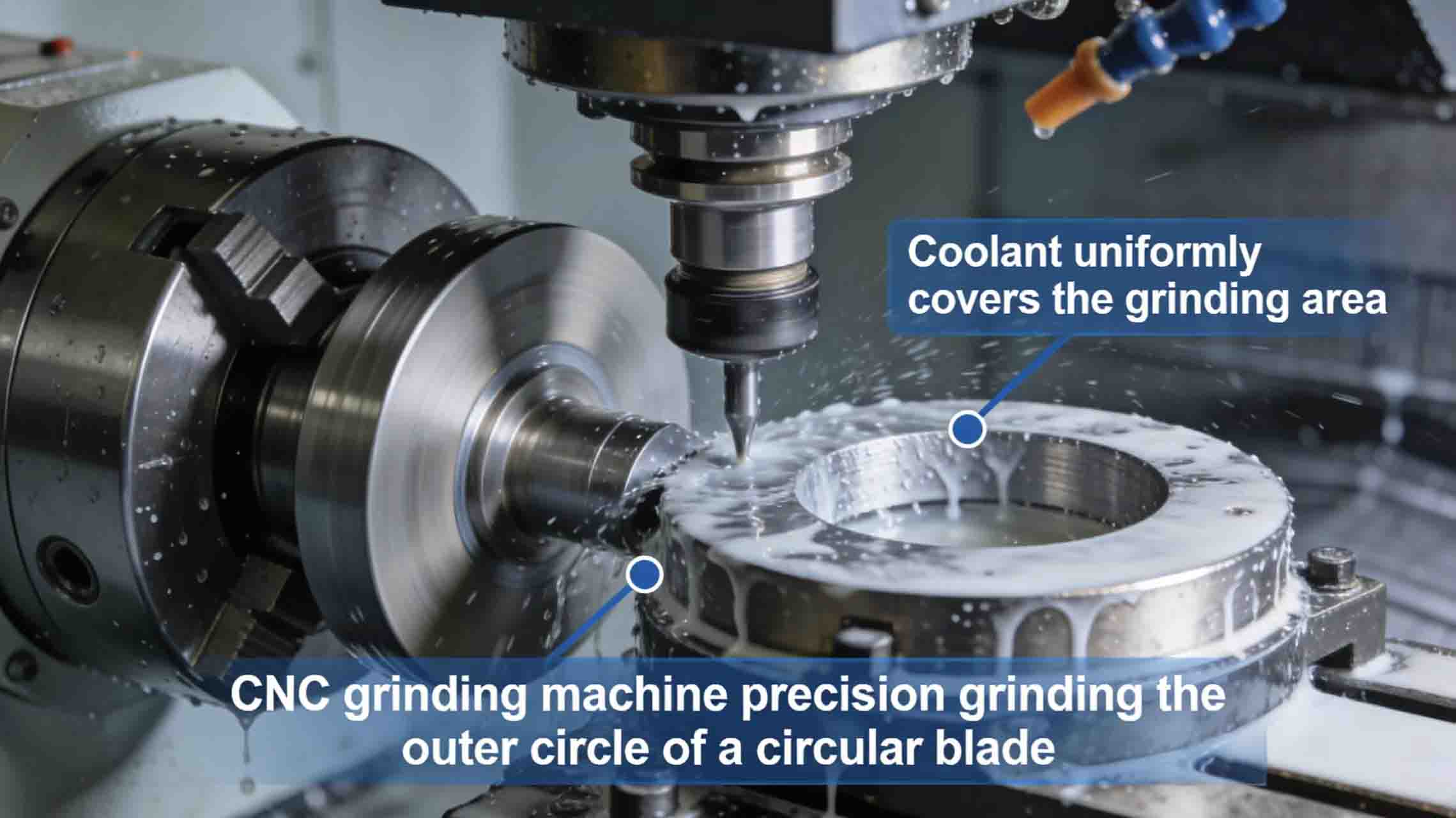
To ensure the concentricity of circular blades, Mingbai Technology employs high-precision CNC grinding machines, completing precision grinding of both the inner bore and outer diameter in a single setup. By eliminating clamping errors, we can control blade concentricity within extremely tight tolerance ranges. For demanding slitter blades, we also perform in-process dynamic balancing tests to further eliminate residual imbalance.
2. Multi-Stage Finishing Process
For surface finish control, Mingbai Technology has established a multi-stage finishing process system ranging from rough grinding, fine grinding to super-finishing. Based on different material characteristics and operating conditions, we select appropriate grinding wheel grit sizes and parameters to ensure that the edges and surfaces of precision machine blades achieve mirror-like finish. For custom slitter blades with special requirements, we also perform lapping and polishing treatments, achieving Ra values below 0.2μm.
3. Full-Process Inspection
Quality stems from process control. Mingbai Technology has established a comprehensive quality inspection system. Every CNC machined blade undergoes strict inspection using concentricity testers and roughness testers before shipment, ensuring both core parameters fully comply with design requirements.
6. Practical Case Analysis
Consider a circular blade used by a new energy company for slitting lithium battery electrodes. The blades previously used by this company had poor concentricity, resulting in frequent excessive burrs and a blade change interval of only 4 hours. After adopting Mingbai Technology's high-concentricity, high-finish circular blades, burr issues were completely resolved, the blade change interval extended to 12 hours, and overall operating costs were reduced by over 50%.
Another example involves a silicon steel processing company whose slitter blades frequently experienced material adhesion due to insufficient surface finish, requiring machine stoppages for cleaning. After switching to Mingbai Technology's mirror-finish custom slitter blades, the adhesion problem completely disappeared, and production efficiency increased by 30%.
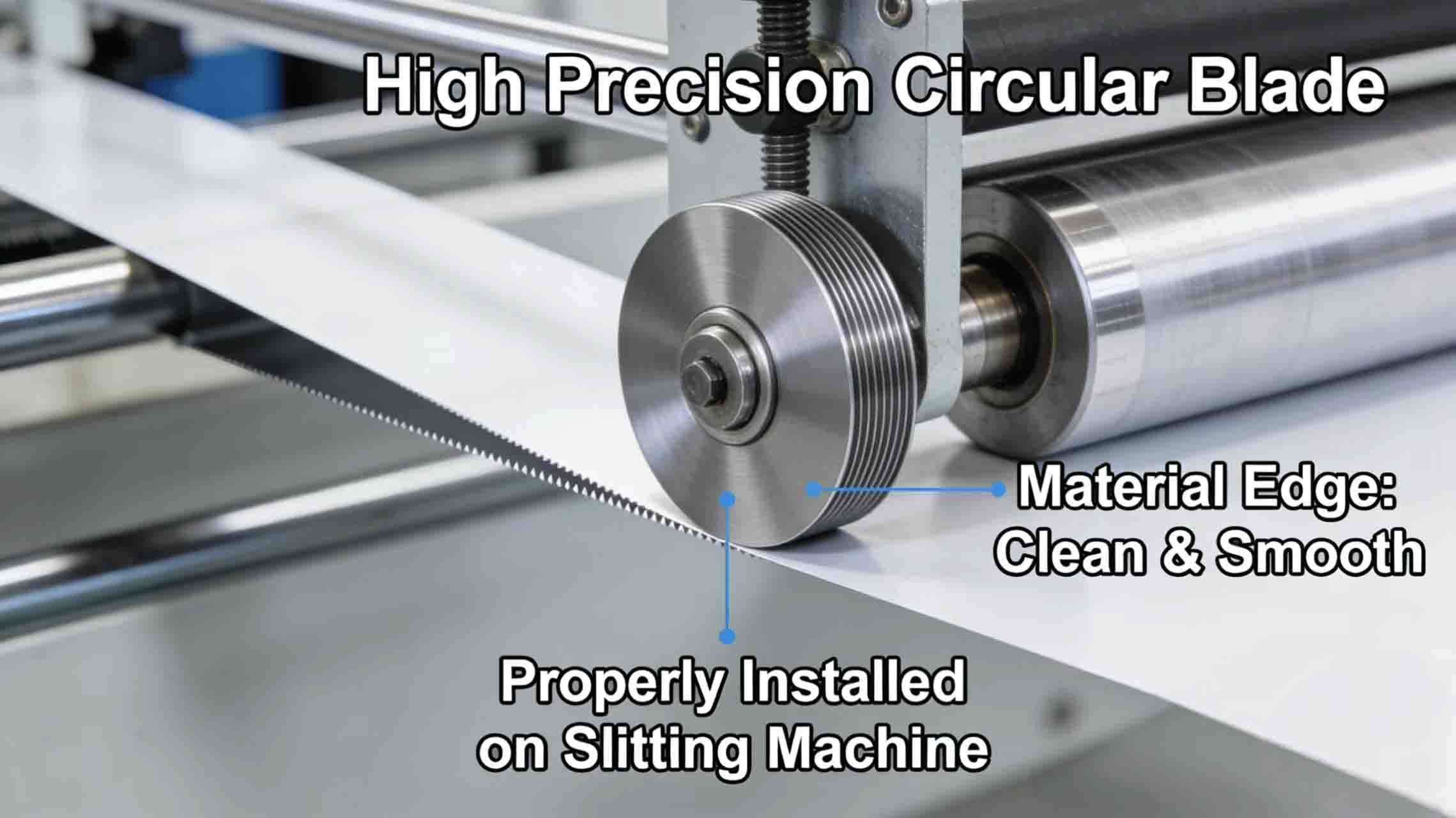
Conclusion
Concentricity and surface finish, seemingly minor technical indicators, have a decisive impact on cutting quality. As a professional tool manufacturer, Mingbai Mechanical Tool Technology Co., Ltd. always prioritizes these two indicators as the cornerstone of quality control. Through advanced processing equipment, scientific process systems, and strict inspection standards, we ensure that every precision machine blade shipped delivers maximum value to customers with its optimal rotational performance and smoothest surface.
Choose Mingbai, choose precision and reliability.
Website: www.mingbaiblade.com
 IPv6 network supported |
Sitemap
|
Xml
|
Privacy Policy
IPv6 network supported |
Sitemap
|
Xml
|
Privacy Policy
leave a message
Scan to wechat :

Scan to whatsapp :
