 en
en Our factory has served countless products across various industries for 30 years, making a significant contribution to the cutting industry. Let us customize the cutting tools you need!
Mabu - CEO RisingBamboo

 Email: Mb@mingbaiblade.com
 Tel.: +86-13855519988



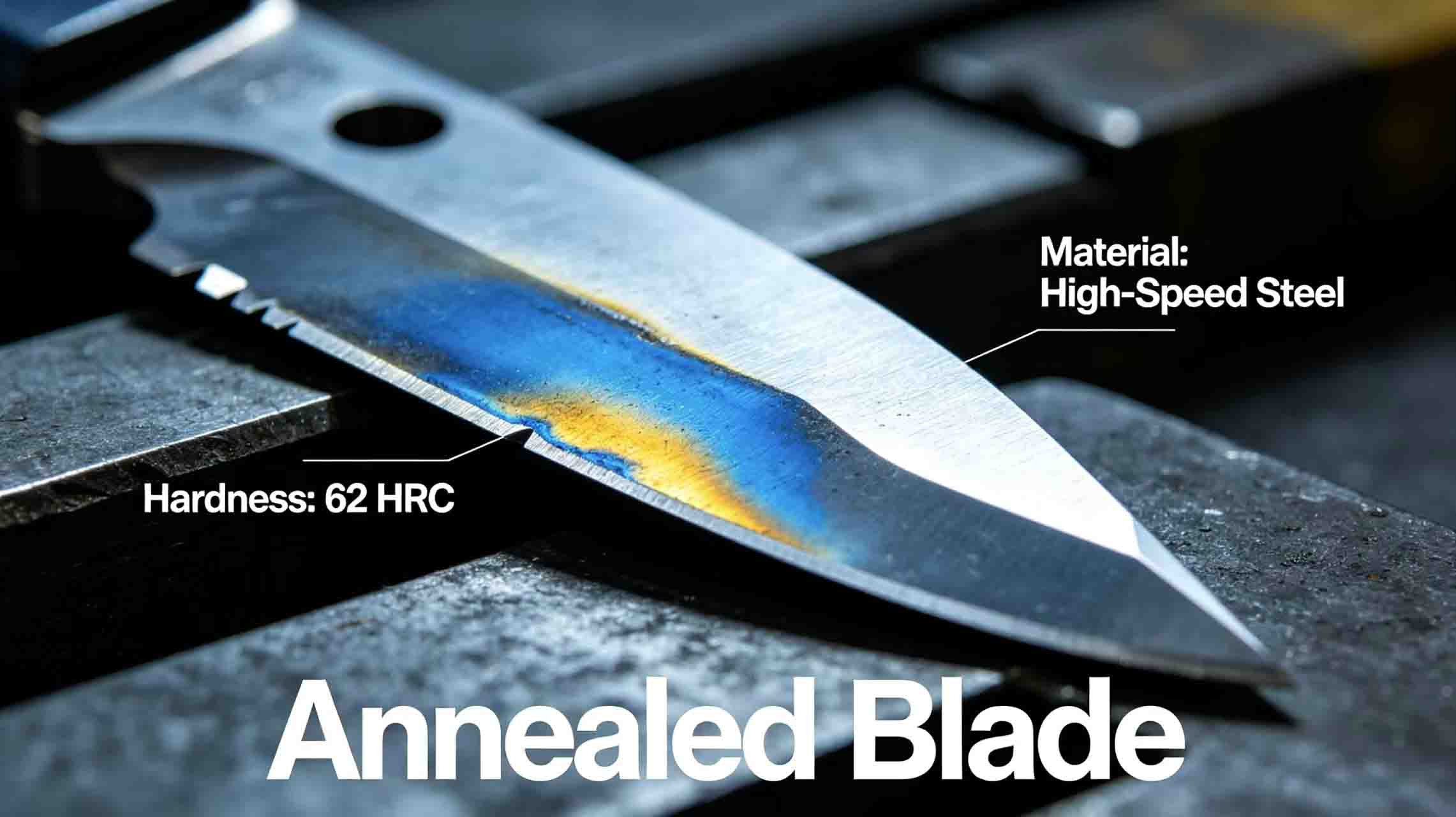
In slitting production, slitter blades or circular blades often undergo "annealing" due to excessive friction heat, dry cutting, or overheating during resharpening — the edge becomes locally soft and hardness drops. Many users think the blade is scrap and can only be thrown away. Mingbai Mechanical Tool Technology Co., Ltd. tells you: in some cases, re-hardening is possible, but certain conditions must be met.
1. How Does Annealing Happen?
Annealing occurs when the blade edge temperature exceeds the material's tempering temperature (approx. 550-600°C for high-speed steel, above 800°C for carbide), causing decomposition of the martensitic structure, precipitation of carbides, and a sharp drop in hardness. Common causes include:
· High-speed dry cutting of stainless steel or high-strength steel, with heat buildup from friction
· Dull grinding wheel or excessive feed rate during resharpening, resulting in grinding-burned annealed mechanical blades
· Interruption of lubrication and cooling, causing dry friction between blade and material
2. Can Annealed Blades Be Re-Hardened?
The answer is: it depends.
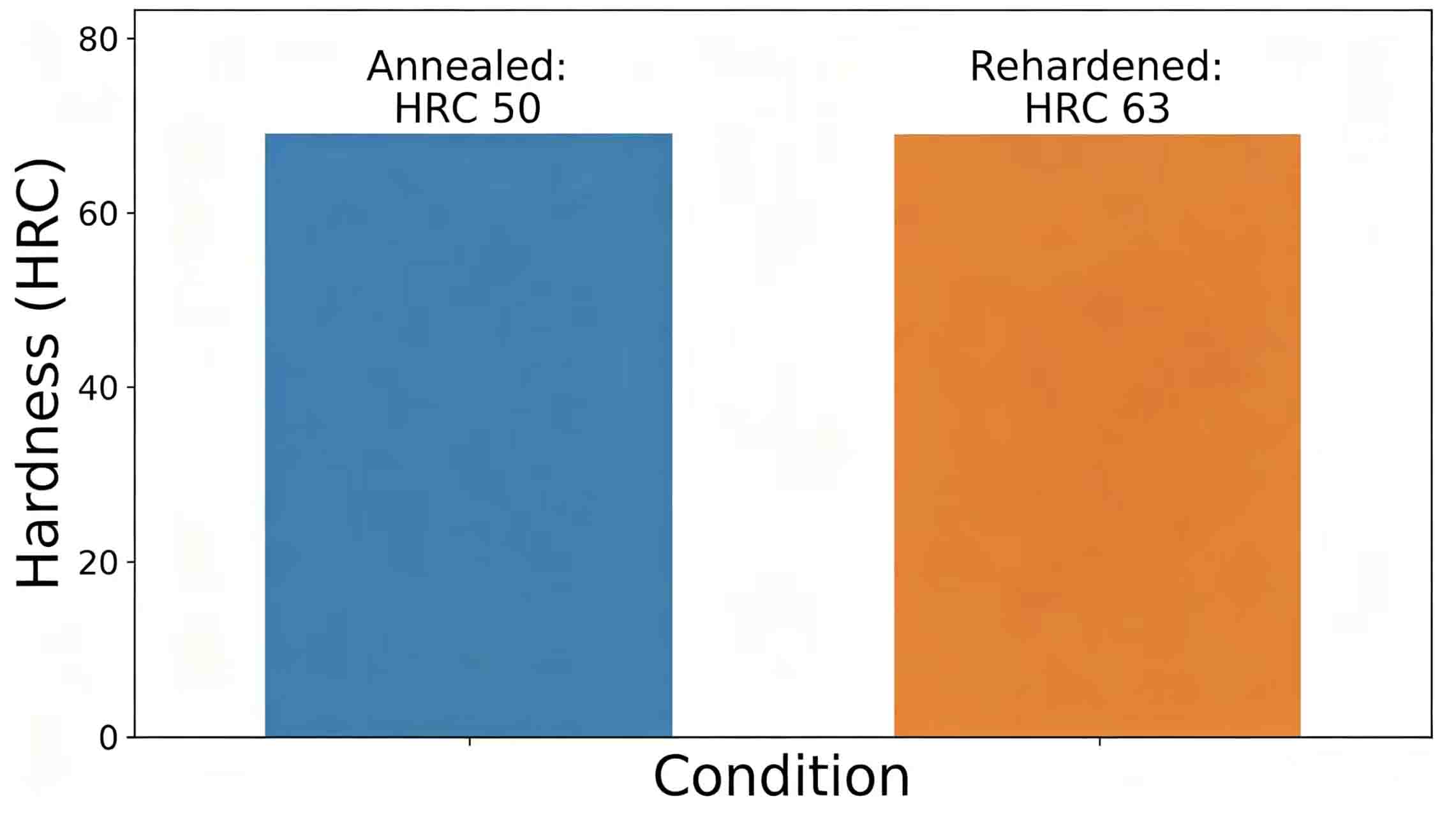
· High-speed steel blades: They can be re-quenched and tempered to restore original hardness. However, the blade may deform, and the surface decarburized layer must be removed.
· Carbide blades: Cannot be restored to hardness by conventional heat treatment. The substrate has undergone irreversible phase transformation.
· Stainless steel blades: Some precipitation-hardening stainless steels can be re-solution treated and aged, but martensitic stainless steels require re-quenching after annealing.
3. Methods and Limitations of Re-Hardening
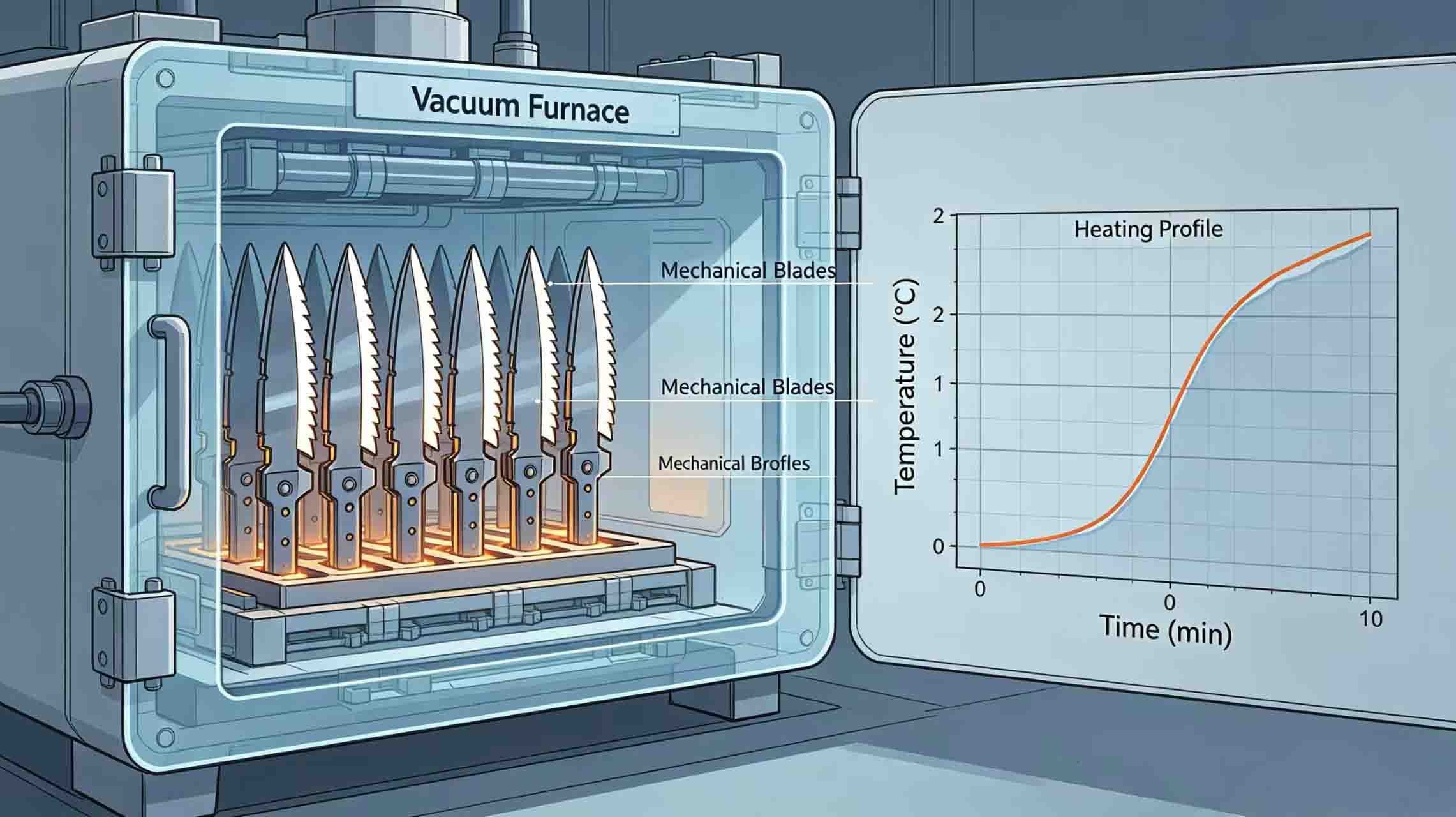
1. Re-heat treatment process suitable for high-speed steel blades
Annealed high-speed steel slitter blades can undergo:
· Annealing softening (to eliminate the original structure)
· Re-quenching (1180-1240°C oil or gas quenching)
· 3-4 tempering cycles (550-560°C)
This can restore original hardness of HRC63-65. However, the blade may deform by 0.05-0.1mm, requiring subsequent precision grinding.
2. Local quenching method
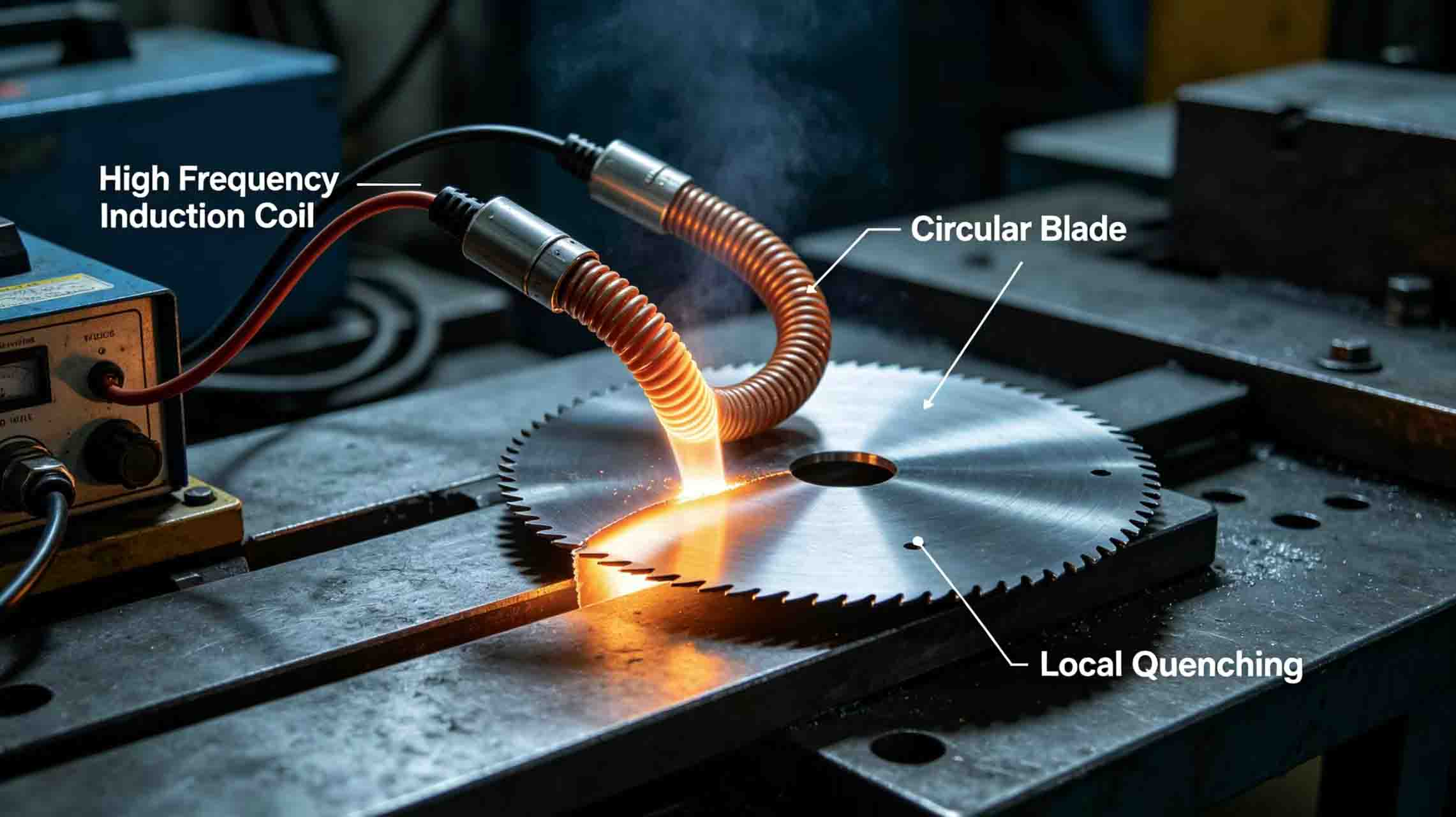
For local edge annealing of circular blades, flame or high-frequency induction local heating quenching can be used to harden only the edge area, avoiding overall deformation. This method is suitable for precision circular blades for thin sheet slitting.
3. Coating as an alternative
If the annealing depth is very shallow (<0.02mm) and the blade has no remaining resharpening allowance, PVD coating can be tried. The coating itself has high hardness (>HRC80) and can temporarily "mask" the softness, but the substrate is soft and impact resistance is poor. Ultra-thin alloy blades for battery electrode slitting may consider this option.
4. Precautions After Re-Hardening
· The edge must be precision ground to remove the oxidation and decarburization layer.
· Flatness and concentricity must be re-inspected; straightening is necessary if needed.
· The life of a re-hardened blade is typically lower than that of a new original blade (about 70%-85%).
5. When Is Re-Hardening Not Worthwhile?
· Blade thickness has been reduced due to multiple resharpenings, remaining effective thickness < 60% of original.
· The blade has cracks or severe deformation.
· Annealing depth > 0.5mm, requiring a large number grinding.
· For small-sized blades with low procurement cost, direct replacement is more economical.
6. Mingbai Technology's Recommendations
Mingbai Mechanical Tool Technology Co., Ltd. recommends customers to:
· Avoid annealing: Use sufficient lubrication and cooling, control resharpening parameters.
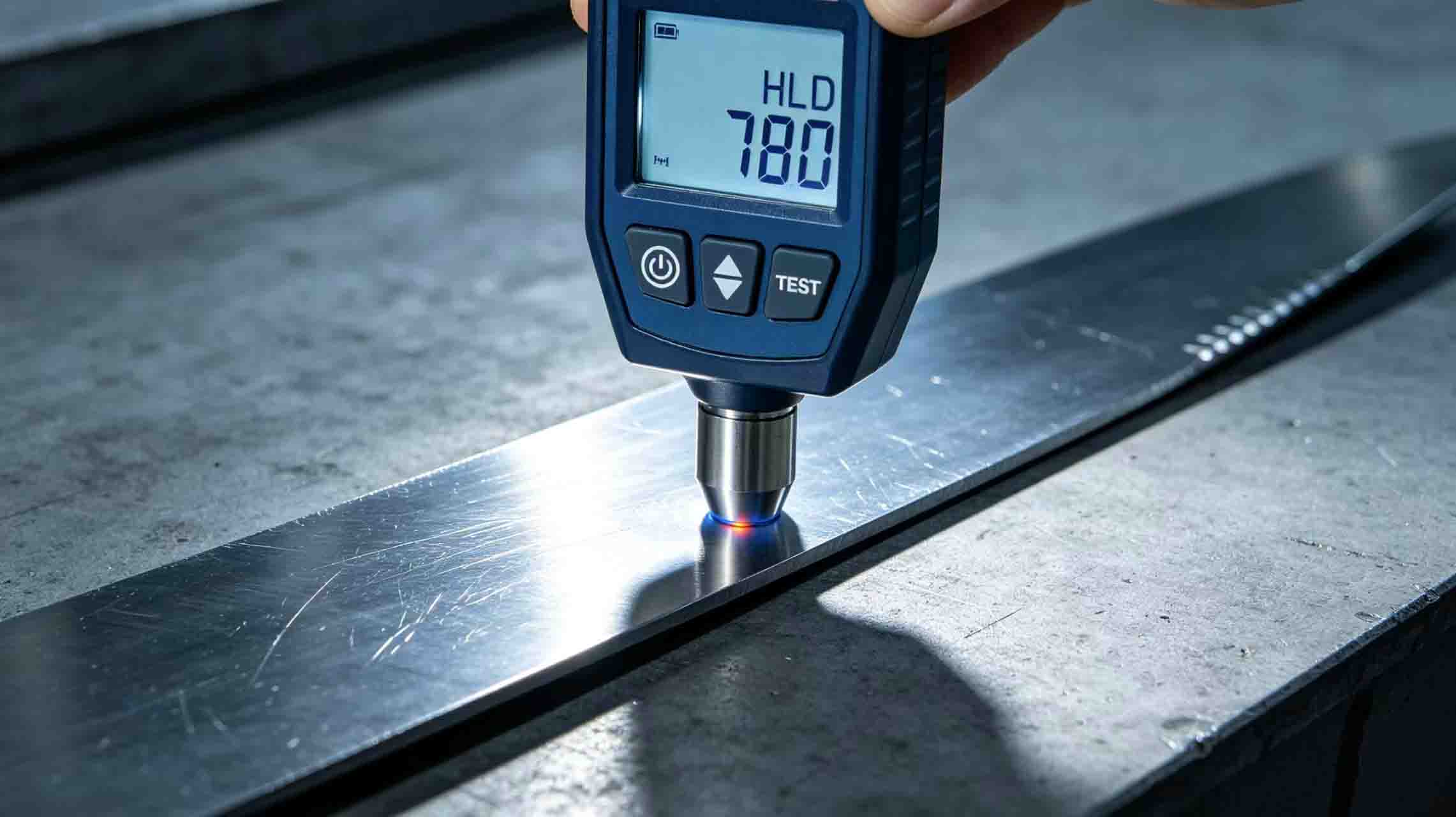
· Inspect after annealing: Use a portable hardness tester to confirm the annealed area and depth.
· Professional factory treatment: If re-hardening is needed, send back to Mingbai for vacuum heat treatment. We provide annealing repair service for high-speed steel circular blades for stainless steel strip slitting.
· Evaluate economics: We will help you calculate repair cost vs. replacement cost for free.
Conclusion
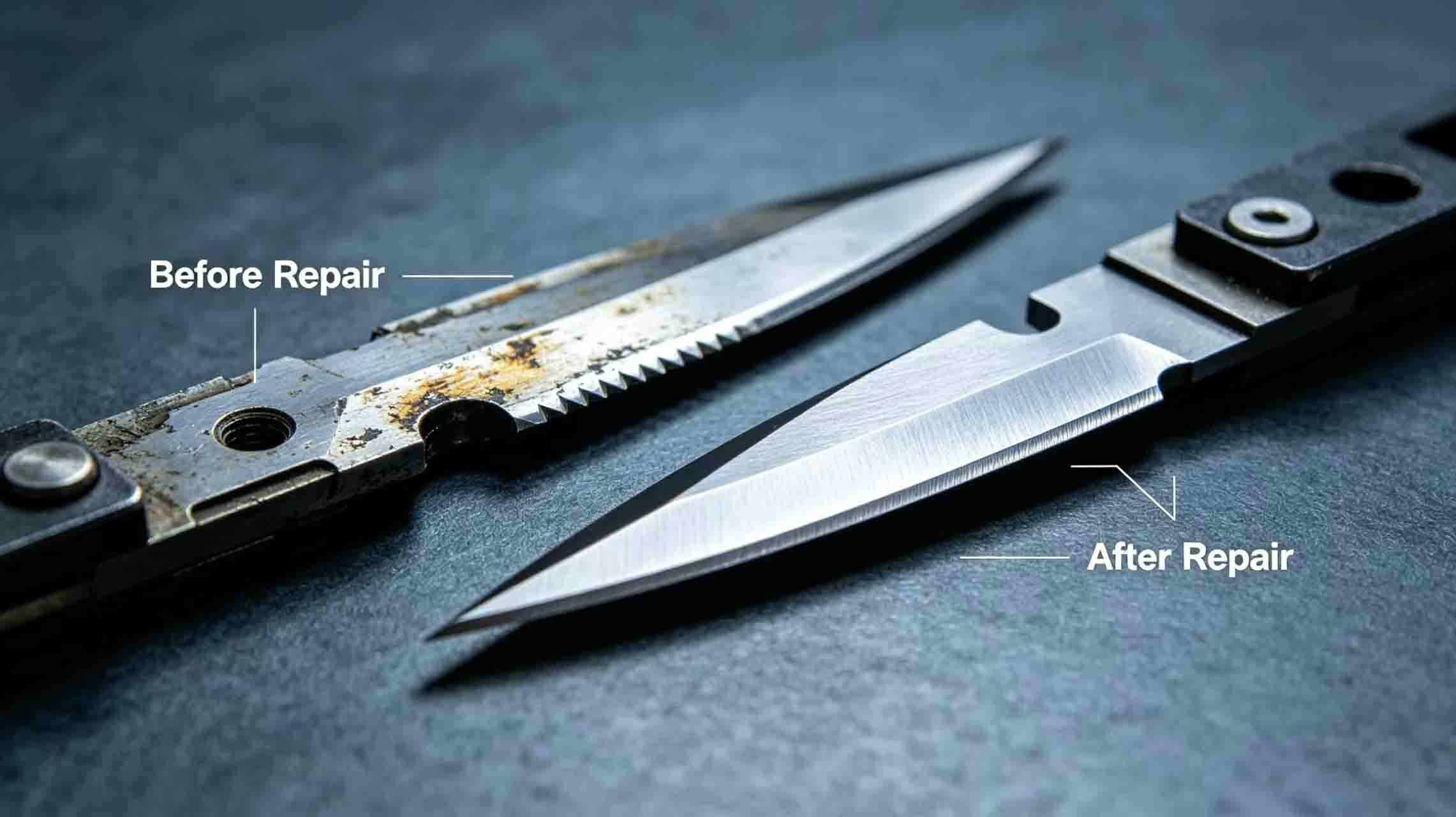
Annealed mechanical blades are not necessarily scrap. High-speed steel blades can be re-heat treated to restore hardness, but the risks of deformation and economics must be weighed. Carbide and stainless steel blades need case-by-case analysis. Mingbai Technology is willing to provide inspection and repair recommendations for annealed blades, helping every blade fulfill its potential.
Website: www.mingbaiblade.com
 IPv6 network supported |
Sitemap
|
Xml
|
Privacy Policy
IPv6 network supported |
Sitemap
|
Xml
|
Privacy Policy
leave a message
Scan to wechat :

Scan to whatsapp :
