 en
en Our factory has served countless products across various industries for 30 years, making a significant contribution to the cutting industry. Let us customize the cutting tools you need!
Mabu - CEO RisingBamboo

 Email: Mb@mingbaiblade.com
 Tel.: +86-13855519988



In slitting operations, when customers encounter short blade life, excessive burrs, or even frequent chipping, their first reaction is often "the blade quality is poor." However, after our on-site diagnostics, we found that more than 60% of cases are caused by incorrect blade material or geometric design, not by defective blades. Mingbai Mechanical Tool Technology Co., Ltd. has many years of experience producing circular blades, slitter blades, and custom blades. Today, we will help you determine whether you are using the wrong circular blades for several common materials.
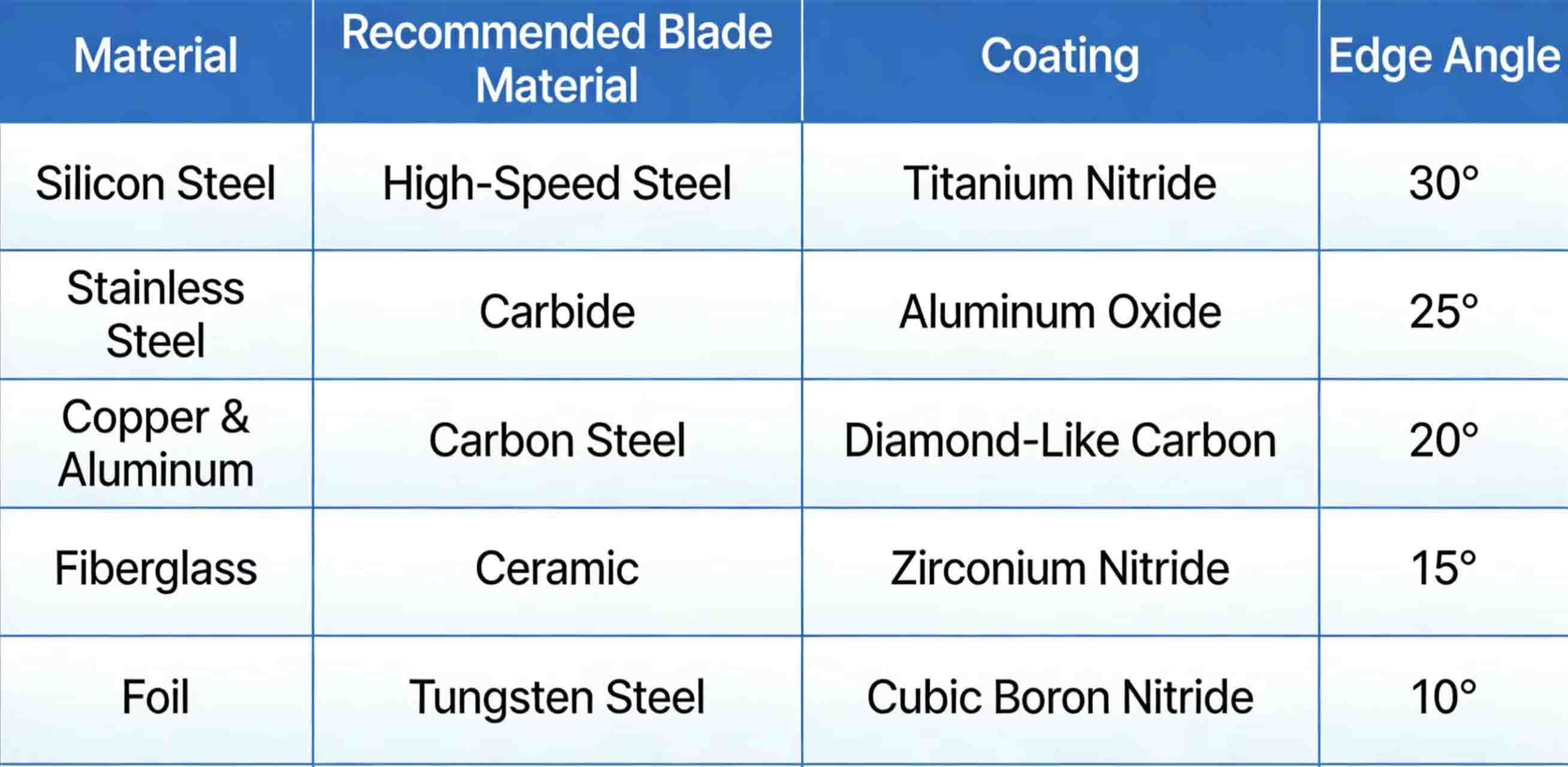
1. Cutting Silicon Steel / Electrical Steel
Common mistake: Using ordinary Cr12MoV or 9CrSi circular blades. Silicon steel has high silicon content, high hardness, and is brittle. The wear resistance of ordinary tool steel blades is insufficient, and the edge will round off quickly, resulting in excessive burrs on the cut edge and increased iron loss.
Correct choice: Choose powder metallurgy high-speed steel (such as ASP2053, M390) or carbide circular blades. Powder metallurgy steel has fine and uniform carbides, providing 3-5 times better wear resistance than Cr12MoV. The edge angle should be controlled at 28°-32°, and a TiAlN coating is recommended for heat resistance and wear resistance.
2. Cutting Stainless Steel / High-Strength Steel
Common mistake: Using the same custom blades as for ordinary carbon steel. Stainless steel has severe work hardening and poor thermal conductivity, so cutting heat is concentrated at the edge. Ordinary high-speed steel blades will quickly soften due to high-temperature tempering, resulting in edge rolling or micro-chipping.
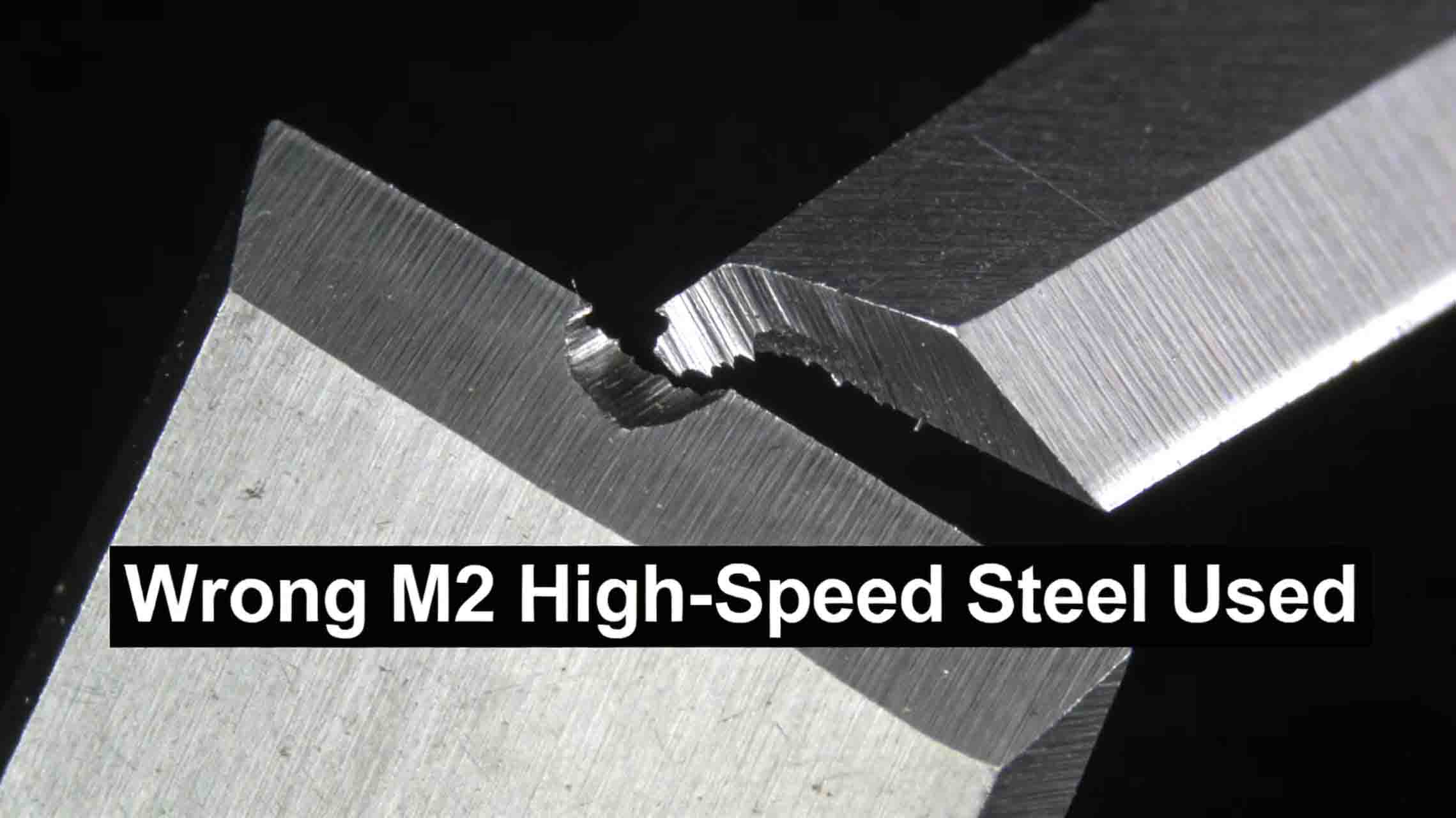
Correct choice: Choose cobalt-bearing high-speed steel (M35, M42) or vanadium-bearing powder steel. Cobalt improves red hardness, maintaining hardness at 500-600°C. AlCrN or TiSiN coatings are recommended, withstanding temperatures above 800°C. The edge should not be too sharp; 30°-35° with micro-passivation is recommended.
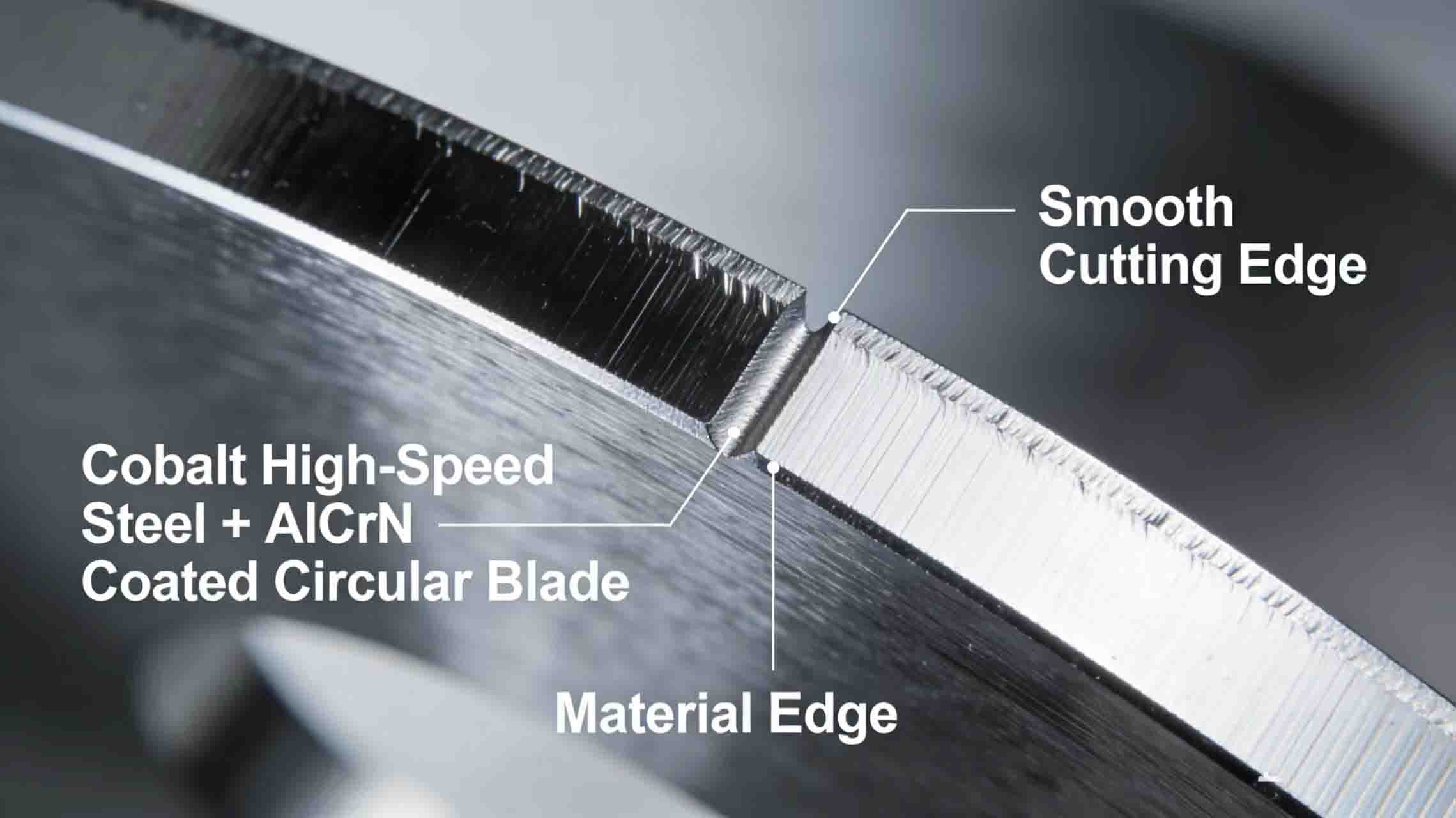
3. Cutting Non-Ferrous Metals Such as Copper and Aluminum
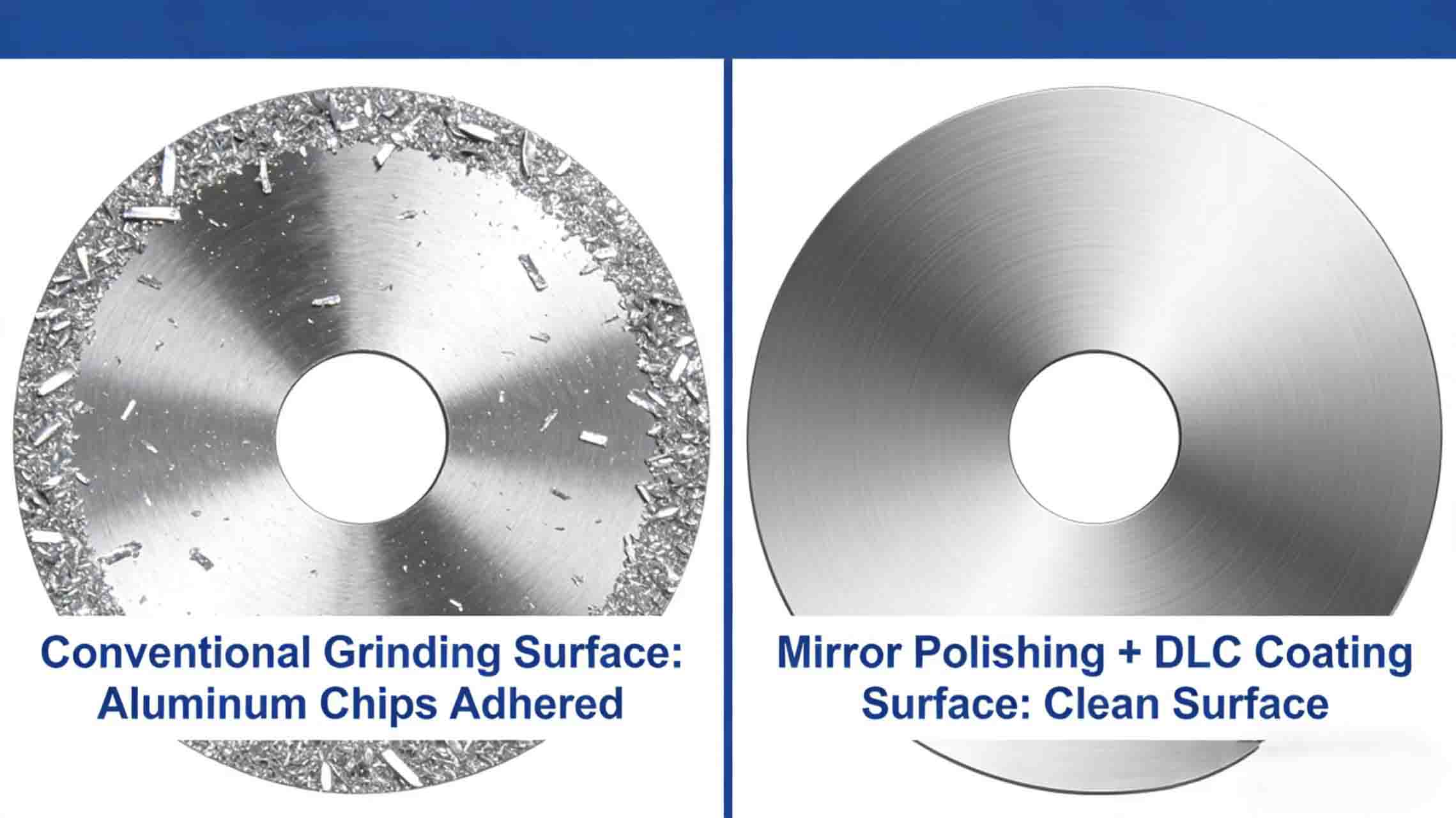
Common mistake: Using slitter blades with ordinary ground surfaces. Copper and aluminum are sticky, and rough surfaces easily cause material adhesion, forming a built-up edge that makes the blade "dull" and pulls grooves on the cut surface.
Correct choice: Require precision machine blades with a mirror finish (Ra ≤ 0.1μm), and DLC (diamond-like carbon) or MoS? coating is recommended to significantly reduce the friction coefficient. The edge angle can be sharper (15°-20°), with a larger clearance angle (10°-12°) to allow smooth chip evacuation.
4. Cutting Composite Films / Fiberglass Materials
Common mistake: Using ordinary high-speed steel circular blades. Fiberglass, carbon fiber, or filler-containing composite films are highly abrasive, causing extremely rapid blade wear, with severe wear or chipping occurring within a few hours.
Correct choice: Carbide custom slitter blades (grades such as YG6X, KD20) are the first choice. Their hardness exceeds HRA91, providing excellent wear resistance. If equipment rigidity allows, polycrystalline diamond (PCD) blades can also be used. Geometrically, a small clearance angle (5°-6°) should be used to support edge strength, along with a negative rake angle design.
5. Cutting Ultra-Thin Foils (≤0.05mm)
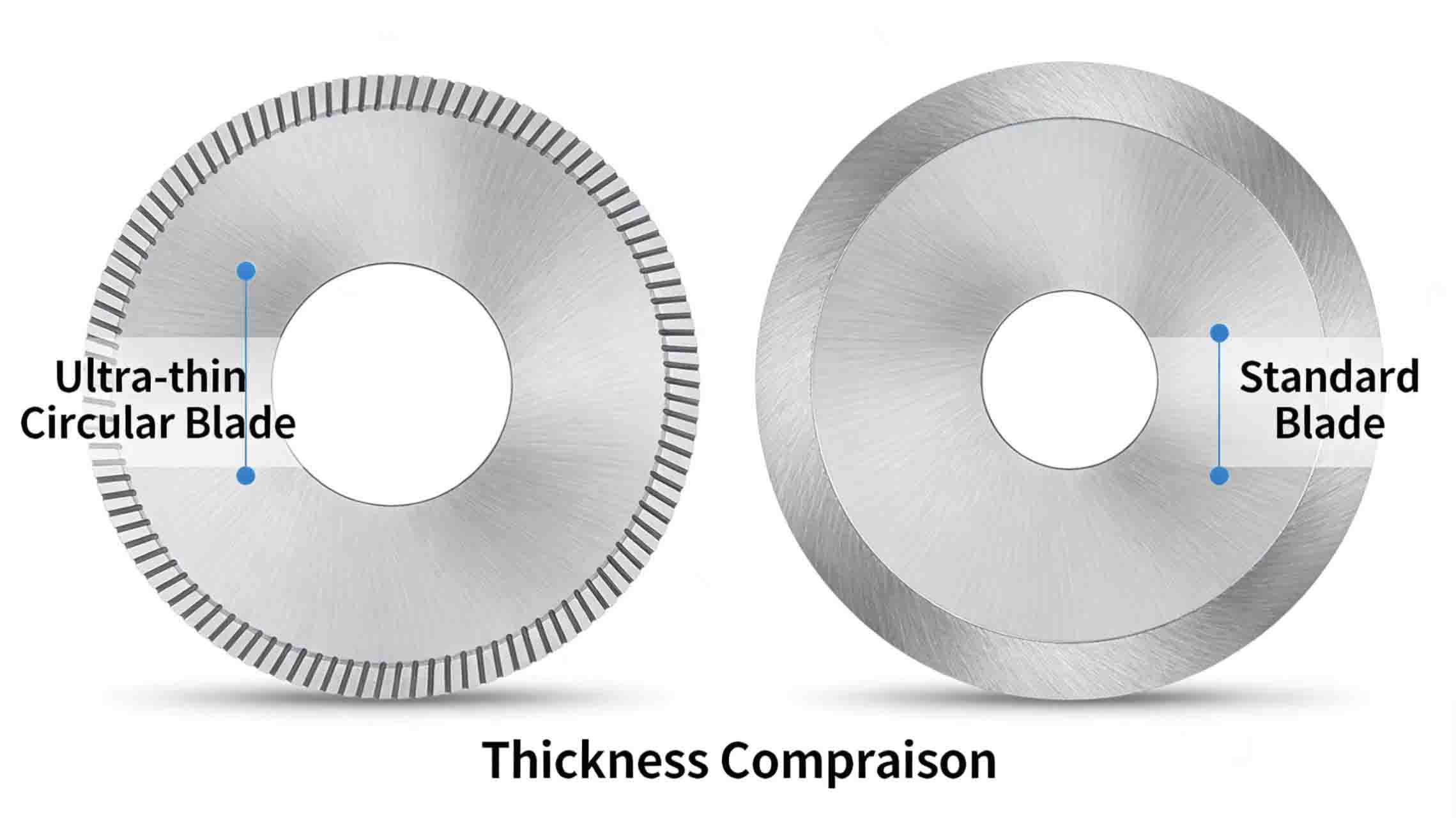
Common mistake: Using standard thickness circular blades with conventional gap settings. Foils have extremely low stiffness; any unevenness will cause stretching deformation or tearing, and tolerance for burrs is zero.
Correct choice: Choose ultra-thin circular blades (1-3mm thickness). The blade shaft must be precision ground with runout ≤ 0.002mm. The gap should be set at 3%-5% of material thickness, or even a "zero gap + light pressure" mode. The edge must be deburred and polished, preferably by hand with an oilstone.
6. Cutting Paper and Self-Adhesive Labels
Common mistake: Using metal slitting blades directly on paper; the edge angle is too small, causing rapid dulling, or the blade surface is not smooth, causing adhesive buildup.
Correct choice: For paper, an edge angle of 22°-28° is recommended. For self-adhesive labels, an anti-stick coating (Teflon or nickel-fluorine) is needed. Custom blades can be designed with a double-bevel angle to reduce contact area with the adhesive side.
How to Confirm Whether You Are Using the Wrong Blade?
If you encounter the following phenomena, it is likely a selection error:
· Burrs appear less than half a day after installing new blades
· The blade edge shows obvious rounding or small chips
· The cut edge is blackened or has a burnt smell (excessive temperature)
· Metal particles from the blade adhere to the material edge
· The same batch of blades shows huge life differences on different materials
Mingbai Technology's Solutions
We offer a "material – operating condition – blade" matching consulting service. Simply tell us the material grade, thickness, cutting speed, and equipment type you are cutting, and Mingbai engineers will recommend the optimal circular blades, slitter blades, or CNC machined blades solution. We can also provide sample trial cutting so you can see the improvement that correct selection brings.
Conclusion
Using the right blade can cut costs in half. Do not use general-purpose circular blades to challenge special material cutting. Mingbai Technology has dedicated custom blades solutions for every specific material. Contact our technical team for a free selection diagnosis.
Website: www.mingbaiblade.com
 IPv6 network supported |
Sitemap
|
Xml
|
Privacy Policy
IPv6 network supported |
Sitemap
|
Xml
|
Privacy Policy
leave a message
Scan to wechat :

Scan to whatsapp :
