Home

slitting machine blades

slitting machine blades

  • Precision Grinding, Extended Lifespan: Key Steps for Maintaining Mechanical Blades
    Jan 21, 2026
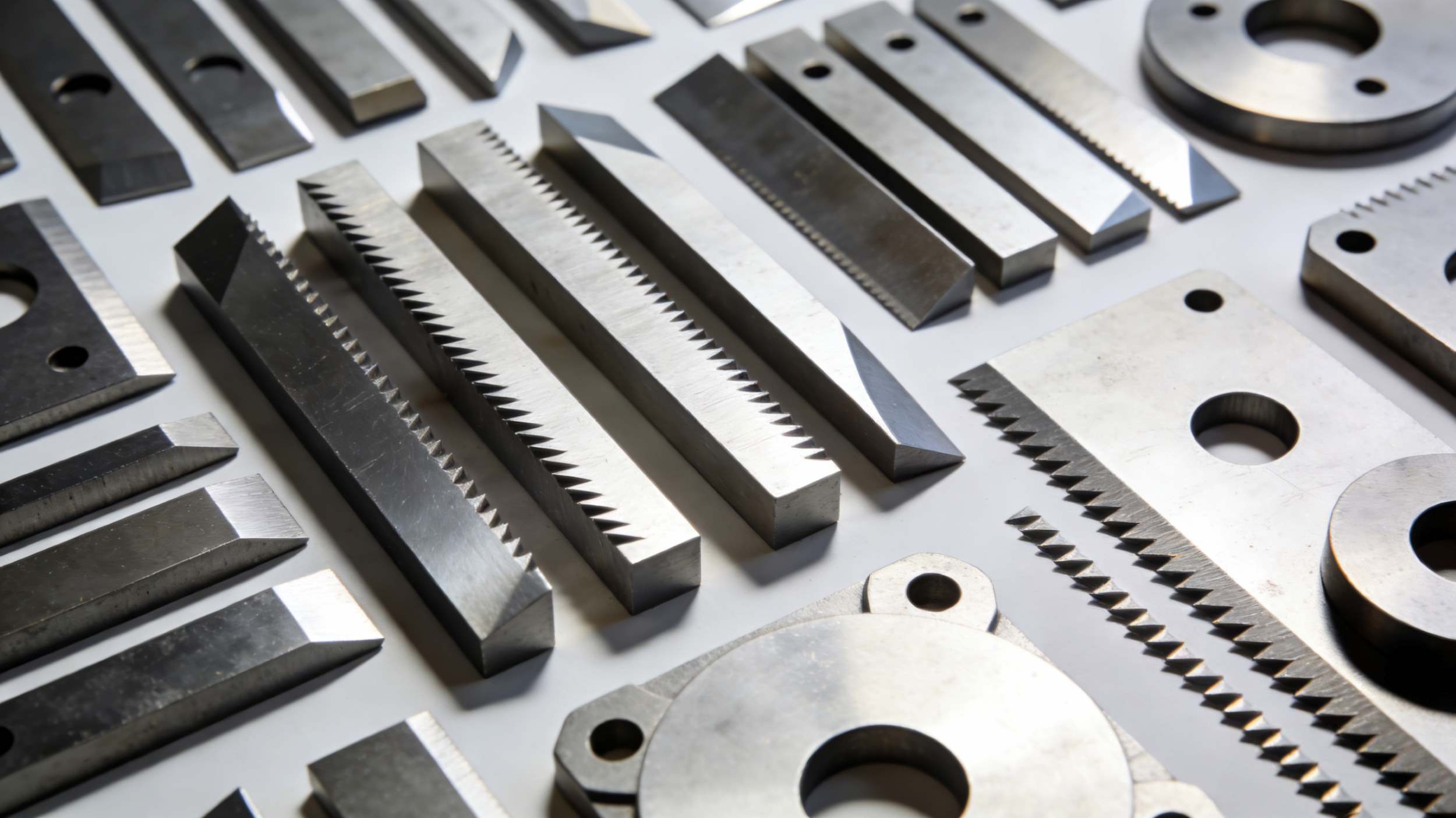
    In industrial production, mechanical blades are core components of many machining processes. Whether they are slitting machine blades, circular blades, or other customized blades, their performance directly affects production efficiency and product quality. However, even the highest-quality blades require proper maintenance and grinding to maintain optimal working condition. Today, we will explore the key steps in mechanical blade grinding to help you extend tool life and reduce production costs. Why Do Blades Need Professional Grinding?  As blades are used over time, they gradually wear down, the edges become dull, leading to increased cutting force, more burrs on products, and higher energy consumption. Regular professional grinding can not only restore sharpness but also correct minor deformations, ensuring cutting accuracy.   Five Key Steps for Blade Grinding 1. Inspection and Assessment Before grinding, a comprehensive inspection of the blade is necessary: · Measure current dimensions and angles · Check the degree of edge wear · Detect any cracks or chips · Evaluate whether repair is worthwhile 2. Cleaning Thoroughly remove oil, metal debris, and adhered material from the blade’s surface. Incomplete cleaning can affect grinding precision and even damage the grinding machine. 3. Precise Clamping The blade must be securely and accurately clamped on the grinding machine. Any slight movement can cause deviations in grinding angles, impacting subsequent performance. 4. Parameterized Grinding Set appropriate grinding parameters according to blade material and purpose: · Selection of wheel type and grit size · Control of grinding angles · Adjustment of feed rate · Control of coolant flow 5. Quality Inspection   After grinding, strict inspection is required: · Edge sharpness testing · Dimensional accuracy measurement · Surface finish inspection · Balance testing Professional Grinding vs. DIY   Many companies attempt to grind blades themselves to save costs, but this often leads to: · Inaccurate grinding angles affecting cutting performance · Excessive grinding shortening overall blade life · Local overheating altering material properties · Inability to repair minor deformations affecting installation precision   Mingbai Technology's Professional Grinding Services At Mingbai Mechanical Tools Technology Co., Ltd., we offer not only high-quality slitting machine blades, customized blades, mechanical blades, and circular blades but also professional blade grinding and repair services. Our advantages include: 1. Precision Equipment: Using imported CNC grinding machines to ensure grinding accuracy 2. Experienced Technicians: Technical staff with years of tool-handling experience 3. Parameter Database: Matching the best grinding solution based on different materials and applications 4. Quality Assurance: Every ground blade undergoes strict inspection 5. Rapid Response: Expedited processing for urgent orders, minimizing customer downtime   Daily Tips for Extending Blade Life In addition to regular professional sharpening, proper daily use can significantly extend blade life: · Follow operating procedures and avoid overloading · Regularly check fastening status to prevent loosening · Maintain proper lubrication to reduce friction heat · Remove chips promptly to prevent secondary wear · Store blades properly to avoid edge collisions   Conclusion Mechanical blades are an important investment in production. Proper maintenance and professional sharpening can maximize the value of this investment. Instead of frequently replacing new blades, it is better to establish a scientific tool management plan, including regular inspections, professional sharpening, and proper use. If you have any questions about our blade products or sharpening services, please feel free to contact Mingbai Technology. We are committed to providing customers with comprehensive tooling solutions to help improve production efficiency and reduce operating costs.   About Mingbai Technology: Mingbai Mechanical Tool Technology Co., Ltd. focuses on the research and development, production, and restoration of high-quality mechanical blades. We offer standard products and customized solutions for industries such as metal processing, packaging, and paper making, earning customer trust with excellent quality and professional service. https://www.mingbaiblade.com/

  • Rotary shear blade manufacturing process: From raw steel to finished product
    Jan 12, 2026
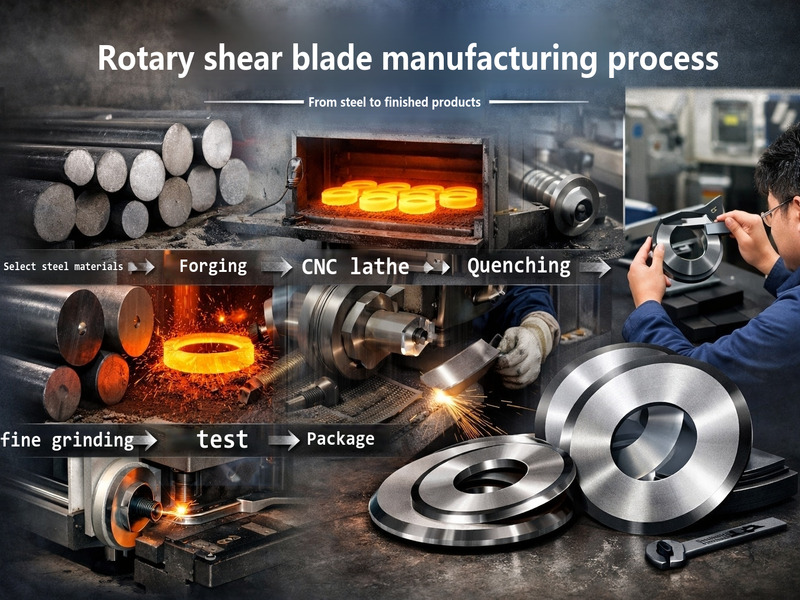
    Rotary shear blades are a core consumable in the steel coil slitting industry, and their manufacturing quality directly impacts cutting accuracy, speed, and service life. Many customers understand the blade material but are unaware of the complete process from raw steel to the finished product. Today, we'll take you inside the factory to see how a high-quality rotary shear blade is made.   I. Material Selection: High-Quality Steel is Key   Rotary shear blades commonly use high-grade tool steel, such as:   Cr12MoV   D2 (SKD11)   H13   High-speed steel M2, M35   Powder high-speed steel (according to customer requirements)   The raw materials must possess: ✔ High hardness ✔ Good wear resistance ✔ Impact resistance ✔ Uniform microstructure   Only by controlling quality from the source can the blades have a stable processing foundation.   II. Forging/Cutting: Processing Steel into Blanks   Depending on the blade diameter, thickness, and assembly dimensions, the steel needs to undergo:   Furnace heating   Forging   Sawing, flame cutting, or wire cutting   The purpose is to: ✨ Improve microstructure ✨ Increase density and toughness ✨ Prepare for subsequent precision machining   High-standard blanks mean the blades are less prone to cracking and more wear-resistant.   III. Precision Machining: Forming the Final Blade Dimensions   The blanks enter the CNC machining workshop and are completed through multiple processes:   CNC turning   External cylindrical grinding   Internal hole grinding   Edge grinding and finishing   Precision machining requires extremely high standards, especially for: 🟩 Edge angle 🟩 Parallelism 🟩 Concentricity 🟩 Surface finish   This step determines whether the blade can maintain stable cutting in high-speed equipment.   IV. Heat Treatment: Enhancing Hardness and Service Life   Heat treatment is the soul of rotary shear blade manufacturing. Including:   Vacuum quenching   Tempering   Deep cryogenic treatment (optional)   Through precise temperature control, the blades achieve: 🚩 Uniform hardness 🚩 Stronger wear resistance 🚩 Higher resistance to chipping   Too low hardness results in poor durability, while too high hardness leads to chipping, so heat treatment must be precise.   V. Precision Grinding and Polishing: Ensuring Cutting Quality   After heat treatment, the blades are processed again due to micro-deformation:   Precision grinding of end faces and inner holes   Edge polishing   Dimensional inspection of each piece   Finally, achieving an almost mirror-like finish, ensuring that the blade remains sharp and stable even at high rotational speeds. VI. Inspection and Packaging: Controlling the Quality of Every Blade   Each blade undergoes a thorough inspection:   ✔ Hardness ✔ Concentricity ✔ Outer diameter and inner bore dimensions ✔ Blade edge precision ✔ Surface defect inspection   After passing inspection, the blades are coated with anti-rust oil, packaged, and marked with specifications and batch numbers for traceability.   Conclusion: Quality Comes from Details, Longevity Comes from Craftsmanship   Rotary shear blades may seem simple, but they involve dozens of processing steps.   We consistently adhere to: 🔧 Carefully selected steel materials 🧊 Professional heat treatment 🎯 Precision machining 🛡 Strict quality control   All to ensure our customers receive blades with longer lifespan, less downtime, and higher efficiency.   If you require custom specifications, special materials, or technical guidance, please feel free to contact us. We will provide professional solutions for your production line. Company Website: https://www.mingbaiblade.com   Whatsapp: +86-13855519988
  • Slitting machine blades: The core components for precision metal slitting.
    Dec 26, 2025
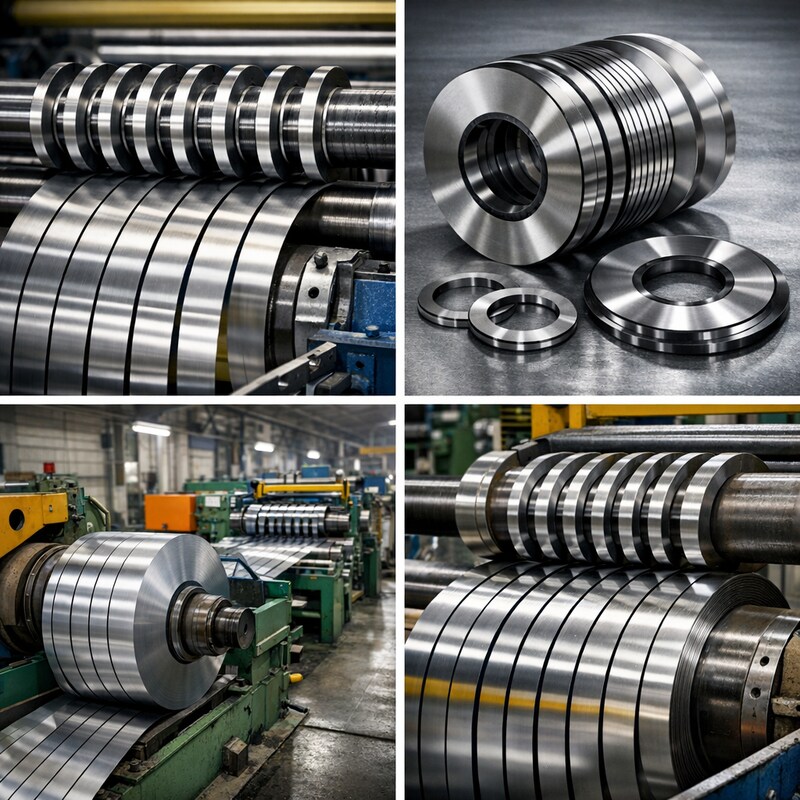
    In the metal processing industry, slitting machines are widely used for the continuous slitting of materials such as steel plates, aluminum plates, stainless steel, and copper strips. In the entire equipment system, the slitting machine blades, as the core components directly involved in cutting, directly determine the slitting accuracy, cut quality, and production efficiency.   What are slitting machine blades?   Slitting machine blades are typically high-precision circular blades that, through the cooperation of upper and lower blades, perform continuous longitudinal cutting of metal coils at high speed. The blades require extremely high concentricity, flatness, and sharpness to ensure burr-free, non-collapsing, and non-damaging cutting of the material.   Common materials for slitting machine blades   To adapt to different metal materials and working conditions, slitting machine blades are usually manufactured from the following materials:   1. SKD11 / D2 Cold work tool steel: Good wear resistance, high cost-effectiveness 2. HSS High-speed steel: Suitable for high-speed slitting conditions 3. Powder metallurgy steel: Uniform structure, longer service life 4. Carbide blades: Suitable for high-strength, high-hardness material slitting   Based on the customer's slitting material thickness, hardness, and production cycle, targeted material recommendations and customization can be provided.   High-quality slitting machine blades typically have the following characteristics:   1. High cutting accuracy: Small blade thickness tolerance ensures consistent slitting width 2. Sharp and wear-resistant edge: Reduces burrs and extends blade replacement cycle 3. Excellent heat treatment process: Stable hardness, not easy to chip 4. Excellent surface finish: Reduces material friction and protects the surface of the sheet metal   These advantages not only improve product yield but also effectively reduce the customer's overall production costs.   Application industries   Slitting machine blades are widely used in various industries, including but not limited to:   Steel and metal processing industry Automotive parts manufacturing Home appliance and electronics manufacturing New energy (lithium batteries, photovoltaics) Building and decorative materials processing   Different application fields have different requirements for blade accuracy and lifespan, therefore customized solutions are particularly important.   Why choose customized slitting machine blades? Each slitting production line differs in equipment structure, materials processed, and process parameters. Compared to standard blades, custom-made slitting machine blades can better match the customer's equipment, offering the following advantages:   Improved cutting stability Reduced material loss Extended blade lifespan Increased overall production efficiency   Professional blade manufacturers can provide customers with comprehensive customization services for dimensions, materials, hardness, and blade profile based on drawings or samples.   Conclusion   Although small, slitting machine blades play a crucial role in metal slitting and processing. Choosing high-quality, highly compatible blade products is key to ensuring production efficiency and product quality. If you are looking for a stable and reliable supplier of slitting machine blades, please contact us. We will provide you with professional technical support and customized solutions. Website: https://www.mingbaiblade.com/ WhatsApp: +86-13855519988    
Leave A Message
If you are interested in our products and want to know more details,please leave a message here,we will reply you as soon as we can.
submit

leave a message

leave a message
If you are interested in our products and want to know more details,please leave a message here,we will reply you as soon as we can.
submit

home

products

WhatsApp

Contact Us